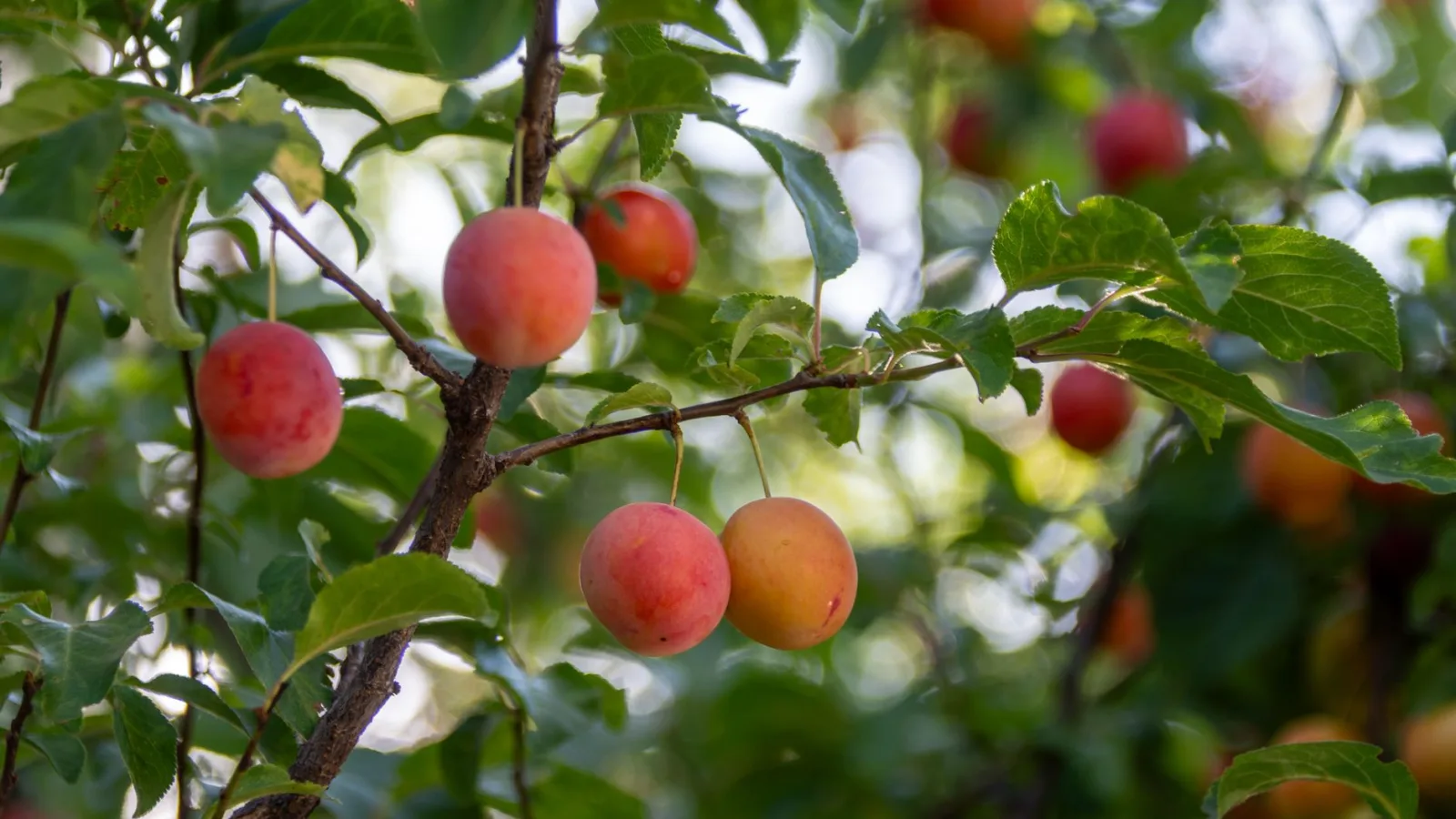
In autumn, when the leaves turn yellow and drop, you may find pits from summer's fallen fruit scattered in the soil as you work the ground under a plum tree. Crack one open and you'll find a single small kernel inside, wrapped in a thin brown skin. Oyat is an old Korean name for the plum, and this kernel is called oyat-ssi, the plum kernel. Old medical texts listed it as a medicinal ingredient. Modern chemical analysis tells a different story, though: the kernel is not something to eat raw.
What the Dongui Bogam Recorded as 李核仁
The Dongui Bogam (Treasured Mirror of Eastern Medicine) is a medical encyclopedia compiled in the early 17th century by Heo Jun, a physician to the Joseon court. The plum kernel appears in its fruit section, 果部 (gwabu), under the name 李核仁 (ihaegin). Ihaegin is the inner kernel you get by cracking open a plum pit, the same thing our crop guide calls the plum kernel. The text doesn't group the tree's root bark and leaves into the same entry. It records each part separately.
The text also describes how the kernels were prepared. They were gathered in the sixth and seventh months and steeped in boiling water. Then they were peeled, their pointed tips were removed, and they were ground for use. The properties, taste, and uses the text gives for the kernel are laid out, with a commentary on the original, in the plum kernel entry in Homiclub's Dongui Bogam. This is a record from a historical medical text, not a remedy to follow today. Please don't take it as evidence that the kernel can treat anything.
Old Records Meet Modern Analysis
Modern analysis shows that the plum kernel contains amygdalin and fatty oil, which is the oil concentrated in the kernel. The old text gathered the kernel separately from the fruit's flesh and never used it raw, and that matches current thinking. Both the old record and modern analysis treat the kernel as something entirely different from the flesh.
Where they part ways is safety. When enzymes in the body break down amygdalin, it releases cyanide. That's why the kernel should never be eaten raw. Going through the traditional preparation doesn't make it safe to eat today, either. Food researchers also leave the kernel out of their studies because of these safety concerns.
Modern research focuses on the parts you can eat, the flesh and the skin. Lab studies have tested the antioxidant activity of the polyphenols in plum flesh and skin, and anthocyanins also count as polyphenols. These are lab results, so any claims about what they do in the human body deserve a cautious read. Plums also contain sorbitol, a sugar alcohol that dissolves readily in water and adds sweetness.
Growing and Harvesting Plums in the Garden
In the Northern Hemisphere, plum trees (Prunus salicina, often called Japanese plum) are planted in March–April or in November. That means bringing home a young tree in late autumn after the leaves drop or in early spring before the buds break. A tree grown from seed takes years to bear and often produces fruit unlike its parent's, so a nursery tree is the easier start for a home garden. In the Northern Hemisphere, harvest runs from June through August. You'll find planting and harvest months side by side in our plum kernel crop guide.
The white powder on the fruit is a natural waxy bloom that washes right off, so there's no reason to peel it away. Through the summer, clear away fallen fruit as it drops. Pits left lying on the soil are easy for kids to pick up and crack open. When you collect the pits, throw them out whole, without removing the kernels.
Pit Out, Flesh In: How to Enjoy Plums
The flesh is the part you eat. Polyphenols are concentrated near the skin, so don't peel your plums. Just rinse them under running water and eat them skin and all.
- Jam and preserves: Plums that are starting to soften can be pitted and cooked down with sugar into something that keeps for months. Plums are rich in pectin, so you don't need to add anything to help them set.
- Yogurt and cheese: Slice plums thin and lay them on top. Their tartness cuts through the richness of dairy, and there's no need for extra sweetener. The riper the plum, the stronger its aroma, so try pairing ripe ones with a hard cheese.
If you're eating plums today, throw the pits away without cracking them. Slice the fruit thin with the skin on and spoon it over a bowl of yogurt.