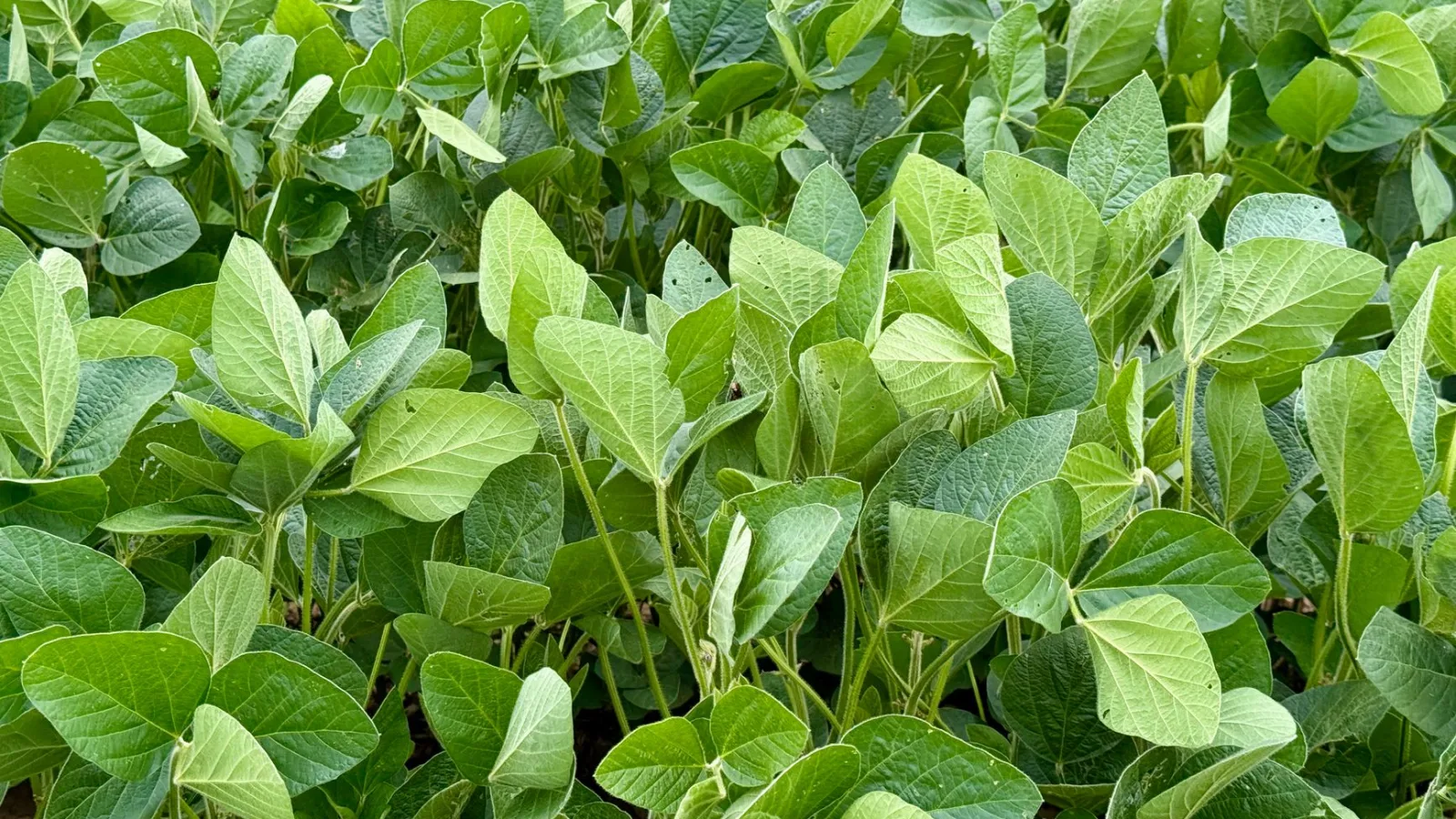
By mid-August, the soybean plants in the garden stand about knee-high, and under the leaves the fuzzy pods are starting to swell, one by one. The beans inside haven't filled out yet, but press a pod between your fingers and you can feel them firming up. What's being made inside that pod right now is the amino acids that protein is built from.
The Amino Acids Forming Inside a Bean Pod
The human body works with about twenty amino acids. Nine of them it can't make on its own, so they have to come from food — those are the essential amino acids. Muscle, enzymes, the compounds your immune system runs on: all of it is built from this set. And the body doesn't keep a reserve of leftover amino acids on hand. That's why spreading protein across three meals a day works better than loading it all into one.
Soybeans are one of the few field crops that carry all nine essential amino acids in decent balance. Dried soybeans run about 36 grams of protein per 100 grams; even immature green soybeans — edamame — come in around 11 grams per 100 grams once boiled. Rice and wheat tend to be low in lysine. Soybeans have lysine to spare but fall short on methionine. That's the quiet logic behind the traditional Korean pairing of kongbap (rice cooked with beans) and doenjang-guk (soybean-paste soup): each dish covers what the other is missing.
Old medical texts record that the water from boiled black soybeans helps bring down swelling. Take that as a long-standing traditional use rather than a proven medical effect.
The Research Trying to Make Amino Acids from Carbon Dioxide
The UN projects that global food demand will be roughly 60% higher in 2050 than it is today. The amount of new farmland available to meet it? Around 2%. So where does the rest come from?
That question is why a team at the Technical University of Munich is looking for an answer that doesn't involve plowing more ground. They use solar-generated electricity to convert carbon dioxide into the raw material for amino acids, then let microbes feed on that material and produce the amino acids themselves. Because the process needs no soil and no field, the researchers expect it to yield far more protein per unit of area than a soybean plot ever could.
For now, though, this is lab-scale work. The step that converts carbon dioxide using solar electricity is energy-hungry, and scaling up the vessels the microbes grow in is still an open problem. Anything sold as food would also have to clear a safety review. This isn't a story about what lands on your table this year.
What to Take Care Of in the August Garden
Research like this takes years to find its footing. In the meantime, the protein job stays with legumes — soybeans, adzuki beans, peas. Here's where to start in the garden this week.
- Don't skip watering while the pods are filling. If the plants go dry now, the beans won't fill out properly.
- Pick anything you plan to eat as edamame while the pods are plump and still green. Wait too long and the pods turn tough.
- You don't need to add more nitrogen. Legumes pull nitrogen from the air by way of the rhizobia in their root nodules, so a generous side-dressing just gives you a lot of leaf.
- For dry beans, watch for the leaves to yellow and drop starting in late September, and harvest then.
Next time you're out in the garden, start with the pods low on the plant and run them through your fingers. If you can feel beans taking shape, it's time to work in another watering. Whenever the process for making amino acids from carbon dioxide finally arrives, the beans going into your rice this fall are ripening right now, in those pods.