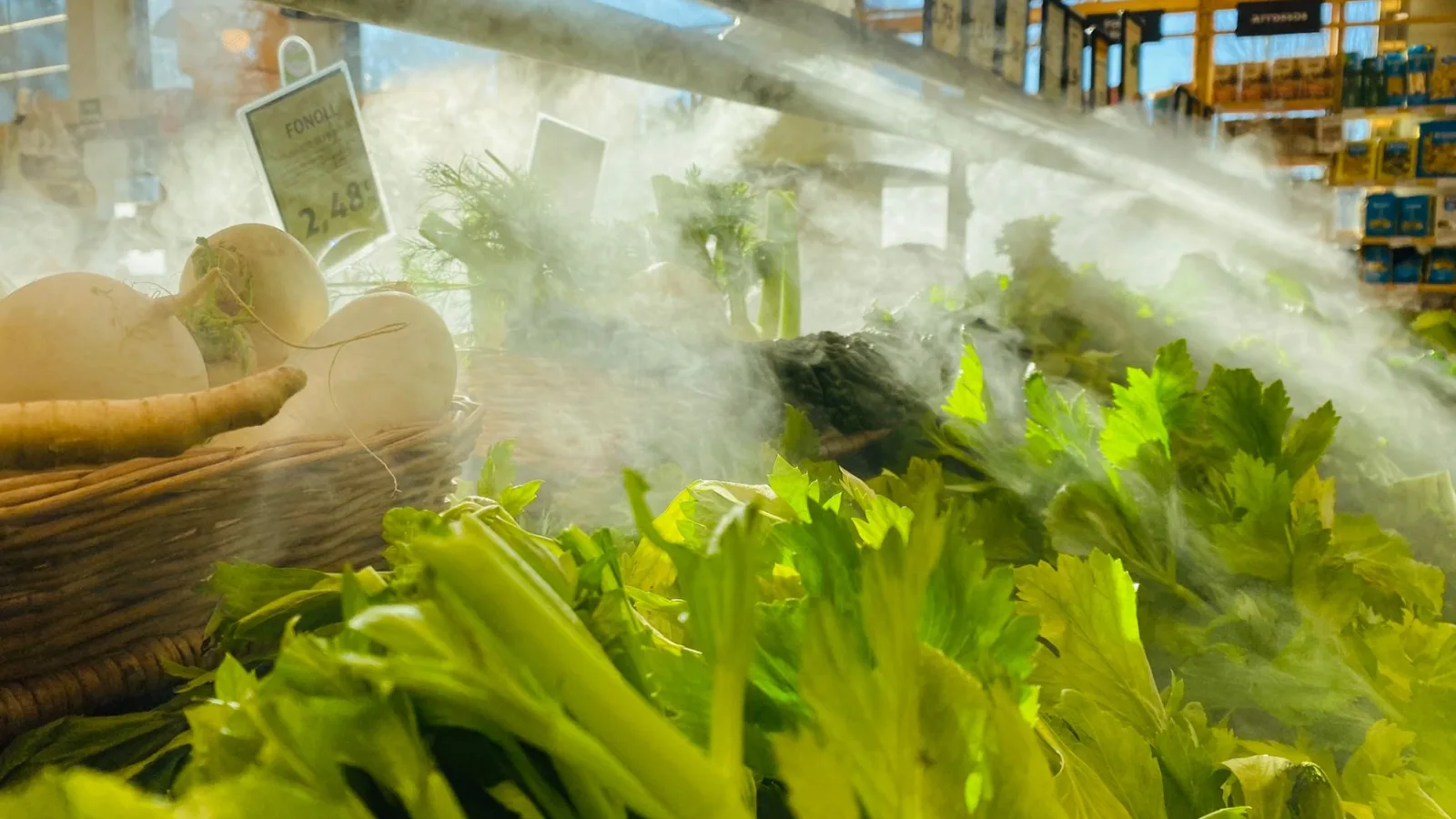
August gardens are still hot at midday, but the evening air cools a little more each day. It's a good moment to set out celery transplants. In the Northern Hemisphere, celery goes in the ground in March and August and comes out in May–June and October–November. Left to ride out high summer, the stalks tend to toughen, so planting in late summer and letting them thicken as temperatures fall is the safer bet.
Cool Weather Is What Makes It Tender
Celery grows best between 15 and 20°C (59–68°F), and it will grow at all somewhere in the range of 7 to 24°C (45–75°F). Above 25°C (77°F), a woody core forms inside the stalks and they turn stringy. At the other extreme, a seedling held below 10°C (50°F) for too long will bolt — send up a flower stalk — and become inedible. Celery is half-hardy, so it shrugs off a light chill, but heat and cold each ruin it in their own way.
It's also thirsty, which is worth keeping in mind. Once a plant dries out, the tissue hardens right where it happened, and watering later won't bring it back. Better to water before the soil surface goes dry.
The big celery-growing countries are China and the United States, along with Spain, Mexico, and Italy. Hold your own region's average spring and fall temperatures up against that 15–20°C window and you can work out your planting months yourself.
The Stalks and the Leaves Hold Different Things
The stalks carry potassium and dietary fiber. They're mostly water, so they come in lower in calories than most vegetables of the same volume. Dietary fiber is a carbohydrate the body doesn't digest, so it stays intact even after you've chewed it.
That distinctive aroma comes from apiin and from essential oils in the phthalide family. The leaves carry flavonoids such as apigenin and luteolin. Use only the stalks and throw the leaves away, and you're throwing those compounds out with them — so chop the leaves fine and stir them into a soup or a stir-fry.
What the Research Actually Covers
A good share of the research on celery works with extracts from the seed or with isolated compounds. Those are different conditions from eating the stalks and leaves as a vegetable. Findings from an extract can't be carried straight over to the vegetable on your table.
3-n-butylphthalide, the main note in celery's aroma, has in fact been isolated and synthesized and developed separately as a pharmaceutical. But a drug uses a purified compound at a fixed dose. That is not the same act as chewing a stalk. So what has been confirmed in people for celery eaten as a vegetable? Its nutrient composition, its water content, its calorie count — about that far. Which is why it's more accurate to file this vegetable not as something that cures anything, but as a way to add potassium and fiber at a low calorie cost.
How to Eat It
Celery, carrot, and onion diced small and sweated in butter make a mirepoix, the base for stews and soups in French cooking. If you're making anything brothy tonight, start that trio in the pan first. Raw, the best-known preparation is Ants on a Log: stalks cut to finger length, filled with peanut butter, and dotted with raisins. The protein and fat in the peanut butter set off the crunch.
For juice, blend it with apple and carrot, or with tomato and cucumber. Celery's aroma tidies up the sweetness of whatever it's paired with. Serve blue cheese or cheddar alongside and the protein and fat from the cheese balance out the plate.
Wash Your Hands After Trimming
If juice from trimming sits on your skin and you then spend a long stretch in the sun, it can cause irritation. Better to carry the harvest indoors and trim there rather than at the bed, and to wash your hands when you're done.
Celery is also an ingredient that turns up occasionally in allergy reports. If you've ever reacted to plants in the carrot family — carrot itself, or minari (Korean water dropwort) — start with a very small amount and see how you feel.
Today's job is a single one. Water the planting spot thoroughly, set the transplants in, and for the next two months water before the soil dries. The stalks that thicken over that stretch are yours to cut in late fall, leaves and all.