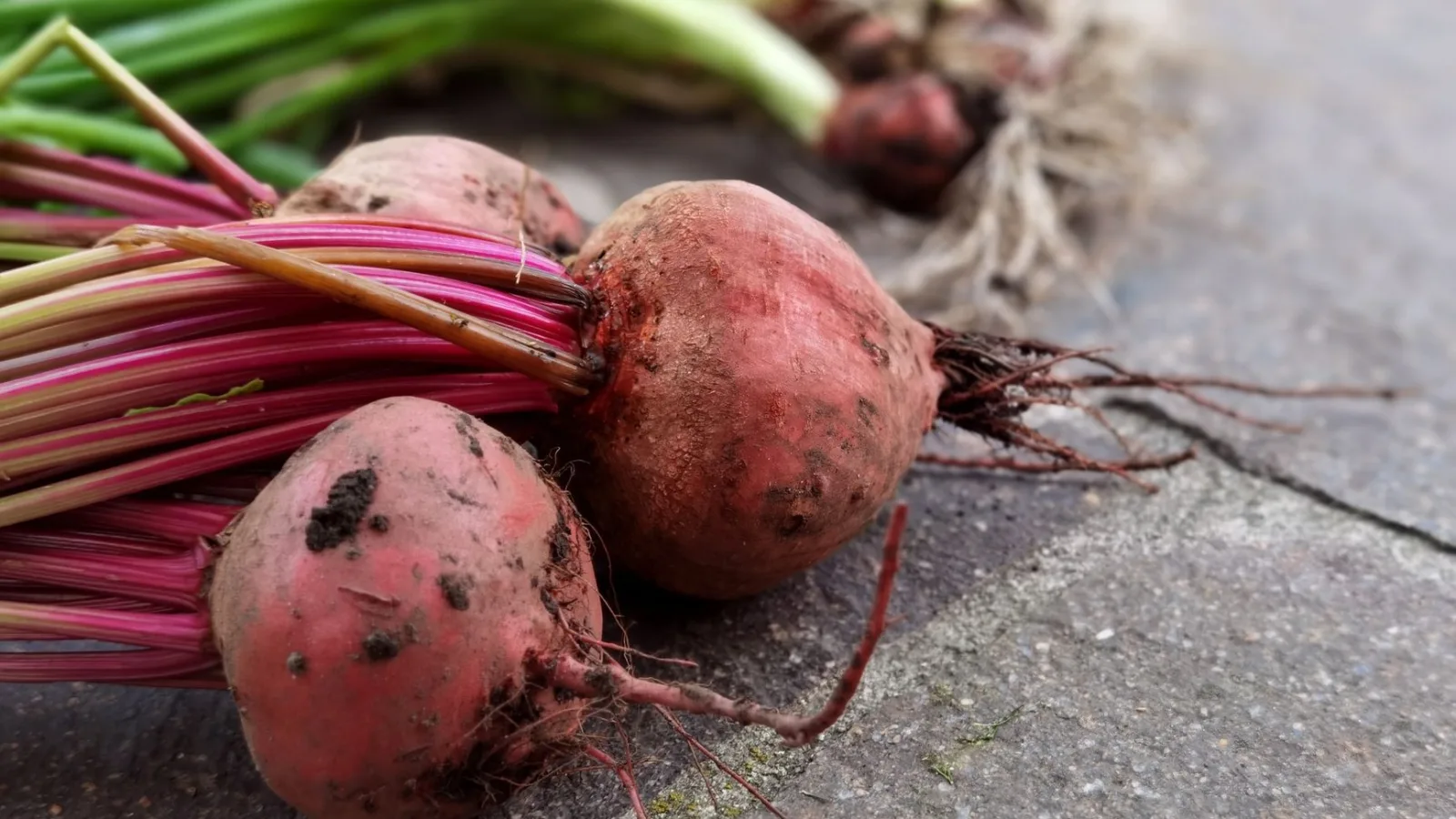
Pull a beet from the garden in July and what lands in your hand is a heavy, dirt-caked root. You trim the leaves, rinse it off, set it on the cutting board, and the moment you halve it, red bleeds across the wood. The color is what you notice first — but the compound gathered in both the root and the leaves is nitrate. And nitrate is at the center of an unusual research finding: people who chewed gum after eating nitrate-rich vegetables saw their blood pressure dip a little further, at least for a while.
How nitrate in vegetables connects to blood pressure
Beets, spinach, arugula, lettuce, and chard all carry relatively high levels of nitrate. Nitrate itself doesn't widen your blood vessels. Some of what you eat travels through the bloodstream back to your salivary glands, mixes into your saliva again, and bacteria living at the back of your tongue convert it into nitrite. When that nitrite is swallowed and turns into nitric oxide in the stomach and bloodstream, the muscle in your vessel walls relaxes and blood pressure eases down a bit.
Clinical studies have repeatedly reported systolic blood pressure dropping by about 4 mmHg for several hours after drinking beet juice. The chain linking vegetable nitrate to blood pressure is reasonably well supported. Work the other direction and the effect fades: when the bacteria in your mouth are knocked back, so is the response. Researchers have observed that nitrite barely rises after rinsing with an antibacterial mouthwash.
Chewing gum means more saliva
In one clinical study, participants ate nitrate-rich vegetables or drank beet juice and then chewed sugared gum. In the gum group, nitrite rose higher in both saliva and blood, and blood pressure dipped a little further for a stretch. The likely explanation: chewing increases the volume of saliva, and the sugar in the gum feeds the bacteria in the mouth, making the conversion of nitrate into nitrite more active.
That said, chewing sugared gum every day is hard on your teeth and your blood sugar. The researchers themselves were interested in finding a way to get the same result without leaning on sugar. Whether sugar-free or xylitol gum produces the same shift isn't something anyone can say for certain yet. Within what's known today, you're better off eating vegetables consistently and not over-sanitizing your mouth than you are stocking up on gum.
Getting there with what's in your garden
Nitrate dissolves readily in water. Boil beets for a long time and the compound leaches out into the cooking liquid — so try roasting them skin-on, or drink the cooking liquid along with the beets.
- Roast beet roots whole and unpeeled at 200°C, or blend them fine and drink them as juice.
- Don't toss the leaves you trimmed off — blanch them briefly and dress them namul-style, as a simple Korean seasoned-greens side. They carry more nitrate than the root does.
- On a day without beets, a plate of spinach, arugula, or lettuce alongside your meal gets you to a similar place.
- If you've got garden work or a workout ahead, try eating two to three hours beforehand. That's roughly when nitrite in the blood peaks.
- Hold off on the antibacterial mouthwash after a meal and rinse with water instead.
If you take blood pressure medication or have reduced kidney function, talk with your doctor before making beet juice a daily habit. The blood pressure change you get from vegetables lasts only a few hours, and it's no substitute for medication.
Tonight, try roasting a single beet skin-on and putting the leaves on the plate too. If you want gum for dessert, reach for sugar-free. After the meal, a rinse with plain water is all you need.
Reference — a clinical study on dietary nitrate, gum chewing, and blood pressure