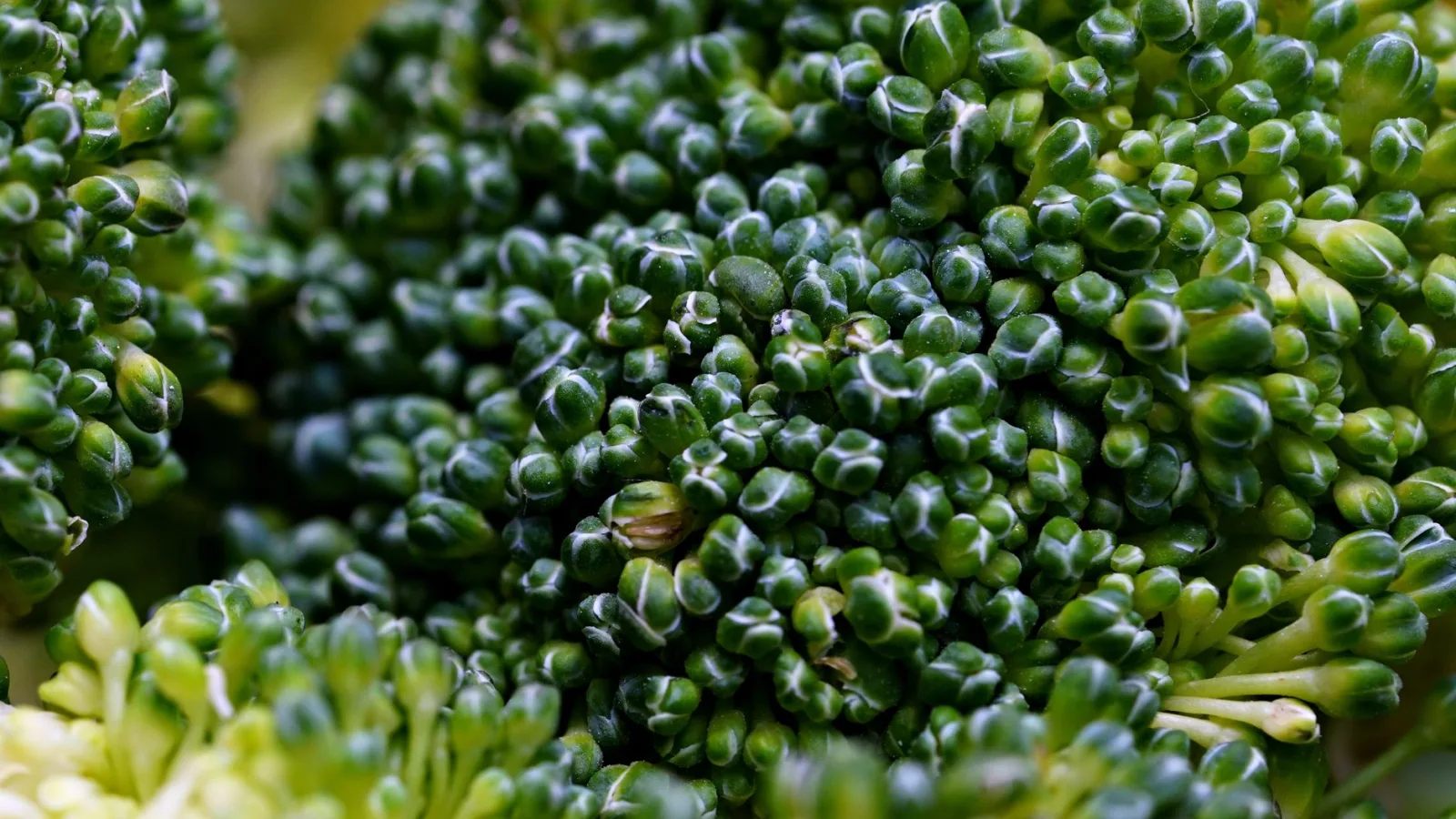
Broccoli cut just three days ago will already be trading its green crowns for yellow. On days when I bring in several heads at once from the garden, there's more than I can blanch and sauté, so whatever's left goes into the blender and gets drunk as juice. But even with the same broccoli, how you apply heat changes how much of the good stuff actually makes it into the glass.
What Cooks Off
Broccoli juice carries polyphenols, chlorophyll, and vitamin C together in one glass, and all three are fragile in heat. Pasteurize the juice hot enough to keep it drinkable for a while and the microbes drop — but so do the polyphenols and the vitamin C. The green goes dull along with them. It's one reason store-bought vegetable juice looks paler and tastes flatter than a glass blended straight from the garden.
Skipping the heat step isn't an option, though. So food-processing researchers have spent years looking for ways to knock microbes down while keeping the temperature low.
Seven Minutes at 40°C, With a Vibration Added
In 2026, a food-processing team applied a treatment called thermosonication to broccoli juice. Thermosonication warms the juice gently while running ultrasonic vibrations through it. Those vibrations spawn microscopic bubbles in the liquid and then collapse them, and the force of the collapse tears open cell walls, freeing compounds that were locked inside to spill out into the juice.
Working through combinations of temperature, time, and vibration intensity, the researchers landed on a best setting of 40°C (104°F) for about seven minutes. Juice treated that way retained noticeably more polyphenols than juice run through ordinary pasteurization, and it scored higher on the standard measures of antioxidant activity. The two compounds that showed up in the greatest quantity were gallic acid and naringin — naringin being the bitter compound you also find in citrus peel.
What Survives Digestion
A juice being rich in something doesn't mean your body takes in that much of it. A good share of it breaks apart on the way through stomach acid and digestive enzymes. So the researchers fed both juices into a benchtop rig that mimics the conditions of the human stomach and intestine, then measured what was still there at the end. About 30% of the polyphenols survived in the thermosonicated juice, compared with about 26% in the conventionally pasteurized batch. Chlorophyll and vitamin C also held up better on the thermosonication side.
That said, this was digestion simulated in a test tube. Whether a person actually absorbs more after drinking the stuff hasn't been established yet. For now, the confirmed finding stops at this: process it at a lower temperature and less of it breaks down.
What to Try in Your Kitchen Tonight
Nobody is installing ultrasonic processing equipment in a home kitchen. And the ultrasonic cleaners sold for eyeglasses and metal parts aren't food-grade, so don't go dunking one in your juice. What you can do instead is change how you cook — put in less heat, and give the compounds less water to escape into.
- Keep blanching under 3 minutes. Leave broccoli in boiling water any longer and the polyphenols and vitamin C leach out into the pot.
- Try steaming for about 5 minutes instead of blanching. Less surface in contact with water means less loss.
- Don't pour out the blanching water — use it in a soup or a rice porridge.
- Drink juice right after you blend it. Left sitting, it meets the air, yellows, and loses vitamin C.
- Throw in the stems, too, peeled thin. They carry just as much as the florets do.
For a fall harvest, broccoli seedlings generally need to go in the ground sometime in August. Clear a strip of bed now and you'll have heads of your own to test all this on once the weather turns cool.
Tonight, skip the long soak in boiling water and give your broccoli 5 minutes in the steamer instead.
Source — a study on thermosonication of broccoli juice, published in Frontiers in Nutrition