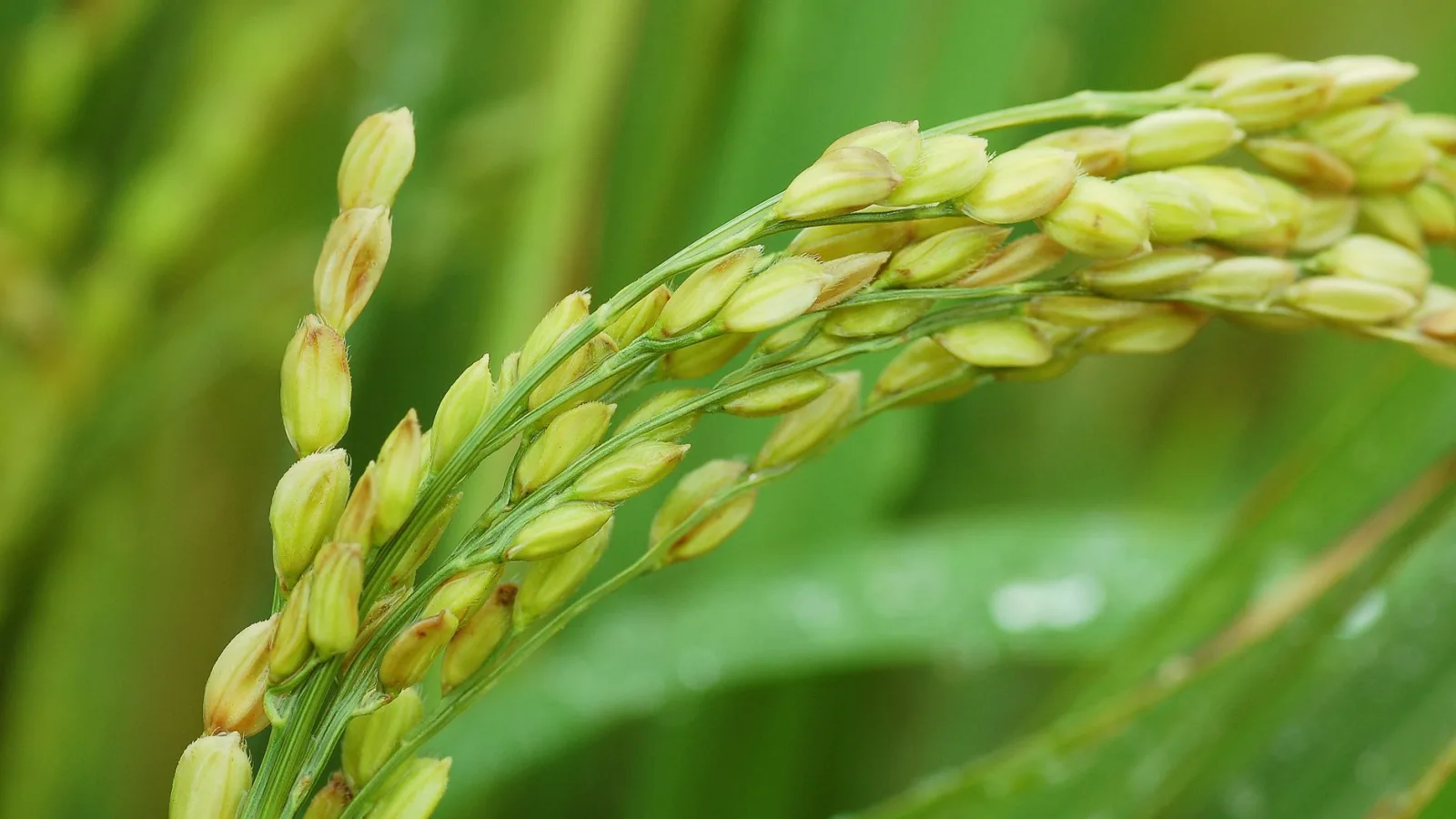
After a summer standing in flooded paddies, rice plants are filling out their grain heads. The white rice that ends up in the bowl looks clean enough, but if the paddy soil is contaminated with heavy metals, the plant takes up a little cadmium or arsenic and leaves it behind in the grain. That goes straight to the food we eat every day. Looking for a way to reduce those amounts, one research team turned its attention to a trace element called selenium. Our own bodies need a tiny amount of it — but out in the paddy, it changed the neighborhood around the rice roots.
What Selenium Reduced
The researchers added selenium to paddy soil contaminated with several heavy metals, using two different methods: mixing it into the soil like a fertilizer, and spraying a dilute solution onto the leaves. They then grew the rice in greenhouse pots for more than three months and compared it with rice that got no selenium.
In the plants treated through the soil, cadmium in the grain dropped by more than half. Arsenic, lead, and nickel fell as well. The foliar spray lowered the metals too, but less effectively than the soil treatment. Selenium itself did not destroy the heavy metals. What made the difference was a change around the roots that kept the metals from getting inside in the first place.
The Iron Plaque Roots Build
The change started inside the root. Selenium raised levels of auxin, a growth hormone, in the rice plant, and as auxin increased, the aerenchyma inside the roots expanded. Aerenchyma is the network of air spaces that carries oxygen taken in by the leaves all the way down to root tips submerged in water. As those spaces widened, the roots released more oxygen into the surrounding soil — and where roots release oxygen, a thin zone of oxygen-rich soil forms around them.
With more oxygen present, iron and manganese dissolved in the soil hardened into oxides on the root surface. The result was a thin, rust-red iron plaque coating the outside of the roots — and in this experiment, the amount of it increased more than fivefold. Cadmium and arsenic stuck to that plaque instead of moving into the root. This chain of events — from auxin to aerenchyma, then to oxygen and iron plaque — appears to be how selenium lowered the heavy metals.
What It Means for Your Garden
This study took place in rice paddies, but the underlying point — plants can only defend themselves when oxygen reaches their roots — applies just as well to a container garden. Water too often, and soil that stays permanently wet starves roots of oxygen and weakens them. Use a mix that drains well, and check that water isn't pooling in the bottom of the pot. Even for crops that don't grow submerged the way rice does, roots need room for air.
Selenium is a trace element our bodies need, but too much of it does more harm than good. So it's not something to scatter over your garden soil on your own. Get it at the table instead — plenty of everyday foods already supply it.
- Brown rice and oats
- Garlic and onions
- Brazil nuts
Today, start by checking the drainage in your pots and beds. Plants can only protect themselves when oxygen reaches their roots.
Source: A 2026 study on selenium and heavy metals in rice, published in the international journal Environmental Science & Technology.