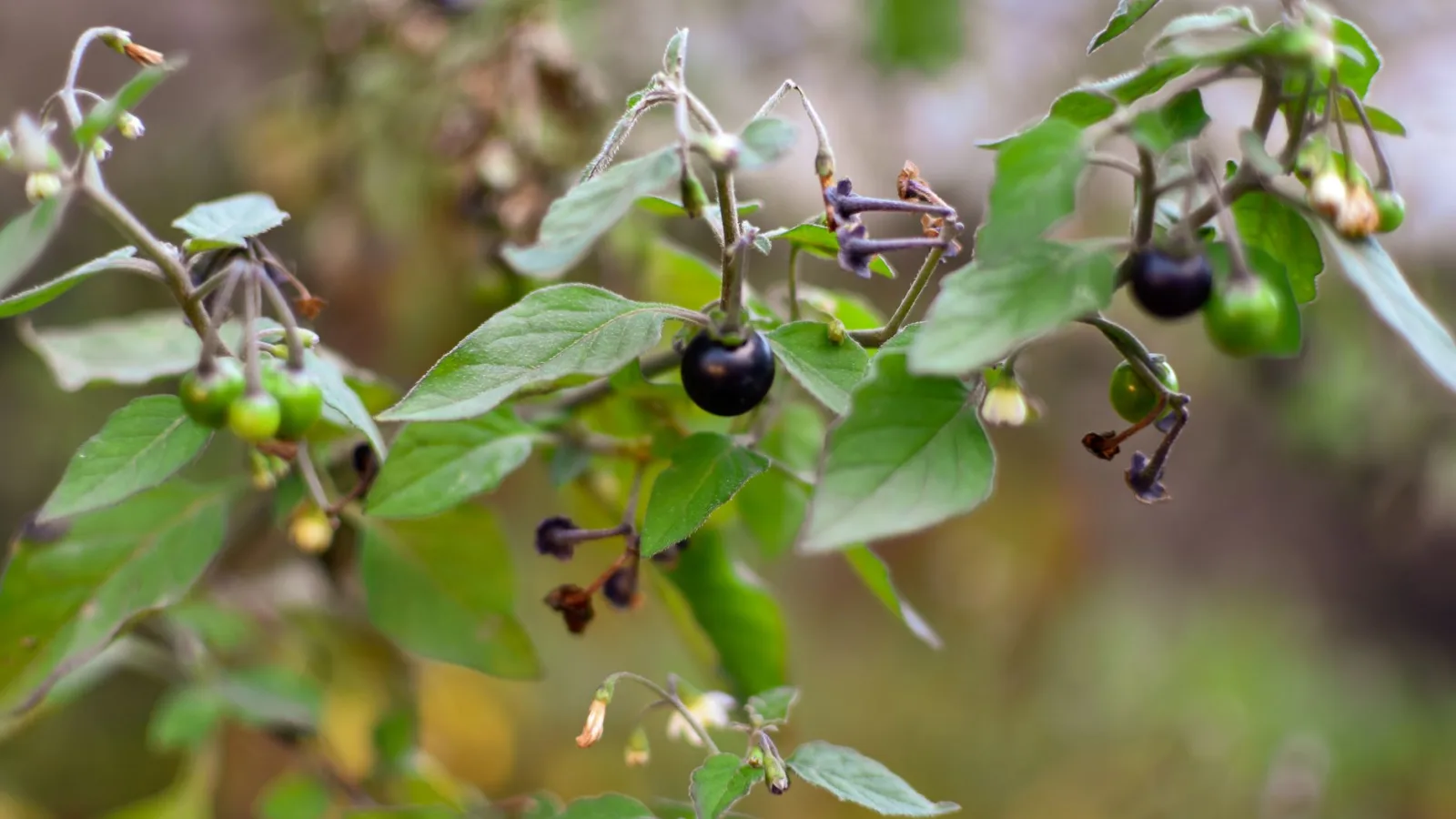
In August, along the edge of the garden — at the end of a pepper row, or tucked against the wall — a knee-high plant stands quietly. The leaves are rounded, and wherever a small white flower has dropped, a berry has set: some still green, some jet black. This is kkamajung, black nightshade. It comes up where nobody planted it, and once it has grown in a spot, the seed it drops brings it back the next year. In the Northern Hemisphere, August is when the fruit comes in.
Sowing — April to May in the Northern Hemisphere, in sunny soil
Black nightshade is an annual, and you start it from seed. In the Northern Hemisphere, sow in April or May. It isn't fussy about soil, so it will come up in the dirt at the corner of a bed or in ordinary potting mix. The seeds are tiny, and buried deep they never make it to the surface. Scatter them on top of the soil, press gently with your palm, and cover with the thinnest possible layer. It grows between 12 and 35°C (54–95°F) and does best at 20 to 30°C (68–86°F). If spring mornings are still cold, the seedlings will be slow to appear — better to wait a few days for the soil to warm.
Care — plenty of sun, and finish before frost
This is a plant of sunny open ground, so it makes few demands about water or soil. There's little to do for it, which makes it an easy place for a first-time gardener to start. It is tender, though. The first frost kills that year's plants outright, so anything you want has to come off the plant before frost arrives. Even after the plants die back, the seed they dropped brings up new ones the following spring. It grows wild in China, India, and Korea, and ranges widely from temperate zones into the tropics.
Harvest — young shoots in May and June, berries in August and September
Cut the young shoots that come up in spring in May and June and use them as namul (blanched greens, dressed and served as a side dish). The berries are picked in August and September. Take only the berries that have turned completely black, and leave anything with green still on it on the plant. Give it a few days and it will darken. They don't all ripen at once, so you'll end up picking two or three times, about a week apart.
What the Color Tells You — Glycoalkaloids and Anthocyanins
Black nightshade and its relatives in the genus Solanum contain steroidal glycoalkaloids such as solamargine and solasonine. Levels run highest in the leaves and in unripe green berries, and they drop as the fruit ripens to black. In fully black berries, anthocyanin pigments and polyphenols have been identified. The color tells you plainly how far along the fruit is. This is a note about the compounds in the plant, not about preventing or treating illness.
Prep and Eating — Blanch, Then Rinse
The Donguibogam (a Korean medical text from 1613) lists the plant in its vegetables section under the name 龍葵 (yonggyu), and records the Korean name as "gamajoi." The book describes it as cold in nature, bitter in taste, and free of toxicity — and then attaches a qualifier: it is fit to eat boiled, but not suitable raw. That is the record of an old medical text, and not the judgment of modern medicine. Even so, the passage lines up with what compound analysis shows today, because some of the glycoalkaloids leach out into the blanching water.
So blanch the young shoots in boiling water and rinse them in cold water before using them. Don't wring them out hard; shake off the water lightly instead, or the leaves will clump together. There are two ways to dress them.
- Dress with doenjang (fermented soybean paste) and finish with a drizzle of perilla oil. The salt and the oil's aroma soften the bitter finish. Add garlic, finely minced, and only a little.
- Or dress lightly with soy sauce and nothing more than toasted, crushed sesame seeds. The flavor of the greens themselves comes through more clearly this way. Eat it the same day you dress it.
Ripe black berries are simply rinsed and eaten by the handful. They're only faintly sweet and the seeds are tiny, so they're better eaten whole than blended into a drink. Sort out anything still showing green.
Go out to the garden today and look at the nightshade first. Take a handful of the black berries, leave the green ones where they are, and come back next week.
Sources: Donguibogam, vegetables section, 龍葵 · Korea National Arboretum, Korea Biodiversity Information System