
Tangaek — Decoctions · Grains
藊豆 Hyacinth Bean
 Related Crop · Hyacinth Bean →
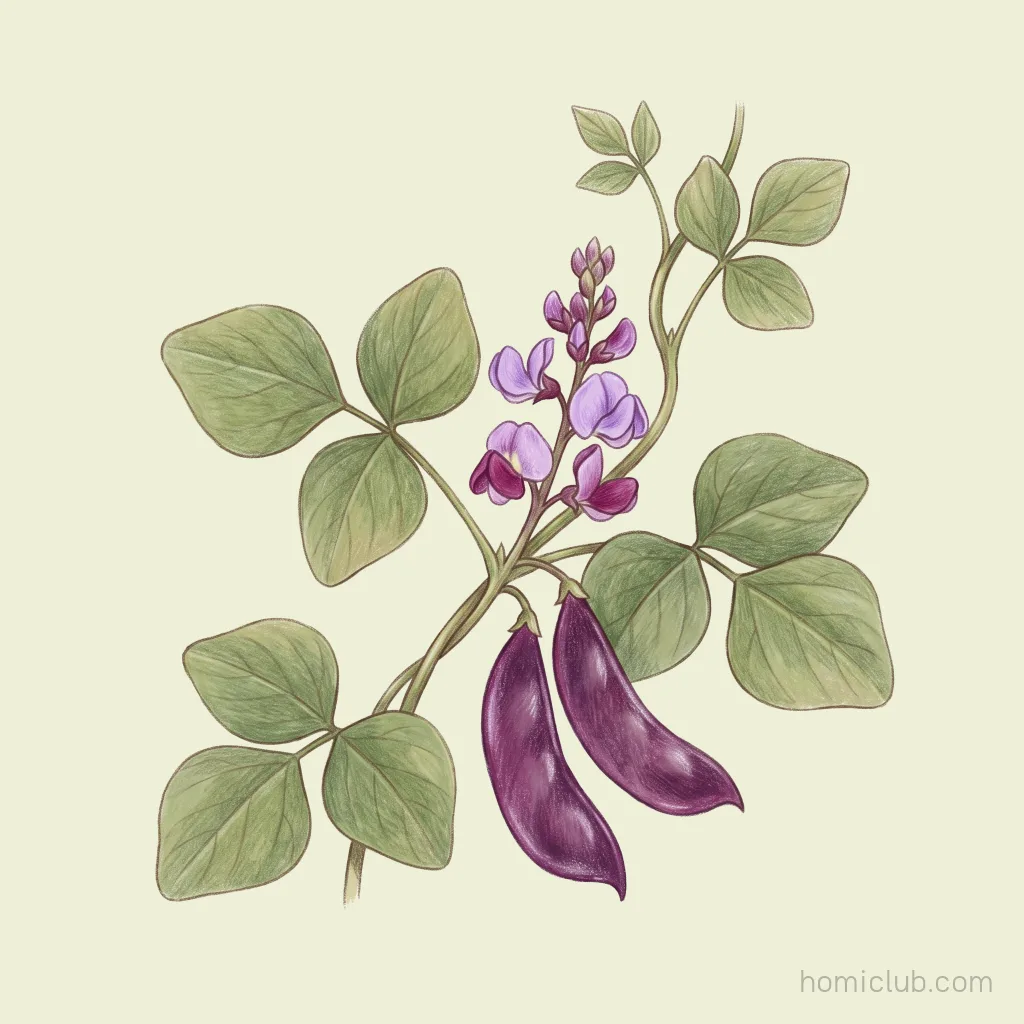
Byeondu-kong is the pod and seed of a climbing legume, known today as pyeondu or hyacinth bean. A white seam across the dark seed reminded people of a magpie, hence the alternate name jakdu, 'magpie bean'. It is the same bean as the pyeondu in the crop guide, and the Donguibogam lists it in the grain section, also as baekpyeondu.
Original, read line by line 東醫寶鑑 · Tangaek — Decoctions vol. 1
-
性微溫一云微寒, 一云平, 味甘, 無毒.
Its nature is slightly warm, though one account calls it slightly cold and another neutral; its taste is sweet, and it is non-toxic.
HomiclubByeondu-kong is the seed of a leguminous vine known today as pyeondu or kkachi-kong. It bears white or purple flowers in summer and flat, broad pods, and in the West it is called the hyacinth or lablab bean.
-
主和中下氣. 療霍亂吐利不止, 轉筋. 《本草》
It governs harmonizing the middle and sending qi downward. It treats unceasing vomiting and diarrhoea from gwallan (霍亂) and cramping of the sinews. 《Boncho (本草)》
-
其實有黑白二種, 白者溫而黑者小冷, 入藥當用白者. 《本草》
Its seed comes in black and white kinds; the white is warm and the black slightly cold, so the white should be used in medicine. 《Boncho (本草)》
-
亦名鵲豆, 以其黑, 間而有白道, 如鵲也. 《本草》
It is also named jakdu (鵲豆, magpie bean), because a white line runs through the black as in a magpie's markings. 《Boncho (本草)》
HomiclubA raised white ridge along one side of the seed is the mark that identifies this bean. The Korean name kkachi-kong, magpie bean, comes from the same marking.
-
解一切草木毒及酒毒, 亦解河㹠毒. 《本草》
It resolves every plant toxin and alcohol toxin, and also the toxin of hadon (河㹠, pufferfish). 《Boncho (本草)》
-
凡使去皮, 生薑汁拌, 炒用. 《入門》
Whenever it is used, remove the skin, mix it with ginger juice, and roast it. 《Immun (入門)》
-
患寒熱者, 不可食. 《本草》
One suffering from alternating chills and fever must not eat it. 《Boncho (本草)》
-
卽白扁豆也. 《本草》
It is baekpyeondu (白扁豆, white lablab bean). 《Boncho (本草)》
Related Crop
Hyacinth Bean →
Reading on Hyacinth Bean
Grains — more entries
This is a cultural and historical record from a classical text, not a claim about any food’s effects. Nothing here is a health supplement or intended to prevent or treat disease. Consult a medical professional about health concerns. · Text: Korean Medicine Classics DB · Reading: Homiclub