
Tangaek — Decoctions · Grains
花 Hwa (화)
The flower of the red bean, better known as the adzuki bean. In the Dongui Bogam, this entry appears in the Grains section (gokbu, 穀部) as a sub-entry attached to the adzuki bean itself (jeoksodu, 赤小豆), and the original text also records an alternate name for the flower: bubi (腐婢). The text preserves a note on preparation as well: the flowers are picked in the seventh month of the traditional lunar calendar and dried in the shade — a gentle drying method traditionally used for delicate plant parts — before use.
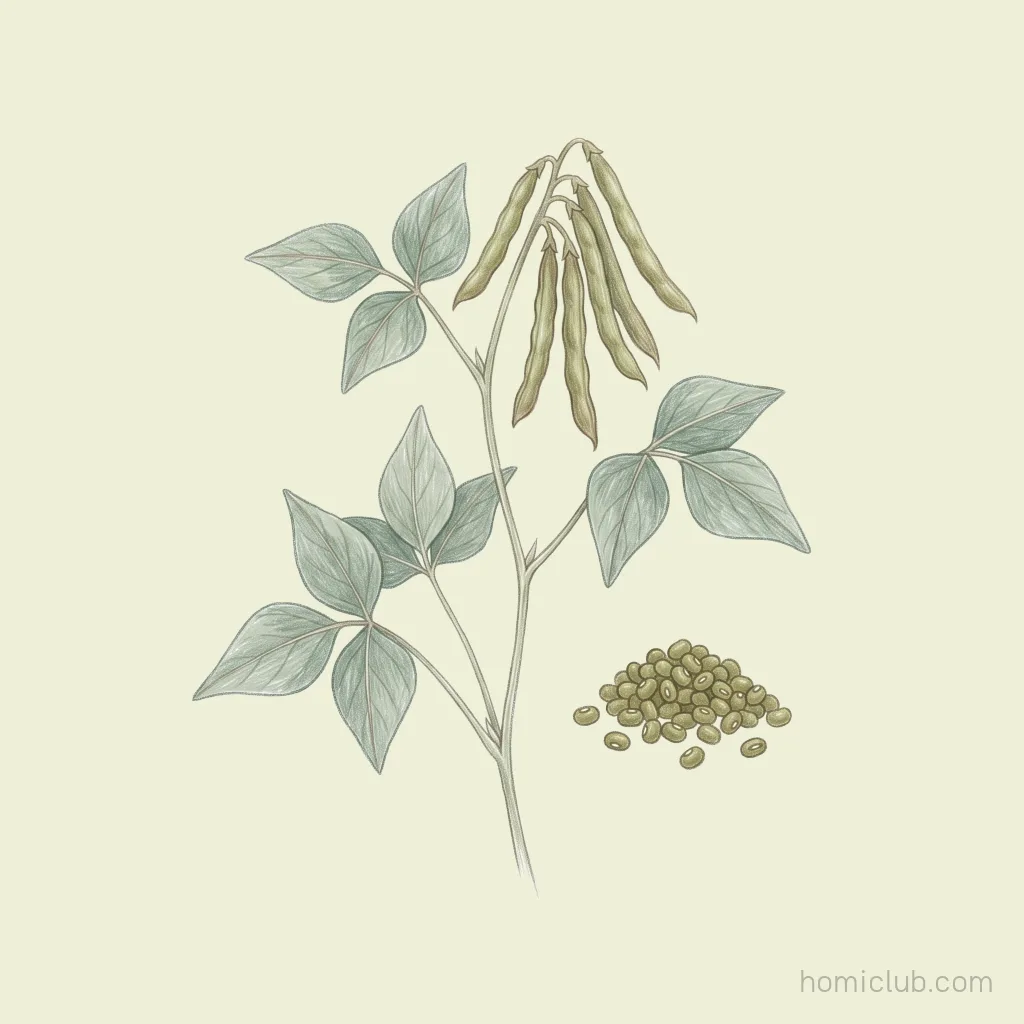
The adzuki flower itself is a small, yellow, butterfly-shaped blossom that blooms in summer. On a single plant, the flowers open one after another over the course of several days.
Original, read line by line 東醫寶鑑 · Tangaek — Decoctions vol. 1
-
性平, 味辛, 無毒. 治宿酒渴病. 《本草》
Its nature is neutral, its taste pungent, and it is non-toxic. It treats the thirst disorder left by stale wine. 《Boncho (本草)》
HomiclubThe adzuki flower is small, yellow, and butterfly-shaped, opening in summer. A single plant blooms in succession over several days, so flowers and pods appear on it at the same time.
-
止消渴, 病酒頭痛, 能消酒毒, 主酒病爲良. 《本草》
It stops sogal (消渴, wasting thirst), serves for headache from drinking, can dissolve the toxicity of wine, and is good for governing disorders caused by wine. 《Boncho (本草)》
-
一名腐婢, 卽赤小豆花也. 七月採, 陰乾用. 《本草》
It is also called bubi (腐婢), that is, the flower of jeoksodu. Gather it in the seventh month and dry it in the shade for use. 《Boncho (本草)》
Grains — more entries
This is a cultural and historical record from a classical text, not a claim about any food’s effects. Nothing here is a health supplement or intended to prevent or treat disease. Consult a medical professional about health concerns. · Text: Korean Medicine Classics DB · Reading: Homiclub