
탕액편 · 초부 (풀)
鱧腸 한련초 (예장)
 관련 작물 · 한련초 →
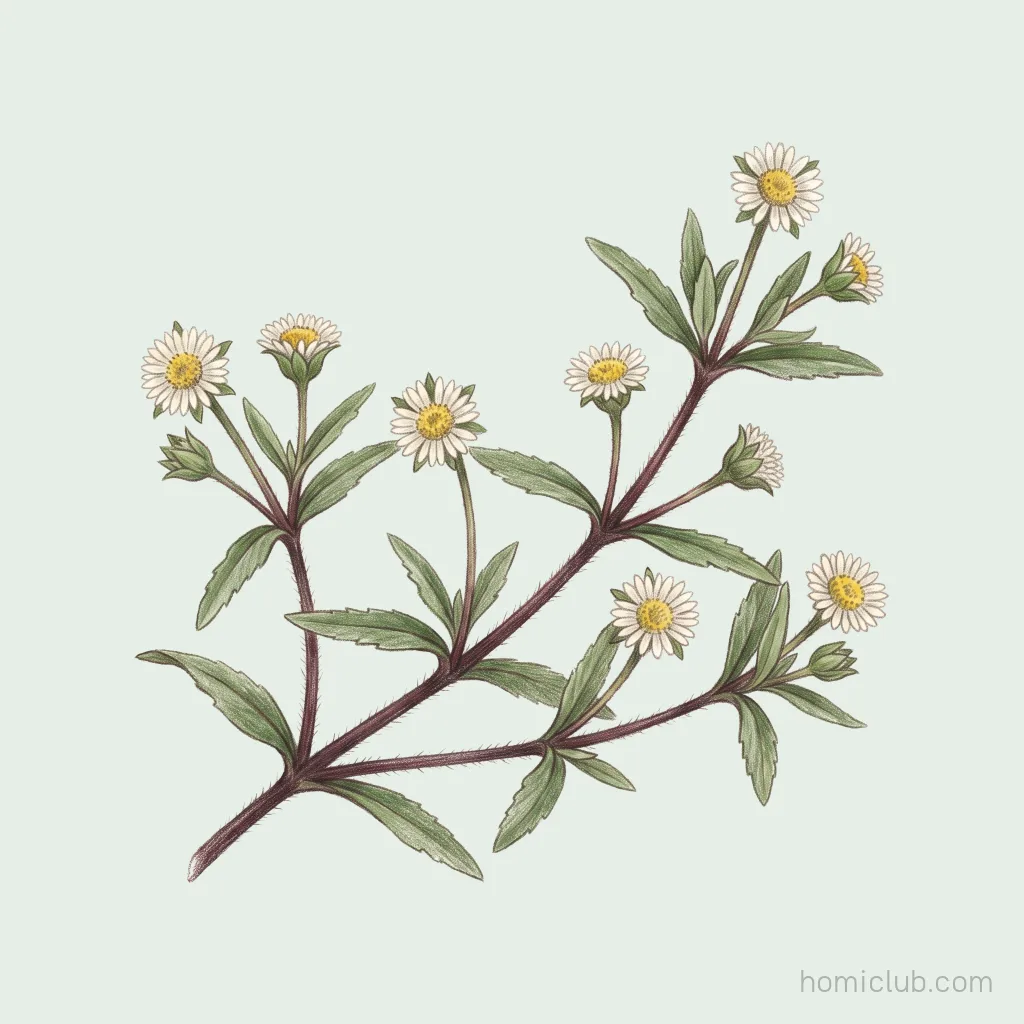
예장은 한련초다. 논둑과 물가에 흔한 국화과 한해살이풀로, 싹을 뜯으면 나오는 즙이 잠깐 사이에 검게 변한다. 그래서 검은 물을 들이는 데 썼고, 연자초·한련자라는 딴 이름으로도 불렀다.
원문 풀이 東醫寶鑑 · 탕액편 권3
-
性平, 味甘酸, 無毒.
성평, 미감산, 무독.
성질이 평하고 맛은 달고 시며 독이 없습니다.
-
主血痢, 鍼灸瘡發, 洪血不可止者.
주혈리, 침구창발, 홍혈불가지자.
혈리와, 침이나 뜸을 뜬 자리가 헐어 피가 몹시 나면서 멎지 않는 것을 주로 다스립니다.
-
長鬚髮, 付一切瘡.
장수발, 부일체창.
수염과 머리털을 자라게 하고, 온갖 헌데에 붙입니다.
-
處處有之, 卽蓮子草也.
처처유지, 즉연자초야.
곳곳에 있으니, 곧 연자초입니다.
호미클럽 풀이논둑과 축축한 밭가에 흔한 국화과 한해살이풀로, 작고 흰 꽃이 핍니다.
-
俗謂之旱蓮子.
속위지한련자.
민간에서는 한련자라 부릅니다.
-
三月八月採, 陰乾.
삼월팔월채, 음건.
삼월과 팔월에 캐어 그늘에서 말립니다.
-
實若小蓮房.
실약소연방.
열매는 작은 연밥송이 같습니다.
-
摘其苗皆有汁出, 須臾而黑.
적기묘개유즙출, 수유이흑.
그 싹을 뜯으면 모두 즙이 나오는데, 잠깐 사이에 검어집니다.
호미클럽 풀이자른 자리에서 나온 즙이 공기에 닿아 금세 검어집니다. 먹처럼 검다 하여 묵한련이라는 이름이 붙었습니다.
-
故多入烏鬚髮藥. 《本草》
고다입오수발약. 《본초》
그러므로 수염과 머리털을 검게 하는 약에 많이 넣습니다. 《본초》
관련 작물
한련초 →
한련초 이야기
초부 (풀) 의 다른 항목
옛 문헌을 문화·역사 자료로 옮긴 것이며, 특정 식품의 효능을 주장하지 않습니다. 여기 소개된 것은 건강기능식품이 아니고 질병의 예방·치료를 위한 것이 아닙니다. 건강 문제는 의료 전문가와 상담하세요. · 동의보감(자체 풀이)