
Tangaek — Decoctions · Grains
黍米 Proso Millet
 Related Crop · Proso Millet →
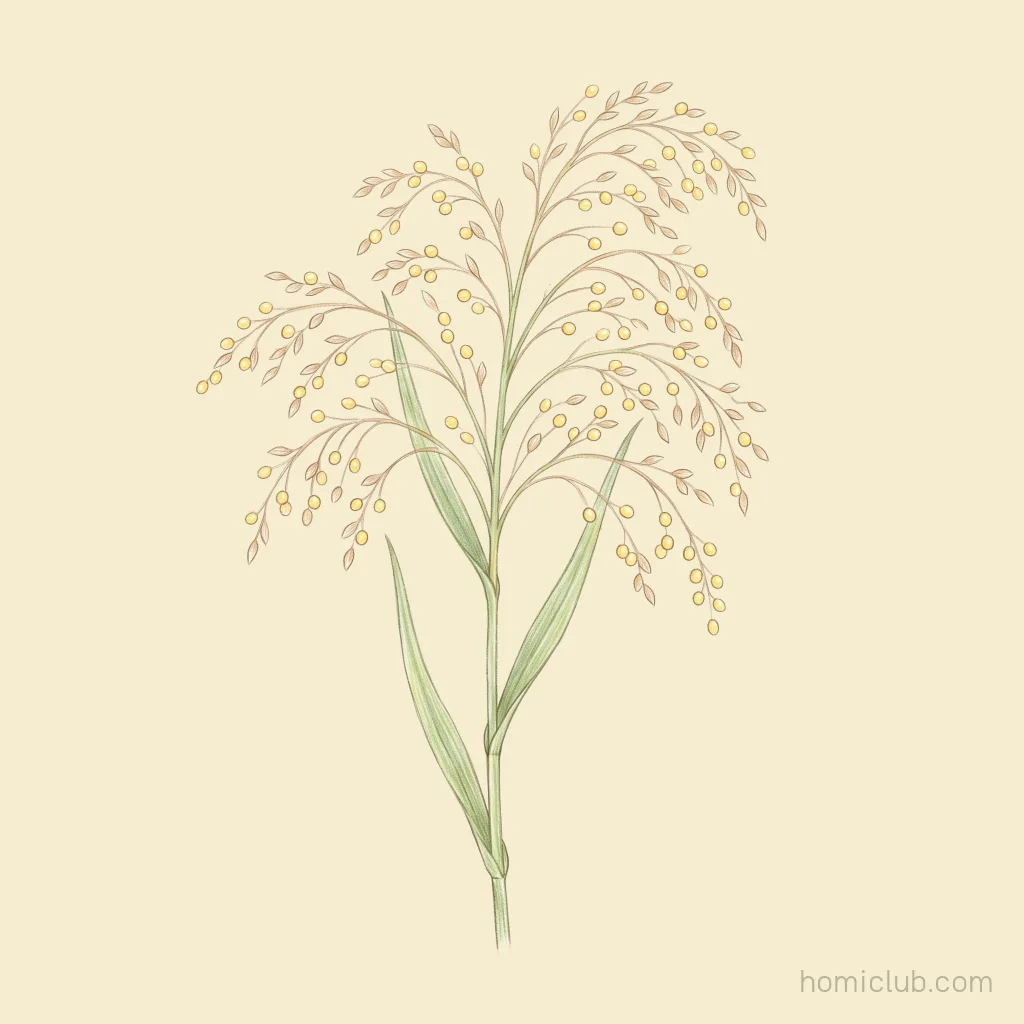
Seomi is hulled proso millet, the same grain as the millet in the crop guide. It resembles foxtail millet but belongs to a different group, and comes in red, black and other shades. The glutinous form, chul, went to the brewing vat; the non-glutinous form was eaten as grain.
Original, read line by line 東醫寶鑑 · Tangaek — Decoctions vol. 1
-
性溫, 味甘, 無毒. 益氣補中. 不可久食, 令人多熱煩. 《本草》
Its nature is warm, its taste sweet, and it is non-toxic. It augments qi and supplements the centre. It should not be eaten long, for it makes a person hot and vexed. 《Boncho (本草)》
HomiclubSeomi is the milled grain of proso millet. It resembles foxtail millet but is a different cereal; its panicle droops like a rice head and its grains are larger, which tells it apart in the field.
-
有小毒, 不堪久服, 昏五藏, 令人多睡. 《本草》
It is slightly toxic and cannot be taken long, for it clouds the five jang and makes a person sleep much. 《Boncho (本草)》
-
似粟而非粟, 穀之類也. 有丹赤黑三種, 肺之穀也, 肺病宜食之. 《入門》
It resembles sok but is not sok, being of the grain kind. There are three sorts, dan (丹), jeok (赤), and heuk (黑); it is the grain of the pye (肺, lung), so when the lung is ill it is fitting to eat it. 《Ipmun (入門)》
Related Crop
Proso Millet →
Grains — more entries
This is a cultural and historical record from a classical text, not a claim about any food’s effects. Nothing here is a health supplement or intended to prevent or treat disease. Consult a medical professional about health concerns. · Text: Korean Medicine Classics DB · Reading: Homiclub