
Tangaek — Decoctions · Grains
麻子 Hemp
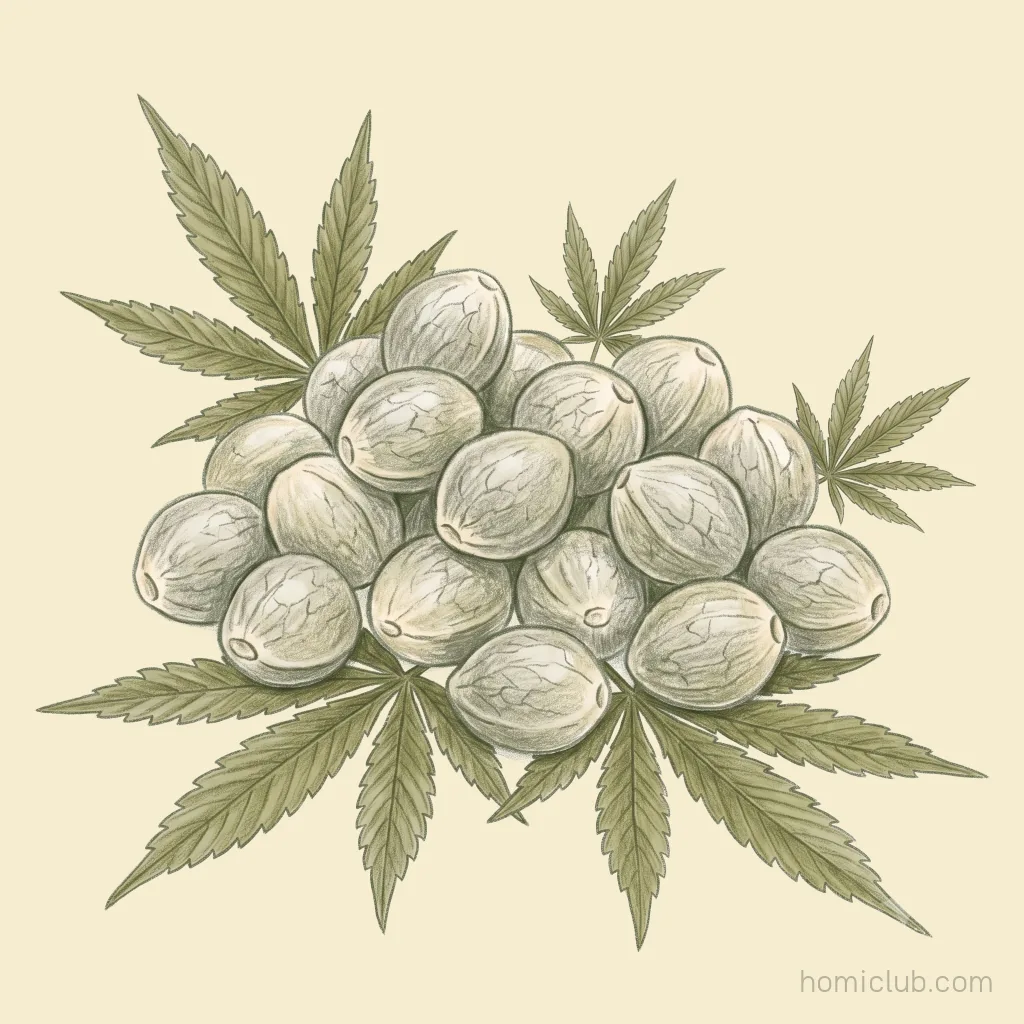 Related Crop · Hemp →
Maja is hemp seed, commonly called main and written in old Korean as samssi. The husk is stubborn: the seed was soaked two or three days until it split, sun-dried, then rubbed on a roof tile so whole kernels could be winnowed out. Hemp cultivation in Korea is licensed today.
Original, read line by line 東醫寶鑑 · Tangaek — Decoctions vol. 1
-
性平一云寒, 味甘, 無毒. 補虛勞, 潤五藏, 疏風氣.
Its nature is neutral, though one account calls it cold; its taste is sweet and it is non-toxic. It supplements heoro (虛勞, taxation depletion), moistens the five jang (五藏), and disperses punggi (風氣, wind qi).
HomiclubMaja is the seed of hemp, also called main. Hemp was the fibre crop behind linen cloth, cord, and plaited sandals; in Korea it is a controlled substance and cannot be grown without a licence.
-
治大腸風熱結澁, 利小便, 療熱淋, 通利大小便. 不宜多食, 滑精氣, 痿陽氣. 《本草》
It treats wind-heat bound and astringent in the large intestine, promotes urination, relieves yeollim (熱淋, heat strangury), and frees the passage of stool and urine. It should not be eaten in quantity, for it makes the jeonggi (精氣, essence qi) leak and withers the yanggi (陽氣, yang qi). 《Boncho (本草)》
-
早春種爲春麻子, 小而有毒. 晩春種爲秋麻子, 入藥佳. 《本草》
Sown in early spring it becomes chunmaja (春麻子, spring hemp seed), which is small and toxic. Sown in late spring it becomes chumaja (秋麻子, autumn hemp seed), which is good to put into medicine. 《Boncho (本草)》
-
入足太陰ㆍ手陽明經. 《入門》
It enters the foot taeeum and hand yangmyeong channels. 《Ipmun (入門)》
-
汗多ㆍ胃熱ㆍ便難三者, 皆燥濕而亡津液. 仲景以麻仁潤足太陰之燥, 乃通腸也. 《湯液》
Profuse sweating, stomach heat, and difficult stool — these three all dry the damp and so exhaust the jinaek (津液, fluids). Junggyeong (仲景, Zhang Zhongjing) used main to moisten the dryness of the foot taeeum, which is to say he freed the intestine. 《Tangaek (湯液)》
-
麻仁極難去殼. 水浸經三兩日, 令殼破, 暴乾, 新瓦上挼取仁用.
Main is exceedingly hard to hull. Soak it in water for two or three days until the husks split, dry it in the sun, then rub it on a new roof tile and take the kernels for use.
HomiclubThe hulling is done by rubbing the seed against the rough face of a roof tile. It follows the same principle as rubbing sesame or perilla between the palms to loosen the seed coat.
-
一云, 帛包, 浸沸湯中, 湯冷出之, 垂井中一夜, 勿令着水. 次日, 日中取出, 暴乾, 就瓦上挼去殼, 簸揚取仁, 粒粒皆完. 《本草》
One account says: wrap it in silk, steep it in boiling water, take it out when the water has cooled, and hang it in a well overnight without letting it touch the water. The next day take it out at midday, dry it in the sun, rub off the husks on a tile, and winnow to gather the kernels, and every grain will come out whole. 《Boncho (本草)》
Related Crop
Hemp →
Reading on Hemp
Grains — more entries
This is a cultural and historical record from a classical text, not a claim about any food’s effects. Nothing here is a health supplement or intended to prevent or treat disease. Consult a medical professional about health concerns. · Text: Korean Medicine Classics DB · Reading: Homiclub