
Tangaek — Decoctions · Grains
粳米 Rice
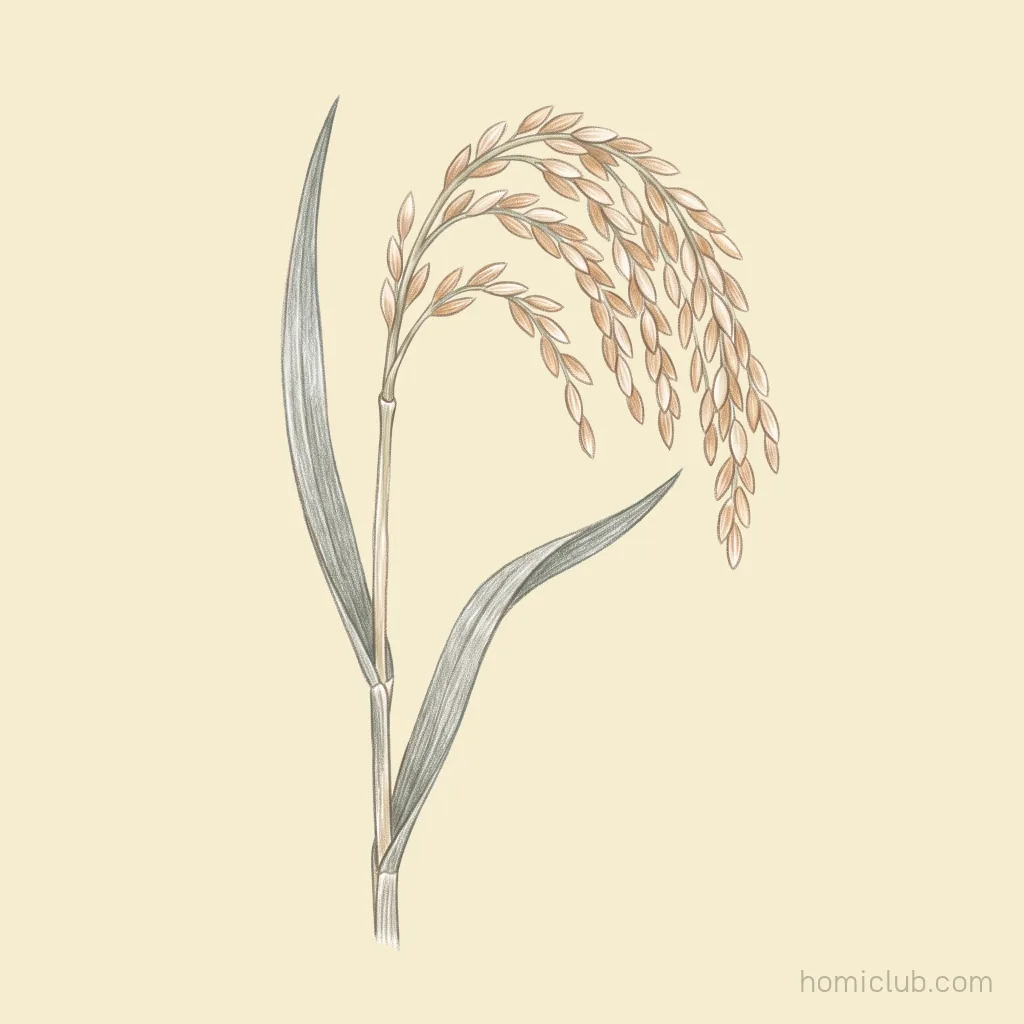 Related Crop · Rice →
Gaengmi is plain non-glutinous rice. The Donguibogam glossed it in Korean as 'good nissal' and explained the character gaeng as harder than glutinous rice. It is the grain of the rice plant in the crop guide, and the text rated late rice gathered after the first frost highest.
Original, read line by line 東醫寶鑑 · Tangaek — Decoctions vol. 1
-
性平, 味甘苦, 無毒. 平胃氣, 長肌肉, 溫中止痢, 益氣除煩. 《本草》
Its nature is neutral, its taste sweet and bitter, and it is non-toxic. It calms wigi (胃氣, stomach qi), builds flesh, warms the centre and stops dysentery, augments qi and removes vexation. 《Boncho (本草)》
HomiclubGaengmi is non-glutinous rice. The old Korean gloss reads "dyohan nissal," in which "nissal" is the word for non-glutinous rice, and it is the rice cooked for everyday meals.
-
粳, 硬也, 堅硬於糯米也. 入手太陰ㆍ少陰經. 氣精皆從米變化而生, 故字皆從米. 《入門》
Gaeng (粳) means hard, being firmer than nami (糯米, glutinous rice). It enters the hand taeeum and soeum channels. Both gi (氣) and jeong (精) arise through the transformation of rice, and so both characters take mi (米, rice) as their element. 《Ipmun (入門)》
HomiclubThe reading draws on the fact that both characters gi (氣) and jeong (精) contain the element mi (米), rice. Building meaning from the shape of a character is a habit of classical philology.
-
作飯及粥食之. 稍生則不益脾, 過熟則佳. 《本草》
It is eaten cooked as rice or as gruel. Slightly underdone it does not benefit the bi (脾, spleen); thoroughly cooked it is good. 《Boncho (本草)》
-
白晩米爲第一, 早熟米不及也. 《本草》
White late-ripening rice is first; early-ripening rice does not match it. 《Boncho (本草)》
-
卽晩米也, 霜後收者佳. 《日用》
That is, late rice, and what is harvested after the frost is good. 《Iryong (日用)》
Related Crop
Rice →
Reading on Rice
Grains — more entries
This is a cultural and historical record from a classical text, not a claim about any food’s effects. Nothing here is a health supplement or intended to prevent or treat disease. Consult a medical professional about health concerns. · Text: Korean Medicine Classics DB · Reading: Homiclub