
Tangaek — Decoctions · Grains
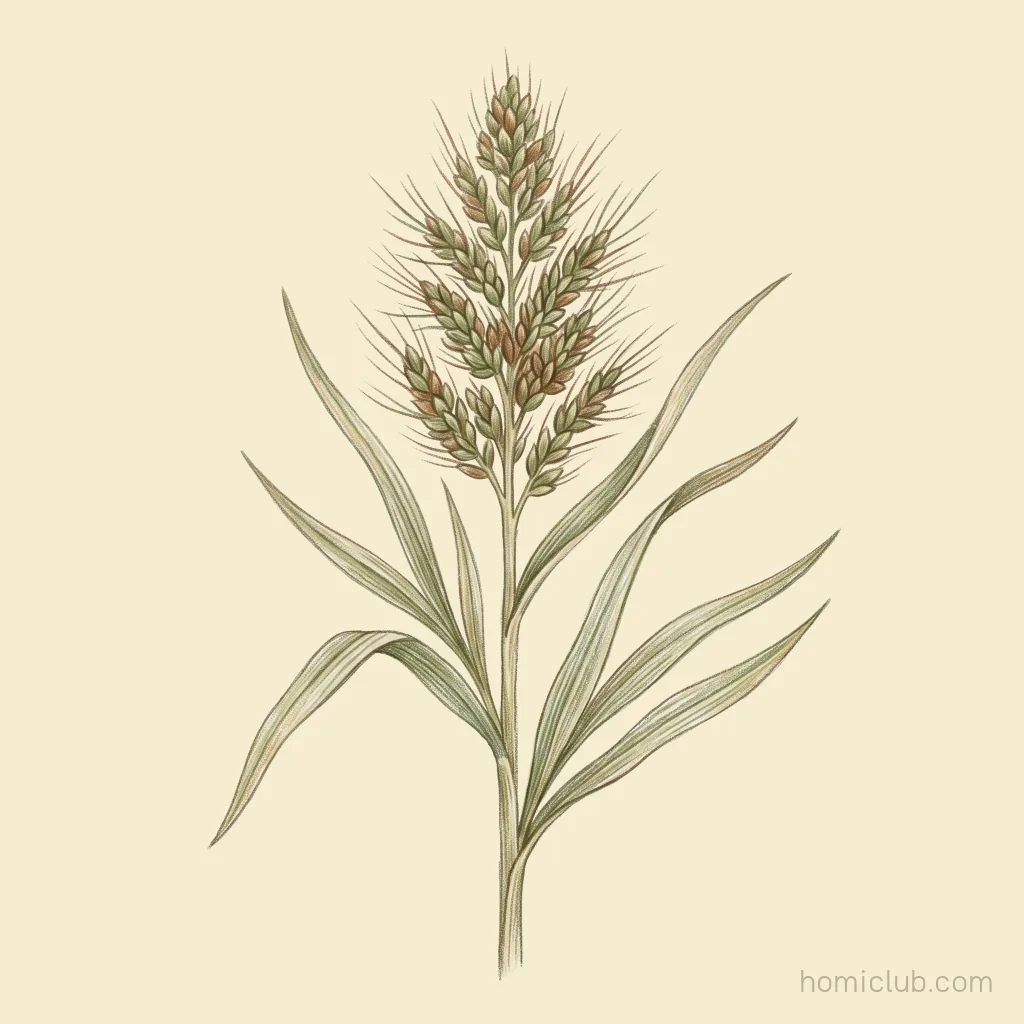
稷米 Japanese Millet
 Related Crop · Japanese Millet →
Jingmi is the grain of barnyard millet, glossed in the book with the Korean name 'pissal' and also called jemi. It is the same grain as the pi in the crop guide, sown as a famine crop because it endures dry ground, and today it survives mostly as one grain among many in mixed rice.
Original, read line by line 東醫寶鑑 · Tangaek — Decoctions vol. 1
-
性冷, 味甘, 無毒. 治熱, 益氣, 補不足. 《本草》
Its nature is cold, its taste sweet, and it is non-toxic. It treats heat, boosts qi, and supplements what is lacking. 《Boncho (本草)》
HomiclubJingmi is the grain of pi millet; the old Korean gloss writes it 'pissal'. It grows on dry, poor ground and was planted against years of famine; today it survives mainly as one grain among many in mixed-grain rice.
-
多食發冷氣, 八穀之中最爲下.
Eaten in quantity it rouses cold qi, and among the eight grains it ranks lowest.
-
八穀者, 黍, 稷, 稻, 粱, 禾, 麻, 菽, 麥也. 禾是粟苗, 麻是胡麻, 菽是大豆, 麥有大小穬麥, 此諸穀之限也. 《本草》
The eight grains are seo (黍), jik (稷), do (稻), ryang (粱), hwa (禾), ma (麻), suk (菽), and maek (麥). Hwa is the sprout of foxtail millet, ma is homa (胡麻, sesame), suk is the soybean, and maek includes large barley, wheat and gwangmaek (穬麥, naked barley); these are the bounds of the grains. 《Boncho (本草)》
-
稷乃穄之異名也. 稷亦穀之類, 似黍而小, 卽今之穄米. 又謂之粢, 爲五穀之長. 《入門》
Jik (稷) is another name for je (穄). Jik too is one of the grain kinds, resembling broomcorn millet but smaller — that is, the jemi (穄米) of today. It is also called ja (粢) and is reckoned the chief of the five grains. 《Ipmun (入門)》
-
稷米堪爲飯, 不粘着, 其味淡, 今謂之穄米. 《本草》
Jingmi will serve for cooked rice; it does not cling, its taste is bland, and it is now called jemi. 《Boncho (本草)》
Related Crop
Japanese Millet →
Grains — more entries
This is a cultural and historical record from a classical text, not a claim about any food’s effects. Nothing here is a health supplement or intended to prevent or treat disease. Consult a medical professional about health concerns. · Text: Korean Medicine Classics DB · Reading: Homiclub