
Tangaek — Decoctions · Grains
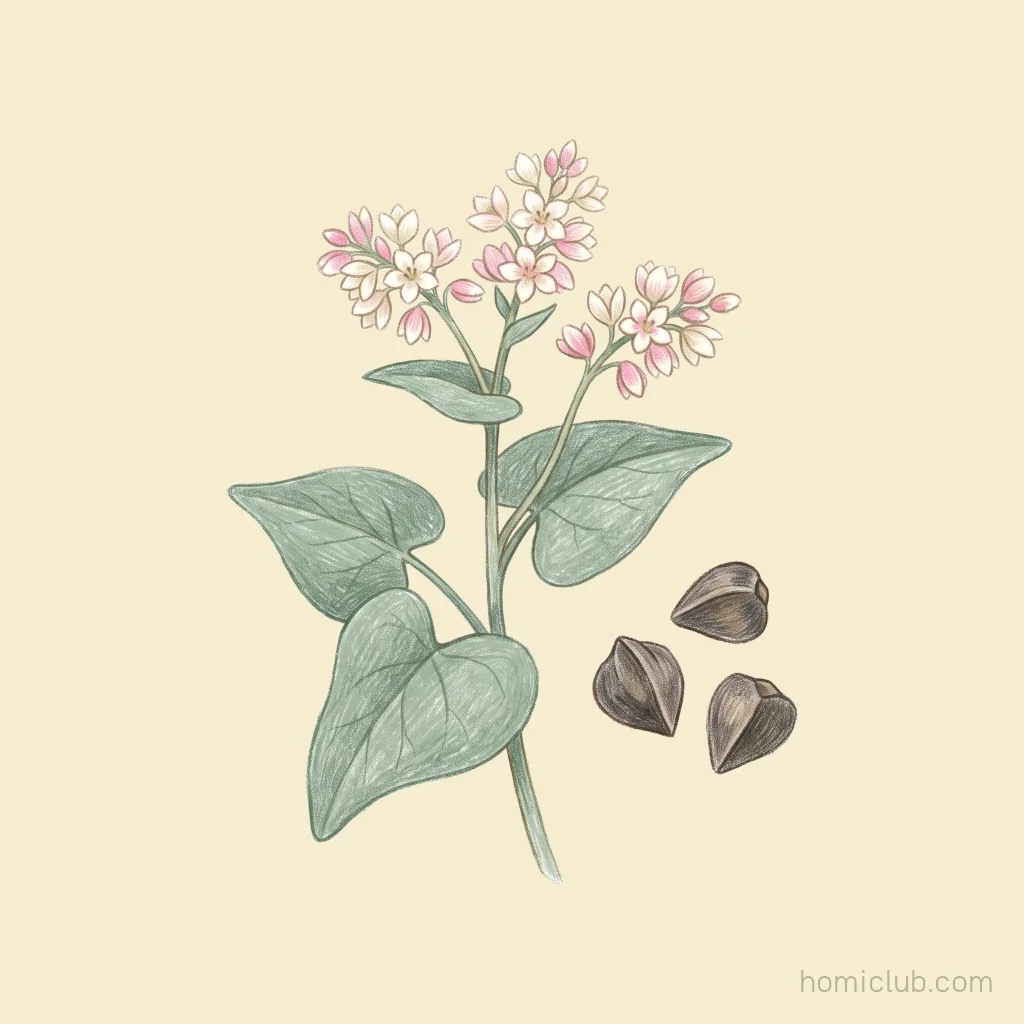
蕎麥 Buckwheat
 Related Crop · Buckwheat →
Gyomaek is the old name for buckwheat, the same grain as the field guide's memil. It ripens in two months, which made it the crop sown against a failed season; today it appears as cold noodles, buckwheat jelly and crepes. Donguibogam warned against eating it with pork or mutton.
Original, read line by line 東醫寶鑑 · Tangaek — Decoctions vol. 1
-
性平寒, 味甘, 無毒. 實腸胃, 益氣力.
Its nature is neutral to cold, its taste sweet, and it is non-toxic. It makes the intestines and stomach solid and boosts strength.
HomiclubGyomaek is buckwheat. Despite the maek (麥) in its name it is not a true cereal but an annual of the knotweed family, harvested a little over two months after sowing.
-
雖動諸病, 能鍊五藏滓穢, 續精神. 《本草》
Though it stirs various illnesses, it can refine the dregs and filth of the five viscera and sustain the spirit. 《Boncho (本草)》
-
久食動風, 令人頭眩. 合猪羊肉食, 成風癩. 《本草》
Eaten long it stirs wind and makes the head dizzy. Eaten together with pork or mutton it brings on pungna (風癩, wind leprosy). 《Boncho (本草)》
Related Crop
Buckwheat →
Reading on Buckwheat
Grains — more entries
This is a cultural and historical record from a classical text, not a claim about any food’s effects. Nothing here is a health supplement or intended to prevent or treat disease. Consult a medical professional about health concerns. · Text: Korean Medicine Classics DB · Reading: Homiclub