- Type
- Herbs & Aromatics
- Difficulty
- Moderate
- Season
- Spring·Summer·Fall
- Sowing
- From seed
Vervain
Verbena officinalis
Verbenalin and iridoid glycosides · the roadside herb whose spikes look like a whip
Vervain is a perennial of roadsides and waste ground. Three or four slender spikes branch from the top of the stem, and tiny pale-violet flowers open along them from the bottom upward. Those spikes resemble the leather thong at the end of a horse whip, which is where the name 馬鞭草, horse-whip herb, comes from. In Europe the same species has long been handled as an herb under the name vervain, while the bedding verbena of flower borders and the fragrant lemon verbena are different plants that merely share a name. The dried leaf and stem are steeped as a tea with a marked bitterness. The Donguibogam lists it in the Herb section as 馬鞭草, setting the nature down as cool and the taste as pungent while adding that some call it bitter, and recording both that it is free of toxicity and that some hold it toxic. It leaves a way of telling it apart — like Leonurus but with a round stem — and says the shoots are gathered in the seventh and eighth months by the lunar calendar and dried in the sun.
Year-Round Calendar
- 1
- 2
- 3
- 4
- 5
- 6
- 7
- 8
- 9
- 10
- 11
- 12
- 4
- 8
- 9
Where It Grows
- Main producer Known as mabiancao, or horsewhip herb, it is gathered from the wild in Central and South China, dried and traded.
- Wild population It grows wild on roadsides and waste ground on Jeju and in the southern provinces.
- Wild population It grows wild in fields and along roadsides from Honshu southward.
It is regarded as native to Europe, West Asia and North Africa, and it is now found throughout the temperate and subtropical zones, so no single country has been given as its place of origin. In Europe the same species has long been used under the name vervain, and material gathered from the wild in Poland, Hungary and the Balkans is traded. What the French call verveine tea is usually lemon verbena (Aloysia citrodora), a different species, and the ornamental verbena planted in flower beds is a different group again.
- Optimum
- 18~25℃
- Range
- 10~30℃
- Hardiness
- Half-hardy
It likes an open, sunny position, and as long as the soil drains well it will grow even on poor ground. In the southern provinces and on Jeju it overwinters — survives the winter — at the root, but in the cold of the central region it freezes and dies, so there it is treated as an annual.
In Korea Central Korea and south
How to grow
- Light
- Five or six hours of sun in an open spot. In shade the spikes stay short
- Soil and depth
- Not fussy. Given drainage it grows on poor ground. A pot at least 20cm deep
- Spacing
- 30cm between plants. It stands close to a metre, so stake it in a windy spot
- Watering
- Water when the surface dries. Watered often, the stems soften and run leggy
- Feeding
- Base compost is enough. Heavy feeding builds leaf and thins the aroma
- Harvest
- Cut a hand's span from the top of the stem in August or September as flowering begins. Cut once and side shoots follow, giving a second gathering in autumn
What makes the difference. Bundle the cut stems and hang them upside down in airy shade. Dried in direct sun they bleach and lose their aroma. Once they crumble, seal them in a container
Why this one is harder. It seeds freely and comes up all over the following year. To stop it spreading, cut the spikes before the seed sets or grow it in a pot from the start
Common problems
- Aphids You will see Colonies on the spikes and new growth, turning sticky What to do Wash them off with a jet of water; if it recurs, use an egg-yolk oil spray. Use no sprays on plants destined for tea
- Powdery mildew You will see White dust on the upper leaf surface, lower leaves drying first What to do It spreads where plants stand too close. Thin the spacing for airflow and remove affected leaves
This page describes how a crop is grown and used. It does not claim health effects for any food, nor is it intended to prevent or treat disease. Component and study notes are references only and do not mean the same result occurs in people. Consult a medical professional about health concerns.
Health Benefits
The old record — mapyeoncho (馬鞭草). The Donguibogam lists it in the Herb section as 馬鞭草. It sets the nature down as cool and the taste as pungent while adding that some call it bitter, and records both that it is free of toxicity and that some hold it toxic. It says the plant resembles Leonurus but has a round stem, and that the three or four spikes it throws are like the thong at the end of a horse whip, which gave it the name. The shoots are gathered in the seventh and eighth months by the lunar calendar and dried in the sun. What an old medical text wrote differs from how it is judged today.
Analyses of iridoid glycosides. Iridoid glycosides such as verbenalin and verbenoside have been isolated from vervain in repeated analyses, with higher levels reported in the aerial parts around flowering. These are compositional analyses and have nothing to do with preventing or treating disease.
Plants that share the name. The name verbena today covers garden cultivars and lemon verbena as well. Vervain and lemon verbena share only the family Verbenaceae, belong to different genera, and do not share a compositional profile. This is a note on how the names are used.
Nutrition
- Verbenalin (distributed in leaf and stem) — an iridoid glycoside isolated from vervain
- Verbenoside (distributed in leaf and stem) — a glycoside of the same family as verbenalin
- Flavonoids (distributed in the leaf) — phenolic compounds common in plants
- Tannins (distributed in leaf and stem) — polyphenols behind the astringency
Bitterness and tannins The bitterness and astringency of vervain tea come from tannins and other polyphenols. Both build the longer it steeps, so strain at three or four minutes. Water off the boil draws less astringency than water at a rolling boil.
Iridoid glycosides Analyses report iridoid glycosides such as verbenalin and verbenoside isolated from vervain. The same work reports higher levels in the aerial parts around flowering. This entry stays with the compositional record.
How much goes into a cup Vervain is not a green that fills a plate; it is a leaf that gets steeped. A pinch of dried leaf per cup means the quantity involved is small to begin with. Fix how many cups a day and do not brew it stronger than that.
A different tea from lemon verbena What herb shops sell as 'verbena' tea is usually lemon verbena leaf. It is clearly lemon-scented and barely bitter, unlike vervain, where bitterness leads. The names overlap, so check the botanical name on the packet.
Pairings
○ Lemon and honey — Since bitterness leads, a slice of lemon or a spoon of honey makes the cup easier. Add honey after pouring, once it has cooled a little.
○ Chamomile and peppermint — Blended with a strongly scented herb, the bitter finish of vervain gets covered. Mix the dried leaves half and half and steep together.
○ Aerial parts at flowering — For tea, cut a hand's span from the top of the stem as flowering begins and dry it in the shade. Leave out the thick base, which is woody. The old record likewise says the shoots are gathered in the seventh and eighth lunar months and dried in the sun.
△ Pregnancy and nursing — The Donguibogam itself set down both that the plant is free of toxicity and that some hold it toxic, and safety data in people is not plentiful. Do not drink it, even as tea, while pregnant or nursing. Switch to another herb tea.
△ Confusion with Leonurus — The Donguibogam also noted the resemblance to Leonurus. The stem is where they part: vervain's is round, while Leonurus, a mint-family plant, has a square stem with edges you can feel. If the identity is not certain, do not gather it.
△ Bedding verbena plugs — The garden verbena sold in borders and pots is grown for looks, not on the assumption anyone will eat it. Plugs are often treated before dispatch. For tea, raise plants from seed instead.
△ Gathering along roads and field edges — The roadsides and waste ground where vervain thrives are also where herbicide gets sprayed. Do not gather along roads, field margins or the edges of park lawns. Use what was grown in your own plot or pot.
Varieties
- Common vervain (seed) — The species seen in the field. Pale-violet flowers open in sequence along fine spikes
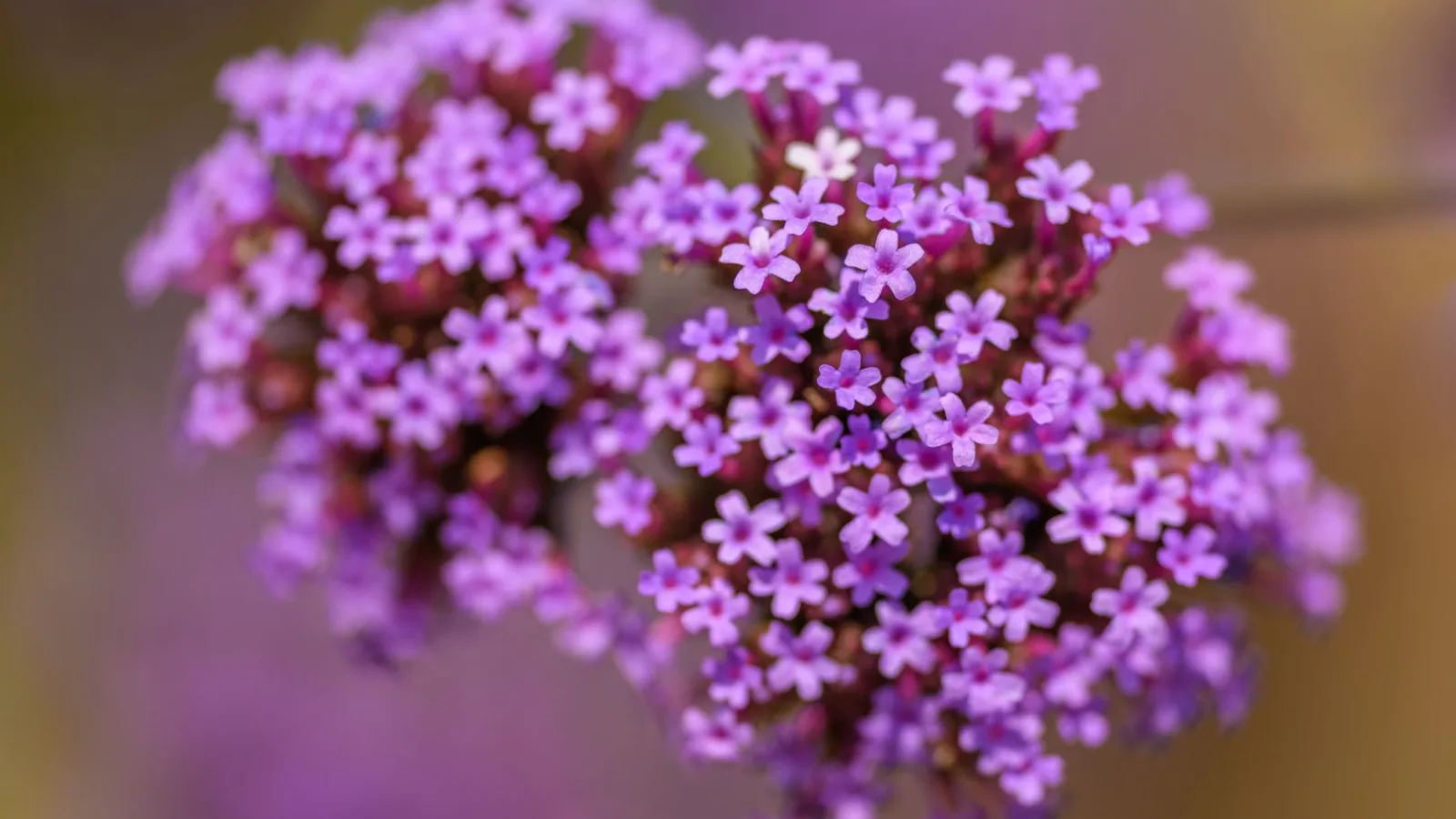
- Purpletop vervain (seed) — A different species over a metre tall with flowers clustered in heads. Commonly seen where border plantings have escaped
- Garden verbena (seedling) — The bred forms sold for borders and pots. Grown for looks, not on the assumption anyone will eat them
- Lemon verbena (seedling) — The fragrant shrub sold as 'verbena' tea. A plant of a different genus from vervain
Source: Donguibogam, Herb Section 馬鞭草 · Korea National Arboretum species information system