- Type
- Leafy Greens
- Difficulty
- Easy
- Season
- Spring·Summer
- Sowing
- From seed
Korean Thistle
Cirsium japonicum var. maackii
Pectolinarin, bitterness · a spiny green blanched in spring
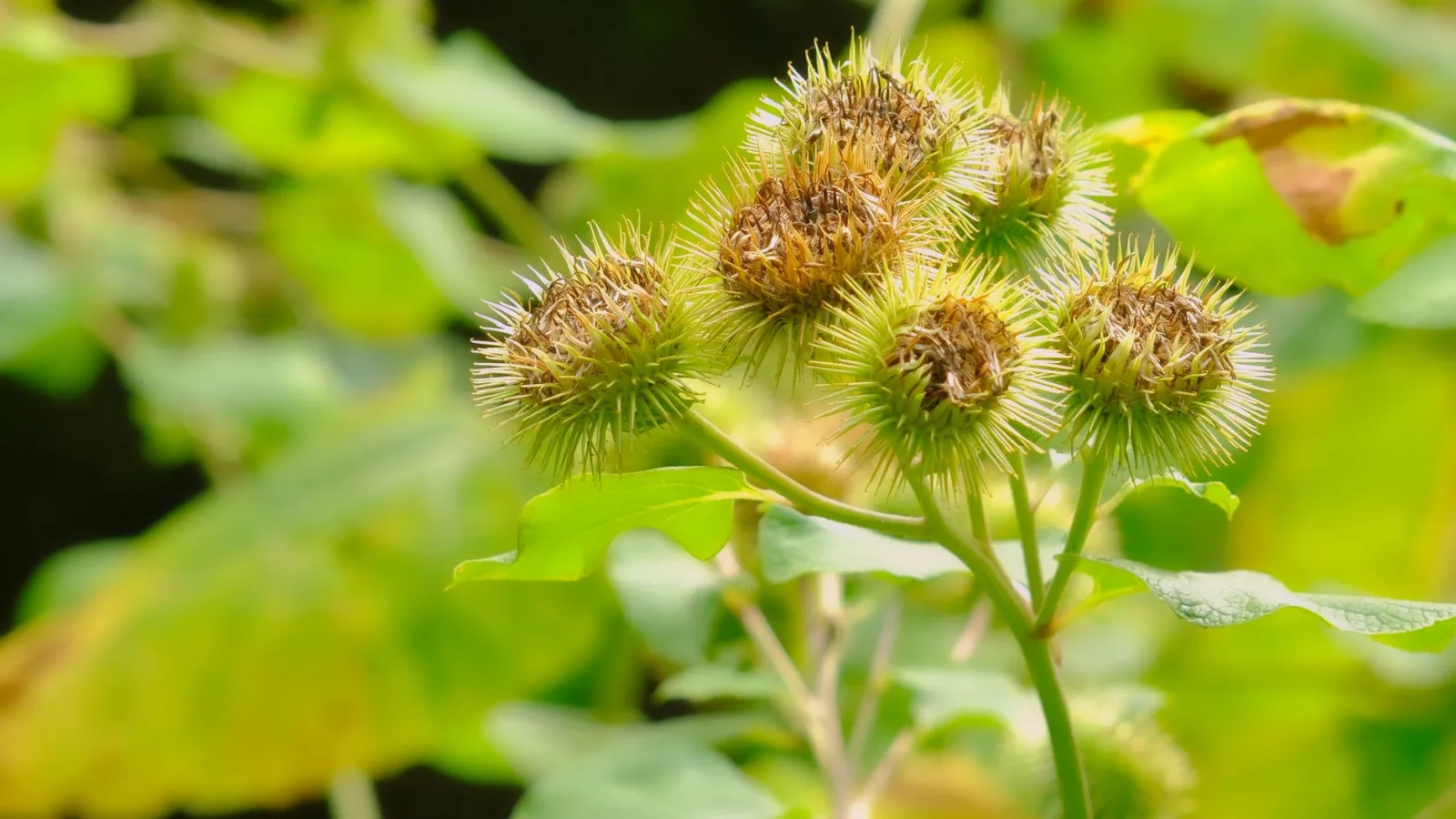
Korean thistle is a perennial of sunny banks and roadside verges. The leaf margins are deeply cut with a spine at every tip, and from June to August a single purple flower head sits at the end of each stem. In its first year the plant usually makes only a flat rosette, sending up a flowering stem the year after. What is eaten is the young spring foliage and tender stems, gathered with gloves because of the spines, then blanched and dressed or dropped into soup. The Donguibogam lists it in the Herb section as 大薊, giving a neutral nature, a bitter taste and no toxicity, and recording that shoots and leaves are gathered in the fifth lunar month and roots dug in the ninth, then dried in the shade.
Year-Round Calendar
- 1
- 2
- 3
- 4
- 5
- 6
- 7
- 8
- 9
- 10
- 11
- 12
- 3
- 4
- 9
- 4
- 5
- 6
Where It Grows
-
Wild population
Grows wild in sunny fields, along roadsides and on banks throughout the country, and is gathered as namul, a seasoned leafy green. Harvest April, May, June
- 4
- 5
- 6
- Wild population Grows wild in the northeast, and is also raised in fields under the name da ji ("great thistle").
- Wild population Grows wild in fields from Honshu southwards.
Its native range is the temperate grassland of East Asia, spanning Korea, northeastern China and Japan; because it cannot be pinned to one country, no country-of-origin row was set up. As a wild plant with no commercial production statistics, the table breaks out not output figures but only the native range and the countries where it is actually harvested, in three rows. Silybum marianum — the white-variegated thistle sold in shops as milk thistle — is a Mediterranean plant of a different genus, so it is not shaded on the same map.
- Optimum
- 15~25℃
- Range
- 0~30℃
- Hardiness
- Hardy
A perennial herb of sunny fields and banks. It overwinters — passing the cold season in place — as a rosette of leaves spread flat like a cushion, then sends up a flower stalk the following year. Its deep roots carry it through most droughts, but it dislikes spots where water pools, and in soil too rich with manure it grows leggy and flops over.
Harvested 1–2 years after planting. Sown in spring or autumn, it often puts out only its cushion-shaped leaves in the first year and raises a flower stalk the next. Proper picking of the young leaves starts in the spring after it has settled in. Being a perennial, once established it comes up in the same spot year after year.
In Korea Nationwide
It grows wild in sunny fields, along roadsides and on banks. From April to June the young cushion-spread leaves and tender stems are picked; the flowers open from June to August. Some growers plant it in fields, but most of the harvest comes from wild stands.
How to grow
- Light
- Six hours of direct sun or more. In shade the leaves sprawl and no flowering stem rises
- Soil and depth
- Not fussy as long as the ground drains. Rich ground pushes soft growth that falls over
- Spacing
- 40 to 50cm between plants. The taproot runs deep and resents moving, so choose the final position at planting
- Watering
- Once established it shrugs off ordinary dry spells. If you want tender leaves to pick, water through a spring drought only
- Feeding
- A handful of compost around the crown in spring is enough. Heavy mineral fertiliser leaves the foliage soft and disease-prone
- Harvest
- From April to June, cut the young rosette leaves and tender stems with scissors. Leave about half the leaves on each plant rather than stripping it, and it will push out more. Once the flowering stem rises the leaves turn coarse and are no longer worth picking
What makes the difference. Thick gloves and scissors are not optional — the spines are stiff. Running a knife along the leaf margin to strip the line of spines before blanching makes for much easier eating
Why this one is harder. The seed carries a pappus and rides the wind a long way, so seedlings appear all over. Leave one or two flower heads for seed and cut the rest before the seed ripens
Common problems
- Aphids You will see Dense colonies of black aphids on flower buds and new leaves What to do Wash them off with a jet of water, and use no spray on leaves you intend to eat
- Powdery mildew You will see Leaf surfaces whiten as if dusted with flour after the rainy season What to do Clear the old lower leaves to open an airflow path and take diseased leaves off the plot
- Thrips You will see White stippling on petals and new leaves, with leaves distorting What to do Set sticky traps to gauge numbers and clear surrounding weeds to cut down shelter
This page describes how a crop is grown and used. It does not claim health effects for any food, nor is it intended to prevent or treat disease. Component and study notes are references only and do not mean the same result occurs in people. Consult a medical professional about health concerns.
Health Benefits
What the Donguibogam records — nature, taste and gathering time. The Donguibogam lists the plant in the Herb section as 大薊. It gives a neutral nature, a bitter taste and no toxicity, and notes that it grows everywhere. For gathering it records shoots and leaves in the fifth lunar month and roots in the ninth, dried in the shade, and gives 刺薊 as an alternative name. This is a historical medical record and differs from modern medical judgment.
The record that separates 大薊 from 小薊. The same entry sets 大薊 and 小薊 side by side and tells them apart by form. 大薊 stands three or four cheok tall with wrinkled leaves, while 小薊 reaches about one cheok and its leaves are not wrinkled. 小薊 is glossed in Korean as jobangga, corresponding to today's jobaengi. The entry also explains that 地丁 is 大薊, the yellow-flowered kind called 黃花地丁 and the purple-flowered kind 紫花地丁. In present-day usage, however, 黃花地丁 names the dandelion and 紫花地丁 the violet, both of them plants other than thistle. This is a historical medical record and differs from modern medical judgment.
Pectolinarin analysis. Compositional studies of Cirsium species report pectolinarin and pectolinarigenin as the principal flavonoids, with wide variation in content according to plant part and gathering date. These are compositional analyses and have nothing to do with preventing or treating disease.
Nutrition
- Pectolinarin (reported from leaf and flower) — a flavonoid characteristically identified in Cirsium species
- Luteolin and apigenin glycosides (leaves) — flavonoids common across the daisy family
- Inulin (the thick root) — the storage polysaccharide of daisy-family roots
- Dietary fibre (stems and leaf veins) — the fibre that makes the tissue tough
Young leaves and bitterness The young spring leaves are bitter and their veins are tough. Blanch them in salted boiling water, then soak for about half an hour in cold water and the bitterness eases. Long blanching strips the flavour out entirely, so lift them as soon as the colour deepens. Spines soften in the water, but on coarser leaves it is better to strip the margins first.
Flavonoid profile Pectolinarin and its aglycone pectolinarigenin are frequently reported from Cirsium species. Luteolin- and apigenin-type glycosides are identified alongside them. Analyses note that content varies widely by plant part and gathering date. This entry stays with the compositional record.
Root and inulin Many daisy-family perennials store inulin rather than starch in the root, and thistle is one of them. Human digestive enzymes cannot break inulin down, so it reaches the large intestine intact and gut bacteria ferment it. A first helping of root can bring on gas, so build the amount up slowly.
Look-alikes and how to tell them apart Jobaengi, which grows on the same ground, has small leaves whose margins are not wrinkled and far weaker spines, setting it apart from the large, deeply cut leaves of Korean thistle. What is sold as seed or seedling under the name 'milk thistle' is the Mediterranean Silybum marianum, distinguished by the bold white marbling that runs along its veins. The compound name 'silymarin' belongs to that plant too, and differs from what is reported in the thistles of Korean fields and hillsides. A shared word in the common name does not make it the same plant, so check the botanical name and the origin before buying.
Pairings
○ Doenjang and perilla — Blanched young leaves dressed with doenjang and perilla oil carry the bitterness well. Simmering them into a soup with ground perilla seed is just as common. Keep garlic light so the leaf flavour survives. Perilla (Deulkkae)
○ Doenjang soup with rice-rinse water — Stir doenjang into the water left from rinsing rice and add the blanched leaves; the broth stays clean rather than heavy. The longer it boils the softer the leaves go and the more bitterness leaches out, so add them near the end. Reheat only the portion you plan to eat that day.
○ Dried as mukna-mul — If the picking has been generous, blanch the surplus and dry it. Dried leaves are rehydrated, boiled and stir-fried through the winter. Gondre, the dried form of Cirsium setidens, is prepared the same way.
△ Not every spiny rosette is a thistle — In the spring rosette stage, Hemistepta lyrata (jichingae) and small thistle (jobaengi) grow mixed in with Korean thistle. Both are eaten in places, but their flavour and blanching times differ, so gathering them together spoils the dish. The one to watch harder is horsenettle (Solanum carolinense), an invasive species listed in Korea: it carries spines on leaves and stems, so choosing by spines alone can pick it up, and its nightshade alkaloids make it unfit to eat. The safest rule is to gather only where you saw the plant in flower the previous year.
△ Never gather from verges or field margins — Thistle thrives exactly where herbicide drift and road dust land — roadsides and the edges of cultivated fields. Washing does not remove either. If there is no clean ground to gather from, save seed and grow a few plants in a border or a large pot instead.
△ Daisy-family allergy — Thistle belongs to the daisy family. People who react to mugwort or ragweed pollen sometimes get an itchy mouth or hives from daisy-family greens as well. Start with a mouthful or two, and stop and seek medical advice at once if the lips swell or the throat feels tight.
Varieties
- Korean thistle (seed) — Pronounced leaf spines and purple flowers. The native species this entry describes
- Gondre (Cirsium setidens) (seed) — Weak spines and broader leaves. Widely grown as a vegetable
- Small thistle, jobaengi (小薊) (seed) — Only about a foot tall. The plant the old text sets apart from 大薊
- Milk thistle (seed) — A Mediterranean plant of a different genus with white-marbled leaves. Not the same plant as Korean thistle
Source: Donguibogam, Herb Section 大薊 · Rural Development Administration (Nongsaro) · Korea National Arboretum