- Type
- Trees & Vines
- Difficulty
- Hard
- Season
- Summer·Fall
- Sowing
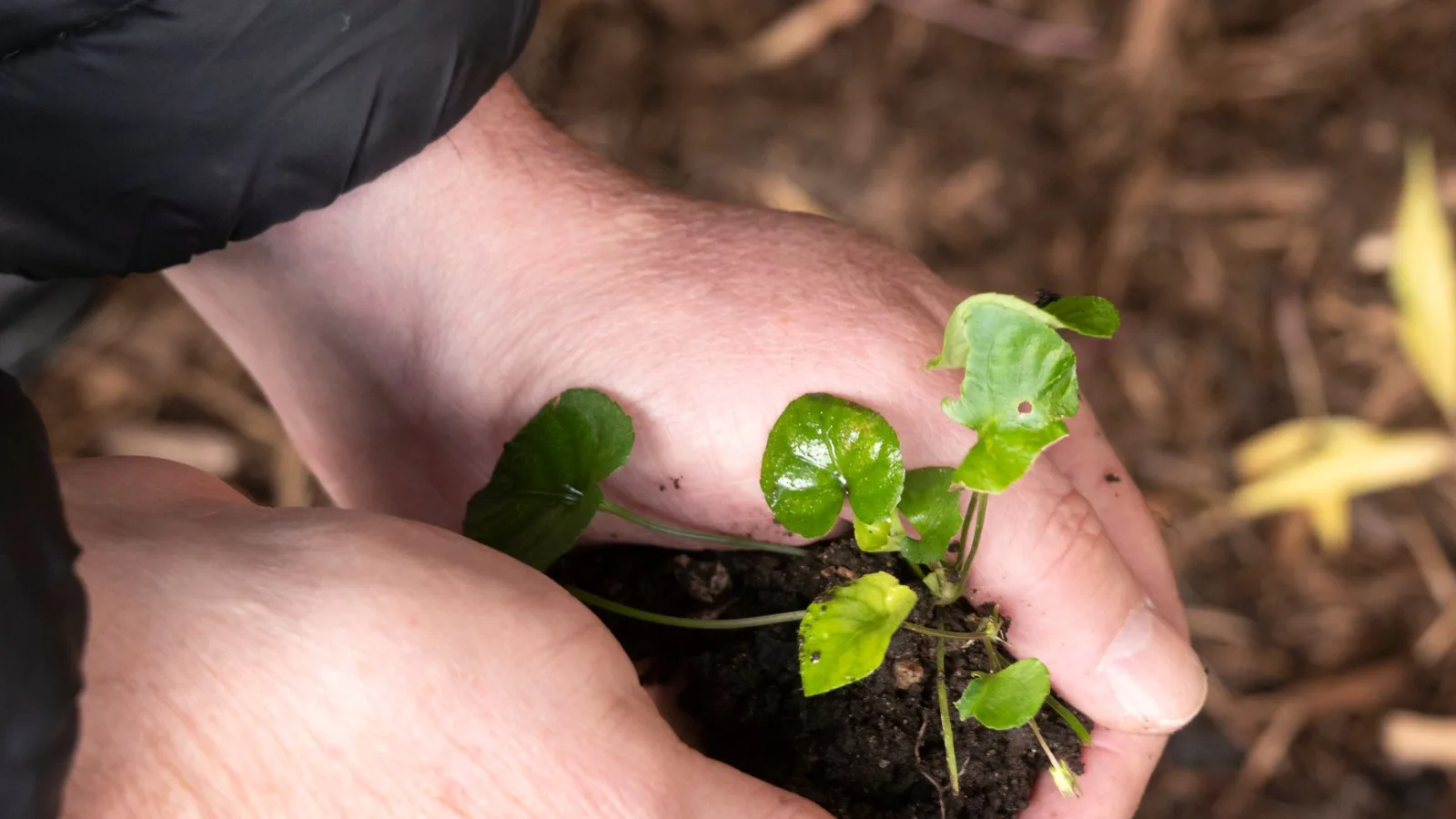
- Plant a sapling
Neunggeum (Chinese apple)
Malus asiatica
Pectin and polyphenols in the small red fruit Korea ate before apples
Neunggeum is the small red fruit Koreans ate before the Western apple arrived. At 3-5 cm across it is far smaller than an apple, and tartness and astringency come ahead of sweetness. The Donguibogam described the tree as resembling the nae tree, with round fruit ripening in the sixth or seventh lunar month, and went out of its way to warn that the taste is bitter and puckering and it should not be eaten in quantity. It also notes that half-ripe fruit was what went into medicine, since fully ripe fruit loses its character. Commercial growing has effectively ended, so you will not find it in markets; a few old trees survive around Daegu and Gyeongsan. Toringo crabapple (Malus sieboldii) and Siberian crabapple (M. baccata) sit in the same genus but are separate species, and the apples sold today are the Western M. domestica, another species again. None of them is a variety of neunggeum, so check the species name when buying a sapling.
Year-Round Calendar
- 1
- 2
- 3
- 4
- 5
- 6
- 7
- 8
- 9
- 10
- 11
- 12
- 3
- 11
- 8
- 9
Where It Grows
- Main producer Here it is called shaguo or huahong, and it is still grown in North China and the Northeast. This is effectively the only place where neunggeum has survived as a commercial crop.
-
Historic source
Before the Western apple arrived it was planted across the whole country, and the Daegu basin and the area around Gyeongsan were the noted growing districts. Commercial cultivation has now all but ceased. Harvest August, September
- 8
- 9
- Historic source It was grown here for a long time under the name waringo, but it gave way to the Western apple, and only a small quantity now remains, kept for conservation.
It is native to East Asia, from northern China across to the Korean Peninsula, and because no single country can be named for it, no country-of-origin row has been entered. It was pushed aside during the twentieth century by the arrival of the Western apple (Malus domestica), and what the countries known today as apple producers grow is not neunggeum but that Western apple. Both belong to the genus Malus, but they are different species, so take care not to read the two maps as one.
- Optimum
- 15~22℃
- Range
- 5~30℃
- Hardiness
- Hardy
It is a temperate deciduous tree. It needs a stretch of cold through the winter for its flower buds to break evenly the following spring, and it endures cold of around minus 30℃. Where summers run too hot and night temperatures never drop, the skin takes on no colour and the fruit is left merely sour.
Harvested 3–5 years after planting. Saplings are planted in March or November and bear no fruit in the year they go in. Only after three or four to five or six years of growth is the fruit picked, ripening in August and September. It sets fruit poorly with its own pollen, so another tree of the genus Malus has to stand nearby.
In Korea Nationwide
It was originally planted throughout the country, and the Daegu basin and the area around Gyeongsan were the noted growing districts. Commercial cultivation has now effectively ceased, and it survives only in old trees and in conservation orchards.
How to grow
- Light
- Six or more hours of direct sun. In less, the fruit never colors and stays purely sour.
- Soil and depth
- Free-draining loam around pH 6.0-6.5. Roots rot in any spot where water sits.
- Spacing
- Four to five meters apart in open ground. For a container, use a dwarf-rootstock tree and a pot of at least 50 cm, one tree only.
- Watering
- Water through summer droughts for the first two or three years. A dry July or August, when fruit is sizing, leaves you with small fruit.
- Feeding
- Ring the base with compost in early spring and give a light second feed in June. Excess nitrogen produces shoots instead of flower buds.
- Harvest
- Pick in August or September once red color shows and the stem separates easily. As the old text says, fully ripe fruit turns bland, so err on the early side.
What makes the difference. It sets poorly with its own pollen. Fruiting is far more reliable with another Malus, an apple or crabapple, nearby. Prune out overlong shoots in winter so light reaches the interior of the tree.
Why this one is harder. Left alone it becomes a 3-6 m tree. Only a dwarf-rootstock graft has any chance in a large pot, and even that needs pruning every year.
Common problems
- Aphids You will see Curled new shoots and sticky leaf undersides What to do Wash them off with water; for heavy infestations use an approved organic product
- Peach fruit moth You will see Pinprick entry marks on the fruit with the inside eaten out What to do Bag the fruit in June and collect and destroy every dropped fruit
- Cedar apple rust You will see Orange spots on the leaves with hair-like projections underneath What to do Keep it well away from juniper, ideally 2 km, and remove infected leaves
This page describes how a crop is grown and used. It does not claim health effects for any food, nor is it intended to prevent or treat disease. Component and study notes are references only and do not mean the same result occurs in people. Consult a medical professional about health concerns.
Health Benefits
What the old text says. Neunggeum appears in the Donguibogam's fruit section as imgeum. The passage cautions against eating much of it and specifies that half-ripe fruit was the form used medicinally. This is a record from a seventeenth-century medical text, not a modern medical judgement.
Polyphenol research. Test-tube and animal studies have reported antioxidant activity measured for polyphenols from Malus fruit. There is almost no human research on this species specifically.
Nutrition
- Pectin (The soluble fibre of skin and flesh) — A fibre that thickens in water
- Polyphenols (Chlorogenic acid and procyanidins) — The compounds behind the astringency
- Malic acid (An organic acid) — The sourness
- Potassium (About 100 mg per 100 g) — A mineral common in fruit
Pectin Because the fruit is small, skin makes up a larger share of it than in an apple, and pectin comes with that. Pectin is a soluble fibre that takes up water and turns viscous. Cooked down with sugar it sets into jam without any added setting agent.
Polyphenols That astringency is chlorogenic acid and procyanidins, both polyphenols. They concentrate just under the skin, so peeling the fruit removes most of them. Multiple studies have reported antioxidant activity measured for polyphenols from Malus fruit. The browning of a cut surface is the same compounds oxidizing.
Malic acid and potassium The sourness is mostly malic acid. It runs highest in underripe fruit and gets offset by sugar as ripening proceeds. Potassium sits around 100 mg per 100 g, unremarkable among fruit.
Pairings
○ Sugar-preserved syrup — Since it is too tart and astringent to enjoy raw, layering it into a sugar preserve opens up its uses. Core it, slice thin, and layer with an equal weight of sugar. After two weeks it can go into water as a drink or into a salad dressing.
○ Pork and duck — The acidity of Malus fruit works well against fatty meat. Sliced and roasted alongside, or grated into a sauce, it cuts the richness. Grated in, it also tenderizes the meat.
○ Cinnamon and clove — Cooking it down with cinnamon and clove buries the astringency under aroma. It reads as sweeter even with less sugar. One stick of cinnamon and two or three cloves is enough. Cinnamon · Clove
△ The seeds — Seeds of Malus fruit contain amygdalin, a cyanogenic glycoside. Swallowed whole they mostly pass through, but chewing several of them thoroughly is worth avoiding. If you are blending whole fruit into juice, core it first.
△ Eating underripe fruit in quantity — Underripe neunggeum is high in tannin, hence the pucker, and a lot of it upsets the stomach. The original text warned that its bitter, astringent taste means it should not be eaten in quantity. Preserved as syrup or jam is the better route.
△ Sensitive stomachs — The organic acid load can bring on heartburn if you eat several on an empty stomach. If gastritis or reflux is a pattern for you, cooked is better than raw. Even the syrup should go into water rather than being drunk straight.
Varieties
- Native neunggeum (Sapling) — The old landrace still standing at village entrances. Small and sour.
- Siberian crabapple (Sapling) — A wild relative of the hills. Fruit the size of a bean.
- Manchurian crabapple (Sapling) — A wild relative, commonly used as rootstock.
- Modern apple (Sapling) — The cultivated species that displaced neunggeum. Larger and sweeter.
Source: Donguibogam, Fruit Section (林檎) · Korea National Arboretum, National Species Knowledge Information System