- Type
- Herbs & Aromatics
- Difficulty
- Easy
- Season
- Summer·Fall
- Sowing
- From seed
Kochia
Bassia scoparia
Saponins and oxalate · the round annual that was tied into brooms
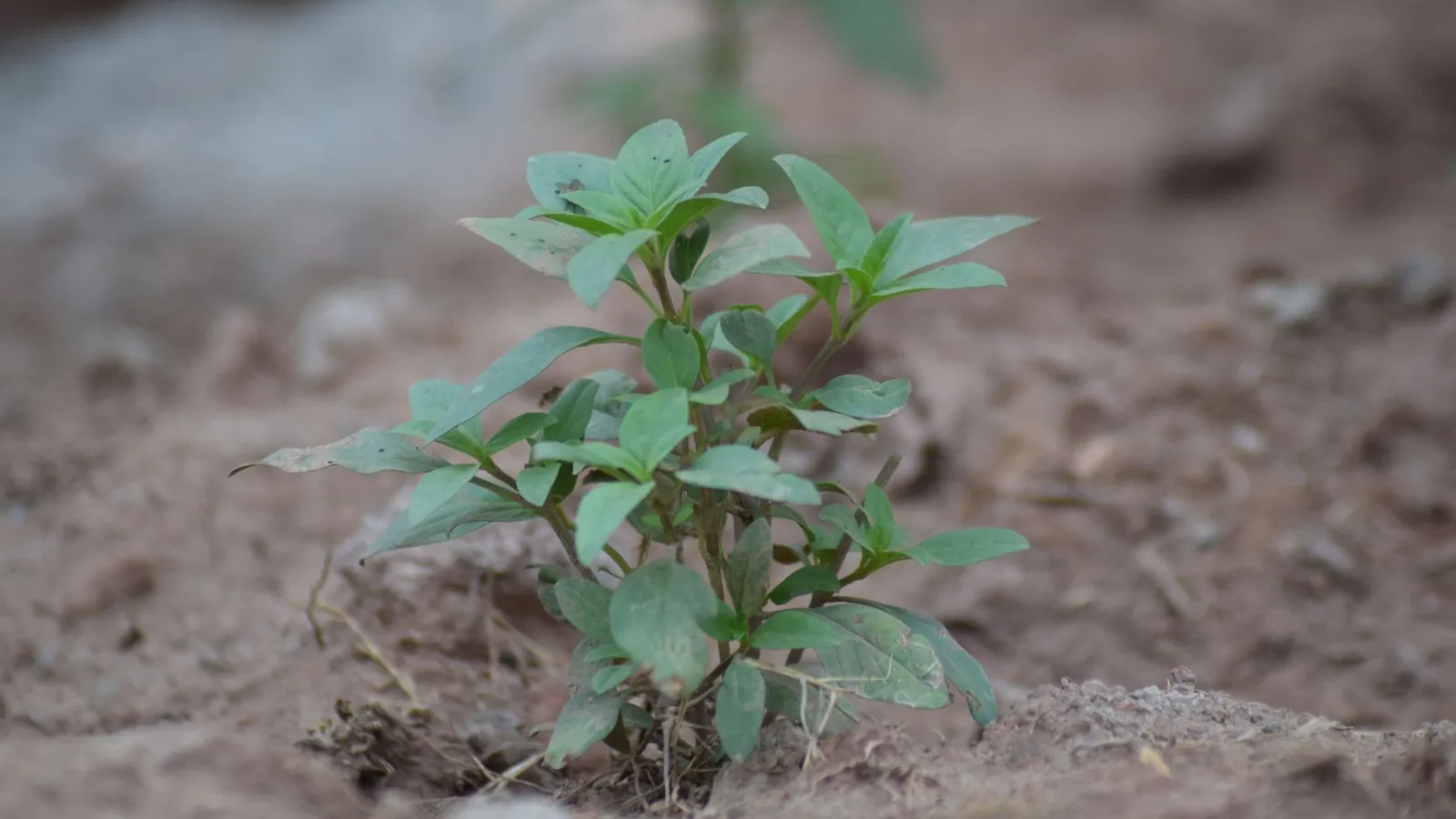
Kochia is an annual planted along yards and border edges. Fine branches divide densely until the whole plant reads as a rounded mound, and in autumn it turns red, which is why it now appears more often as a park ornamental than anything else. Its Korean name comes from its use: stems cut in autumn were bundled into brooms, and the Donguibogam records that it earned the name nakchuja (fallen-broom seed) because it would serve for a broom. The young leaves of spring are blanched and dressed as a namul, and the seed is boiled and rubbed free of its husk — in Japan that seed is called tonburi. Being a plant of the goosefoot group it carries oxalate, and saponins have been reported in it too, so the leaves are always blanched and rinsed and the seed is always boiled and cleaned. The Donguibogam lists it in the Herb section as jibuja (kochia seed) and gives the Korean name as daepssari yeoreum, the fruit of the daepssari. It records a cold nature, a bitter taste and no toxicity, and describes the plant: red stems, green leaves, yellow-and-white flowers and seeds of a pale blue-white. Seed is gathered in the eighth and ninth lunar months and dried in the shade.
Year-Round Calendar
- 1
- 2
- 3
- 4
- 5
- 6
- 7
- 8
- 9
- 10
- 11
- 12
- 4
- 5
- 8
- 9
Where It Grows
- Main producer Common on the dry fields and field margins of North China and Northeast China, where the seed is gathered and dried for use.
- Major producer In Akita Prefecture the seed is boiled and eaten as tonburi, and in parks the plant is grown as an ornamental for the red color it turns in autumn.
- Major producer Planted in yards and along field margins, the stems bound into brooms and the seed harvested.
It originates on the dry steppes and field margins of temperate Eurasia, so it cannot be pinned to a single country. The countries that eat the seed, use the stems, or plant it as an ornamental are clustered in East Asia, and there are no separate international production statistics, so no ranking can be given. It has been introduced to North America and Australia, where it has spread widely as a weed of dry country, but there it is treated as a weed rather than a crop, so those places are not counted as growing regions.
- Optimum
- 20~30℃
- Range
- 10~35℃
- Hardiness
- Not hardy
An annual that grows in dry, full-sun places and tolerates salty ground. It withstands drought, is not fussy about soil, and dies off for the year at the first frost.
In Korea Nationwide
It grows anywhere in the country and does well even on dry ground. Sown in April–May, the young leaves are picked in May–June, the seed is stripped in August–September, and the stems are then cut.
How to grow
- Light
- Full sun all day. In shade the plant opens out loosely and never makes the rounded shape
- Soil and depth
- Undemanding. It grows well even in thin soil so long as the drainage is good
- Spacing
- 40 to 50cm between plants. One plant spreads wide, and crowding dries out the lower branches
- Watering
- Water when the surface dries. Once rooted it stands drought fairly well
- Feeding
- Too much feed draws it up and breaks the shape. A thin dressing of compost worked in before sowing is enough
- Harvest
- Pick young leaves in May and June, before the stem stands. Gather seed in August and September once the heads have filled, and cut the stems for drying after the seed is stripped. The Donguibogam records gathering seed in the eighth and ninth lunar months and drying it in the shade
What makes the difference. Boil gathered seed, rub it by hand to free the husk and rinse it several times. Blanch young leaves, rinse them cold and throw the blanching water away. Dry cut stems fully in the shade before binding the base, or the broom loses its shape
Why this one is harder. The seed drops readily and comes up all over the following year. To keep it in a border, strip the heads before the seed sets, or thin the spring seedlings to decide where it stands
Common problems
- Aphids You will see Colonies on new branch tips, leaves curling What to do Wash them off with a jet of water. Where the young leaves are to be eaten, do not spray
- Powdery mildew You will see White powder on the leaves, spreading from inside the plant outward What to do Widen the spacing and thin the lower branches for airflow. Cut out and discard affected growth
This page describes how a crop is grown and used. It does not claim health effects for any food, nor is it intended to prevent or treat disease. Component and study notes are references only and do not mean the same result occurs in people. Consult a medical professional about health concerns.
Health Benefits
The old record — jibuja (地膚子). The Donguibogam lists it in the Herb section as jibuja (kochia seed) and gives the Korean name as daepssari yeoreum, the fruit of the daepssari. It records a cold nature, a bitter taste and no toxicity. The plant is found everywhere, the entry says; the stems are red and the leaves green, it is about the size of hyeonggae (schizonepeta), the flowers are yellow and white, and the seeds are a pale blue-white resembling the droppings of a silkworm after its first moult. Because it would serve for a broom it earned the name nakchuja (fallen-broom seed), and cheonduja (thousand-head seed) is given as another name. Seed is gathered in the eighth and ninth lunar months and dried in the shade. What an old medical text wrote differs from how it is judged today.
Saponins in the seed. Analyses report the isolation of saponin-type compounds from kochia seed. It squares with the long-standing preparation of boiling, rubbing and rinsing. This is an analysis of composition.
The name and the use. The name nakchuja (落箒子) in the old record came from the use of bundling cut stems into a broom. Brooms are still made this way, making it a rare case where the name and the use have carried through together. This concerns the history of a name.
Nutrition
- Saponins (reported in the seed) — glycosides that foam when drawn into water
- Oxalate (present in the leaves of the goosefoot group) — the reason the leaves are blanched and rinsed
- Dietary fibre (the husk and flesh of the seed) — what gives the seed its popping bite
- Chlorophyll and anthocyanins (pigments of leaf and stem) — the pigment group behind the red autumn colour
Only the young leaves, blanched Leaves of the goosefoot group carry oxalate, so with kochia only the young leaves are used, plunged into boiling water and rinsed cold before dressing. Throw the blanching water away. Once the stem stands and the branches divide, the fibre coarsens beyond what blanching can fix.
How the seed is eaten Gathered seed is boiled, rubbed by hand to free it from the husk and rinsed several times. Cleaned, it has a popping texture, and in Japan it goes onto rice and into dressed dishes under the name tonburi. It is not eaten raw.
Saponins Analyses report the isolation of saponin-type compounds from kochia seed. Saponins foam when drawn into water, and some of them leach out during the boiling and rinsing. This entry stays with the compositional record.
The red of autumn A plant green all summer turns red in autumn as anthocyanins build in the leaves and stems. It is that look which made it a widely planted ornamental. By the time the colour is in, the leaves are long past eating.
Pairings
○ Doenjang and perilla oil — dressed young leaves — Blanched young leaves dressed with doenjang and perilla oil lose their green rawness. Squeeze lightly and toss by hand so the seasoning coats evenly. A little garlic lifts the aroma.
○ Seed over rice — Seed that has been boiled, husked and rinsed goes over freshly cooked rice with a little soy, where the popping texture comes into its own. Grated yam or an egg yolk alongside is another way with it. Drain cleaned seed, refrigerate it and use it within a few days.
○ Autumn stems for a broom — Once the seed is stripped in autumn, cut the stems, dry them in the shade and bind the base into a yard broom. That use is where the name nakchuja came from. Bind only once they are fully dry, or the shape collapses.
△ Do not eat mature leaves or stems — The only part eaten is the young spring leaf. Once the stem stands and the branches divide, the leaves are coarse and are the part where oxalate matters, so they do not go into a namul. Even young leaves are always blanched and rinsed cold, and the blanching water is thrown away.
△ Do not eat the seed raw — Kochia seed is boiled, rubbed free of its husk by hand and rinsed several times before eating. Do not skip that and eat it raw or grind it into a powder. Jibuja sold as a materia medica is meant to be decocted, a different preparation from the food one.
△ Do not feed it heavily to livestock — Poisoning has been reported in cattle and goats that grazed heavily on kochia. Do not offer cut stems as fodder, and do not plant it where livestock have access. In a yard, keep it inside the fence.
Varieties
- Broom line (seed) — Taller with straight branches, the kind cut and bundled into yard brooms
- Ornamental round line (seed) — Low and neatly domed, colouring red in autumn. The kind planted in parks and borders
- Jibuja (dried seed) (part) — Seed gathered in autumn and dried in the shade. Herb markets sell it under that name
Source: Donguibogam, Herb section (Chobu), entry on jibuja (kochia seed)