- Type
- Trees & Vines
- Difficulty
- Moderate
- Season
- Summer·Fall
- Sowing
- Plant a sapling
Fig
Ficus carica
Ficin and pectin in a fruit that sets without visible flowers
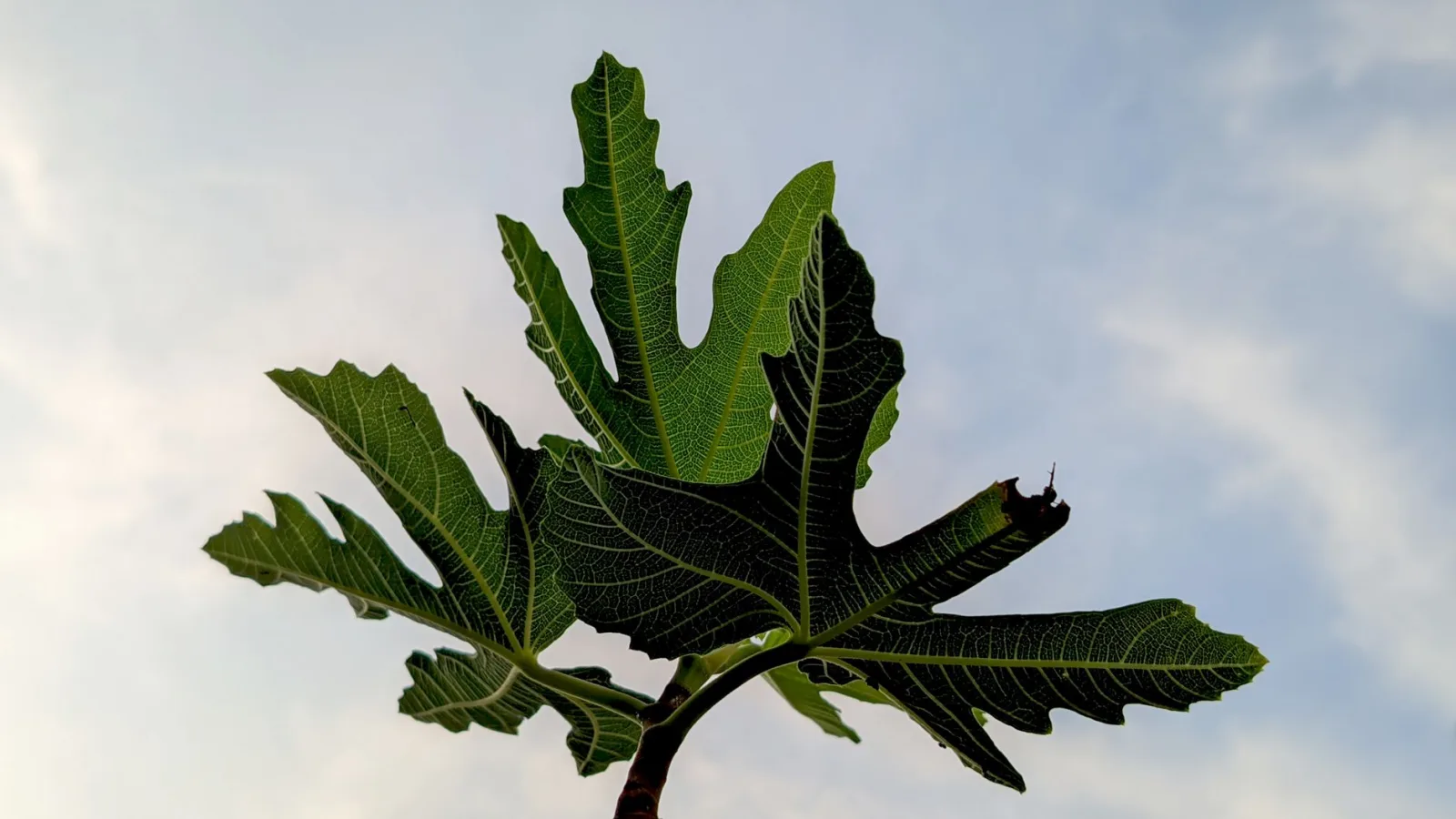
The Korean name for fig means "fruit without flowers," and that is exactly how it looks. There are flowers, in fact hundreds of them, blooming inside a closed pouch, and the red grains you eat are those flowers. The Donguibogam records it as 無花果, citing the Shiwu Bencao for the sweet taste, and describes it as setting fruit without flowering, colored like a green plum but somewhat longer.
Year-Round Calendar
- 1
- 2
- 3
- 4
- 5
- 6
- 7
- 8
- 9
- 10
- 11
- 12
- 3
- 4
- 11
- 8
- 9
- 10
Where It Grows
-
Main producer
The Büyük Menderes valley in Aydın turns out most of the world's dried figs. Harvest August, September
- 8
- 9
- Main producer A world leader in fresh fig production. The Nile Delta and irrigated desert land are the core areas.
- Major producer Old traditional orchards in the mountains of Kabylia are the mainstay.
- Major producer In the Rif mountains of the north, figs are grown without irrigation.
- Major producer Estahban, in Fars Province, is known for dried figs raised on rainfall alone.
Its native range runs from West Asia across the eastern Mediterranean, so it cannot be pinned to a single country, and no country-of-origin row has been set up here. One of the oldest fruit trees people have cultivated, it spread along the Mediterranean coast and throughout West Asia, and production today is still clustered within that belt. Some places outside it grow figs too — Korea, the United States and Spain — but their output is an order of magnitude away from the countries above.
- Optimum
- 20~30℃
- Range
- 10~38℃
- Hardiness
- Half-hardy
It likes a Mediterranean climate — hot, dry summers and mild winters. Below −10℃ the branches freeze, so the tree struggles to overwinter (get through the winter) in open ground in the central inland. Frequent rain around ripening splits the fruit and turns it soft.
Harvested 2–3 years after planting. Two or three years after a sapling goes in, it starts to bear fruit. The month of planting and the month of the first picking are not in the same year.
In Korea Southern Korea
Winter cold draws the line on where figs can be grown. Yeongam in South Jeolla accounts for well over half of the country's cultivation, followed by Haenam and Sinan in South Jeolla, then South Gyeongsang and Jeju. In the central regions the branches must be buried or wrapped every winter.
How to grow
- Light
- Six or more hours of direct sun.
- Soil and depth
- Free-draining potting mix with about 30 percent coarse sand mixed in.
- Spacing
- One tree per pot.
- Watering
- In summer, water until it runs from the base whenever the surface dries.
- Feeding
- A handful of slow-release fertilizer in March and again in June.
- Harvest
- Pick from August to October, when the eye opens slightly and the neck bends so the fruit hangs down.
What makes the difference. Figs fruit on the current season's growth too, which means a hard winter prune still leaves you a crop that year. For a potted tree, cut the branches back by a third in November after leaf drop and move it to the inner side of the balcony.
Why this one is harder. It struggles to overwinter outdoors in central Korea. Branches freeze once temperatures drop below about -10 °C.
Common problems
- Scale insects You will see Cottony masses on branches and leaf stalks, followed by sooty mold What to do Scrape them off with a toothbrush and apply horticultural oil in winter
- Birds You will see Fruit hollowed out just as it comes ripe What to do Throw netting over the tree or bag individual fruit
This page describes how a crop is grown and used. It does not claim health effects for any food, nor is it intended to prevent or treat disease. Component and study notes are references only and do not mean the same result occurs in people. Consult a medical professional about health concerns.
Health Benefits
What the old text says. The Donguibogam entered fig by way of a citation to the Shiwu Bencao. It notes that the tree sets fruit without flowering, that the colour resembles a green plum, and that it came from China, and records the taste as sweet. This is a record from a seventeenth-century medical text, not a modern medical judgement.
Nutrition
- Ficin (In the white latex) — A protein-digesting enzyme
- Pectin and dietary fibre (About 2 g per 100 g fresh) — Holds water
An enzyme called ficin Cut a fig branch or an unripe fruit and white latex runs out, carrying a protein-digesting enzyme called ficin. It belongs to the same family as bromelain in pineapple and papain in papaya. That is why mashing fig into a meat marinade softens the surface. The latex itself, though, is not something to handle bare-handed. It carries furanocoumarin compounds, and skin that holds the sap and then meets sunlight can develop phytophotodermatitis, with blistering and lasting pigmentation. Wear gloves when pruning or picking, and wash any sap off with soap at once. The latex of unripe fruit also irritates the mouth and throat, so eat only well-ripened figs.
Fiber and pectin Fresh figs carry about 2 g of dietary fiber per 100 g, and drying concentrates that density considerably as the water leaves. Pectin is a soluble fiber that holds water and builds bulk in the gut. Soluble fiber holds water in a way that can soften stool and can also firm it up, which is why the same component turns up in two accounts that look like opposites.
Pairings
○ Cured ham and cheese — Halved ripe figs alongside cured ham or an aged cheese is a long-standing Mediterranean combination. Salt and fat push back against the fruit's sweetness and the plate balances.
○ Marinating pork or beef — Ficin from mashed fig works on surface proteins and softens the texture. The principle is the same as using Asian pear.
△ Sun exposure with the latex on your skin — The white latex from fig leaves and branches contains furocoumarin compounds. Getting that sap on your skin and then going out into sunlight is a known cause of phytophotodermatitis. Wear gloves when pruning or picking, and wash the sap off with soap right away if it lands on you.
△ If you have a latex allergy — Fig latex is among the foods reported to cross-react with natural rubber latex. If you have a latex allergy, try a small amount first, and if your mouth tingles or hives appear, stop and see a doctor.
Varieties
- Masui Dauphine (Sapling) — The largest share of Korean planting. Big fruit that softens fast, so it does not travel.
- Bongnaesi (Sapling) — A Korean landrace line. High sugar and thin skin.
Source: Donguibogam, Fruit Section (無花果) · Rural Development Administration (nongsaro.go.kr) · National Institute of Horticultural and Herbal Science