- Type
- Tubers & Storage Roots
- Difficulty
- Moderate
- Season
- Fall·Winter
- Sowing
- From bulblet
Arrowhead
Sagittaria trifolia
Starch · the underwater tuber beneath an arrow-shaped leaf
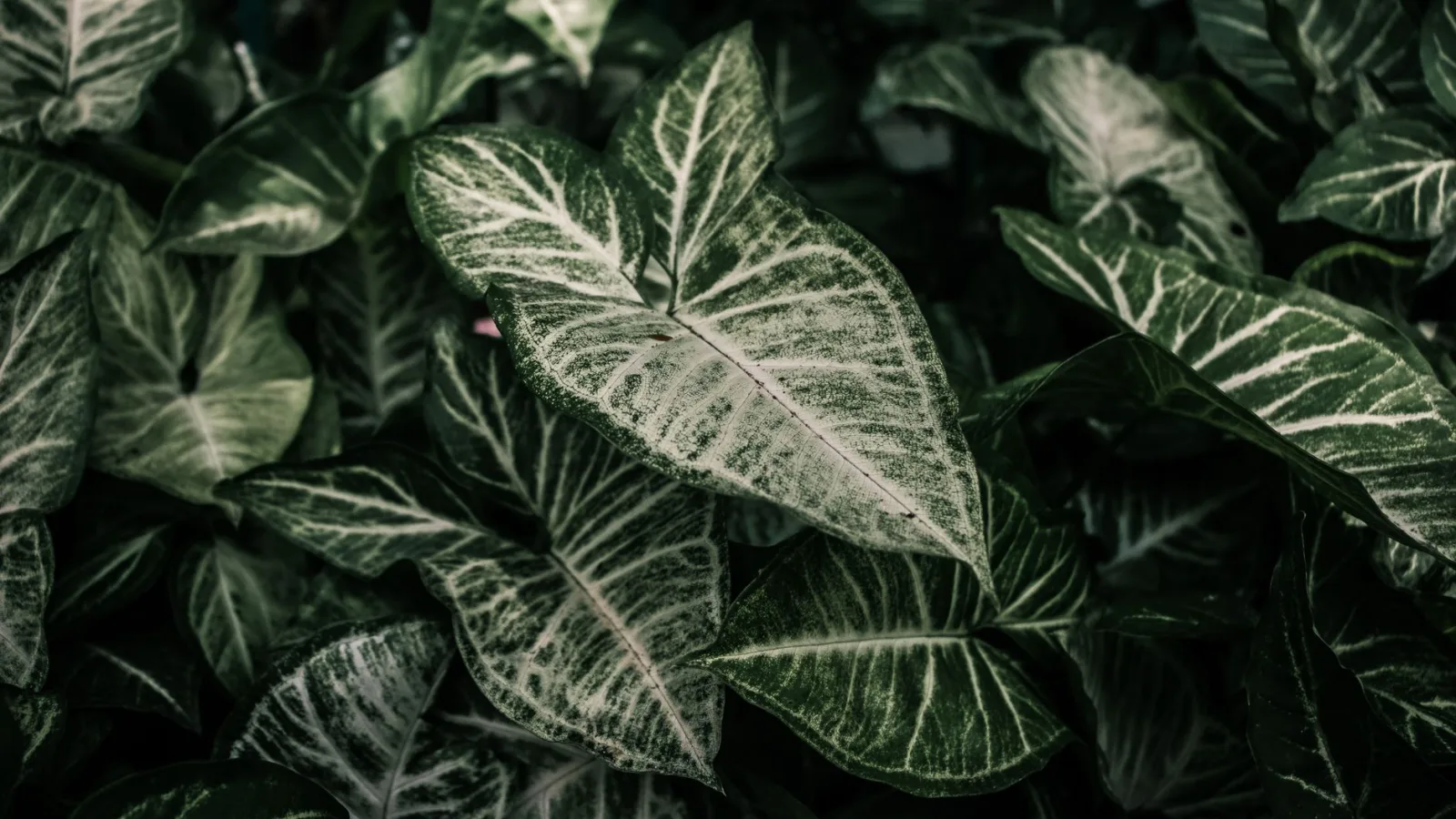
Arrowhead is a water plant of paddy banks and pond margins, its leaves cut into three sharp points like an arrowhead. What gets eaten is not the leaf but the tuber that forms at the tip of a runner in the mud. It is dug from late autumn into early winter, after the water is drawn off and the mud opened up, and boiled it comes out floury, somewhere between a chestnut and a potato. China and Japan know it as 慈姑 and serve it at the new year, and it turns up in Asian grocers here through the winter. The Herb section of the Donguibogam enters it as 野茨菰 under an old Korean name, its nature cold, its taste bitter, with no toxicity. It grows in fields and open country and is found everywhere, the entry says, and citing a folk account it records that in famine years people dug the roots and boiled them, and that they tasted very good. The same entry notes that the plant was also called 剪刀草, the scissor herb, from the shape of its leaves. Raw it is harsh, so it is always boiled, and when digging at the water's edge nothing goes in the basket unless its leaves have been seen.
Year-Round Calendar
- 1
- 2
- 3
- 4
- 5
- 6
- 7
- 8
- 9
- 10
- 11
- 12
- 4
- 5
- 11
- 12
Where It Grows
- Main producer Known as cigu, it is grown as a vegetable in the rice paddies of Jiangsu, Guangxi, and Jiangxi. Cultivation for the edible tubers survives here on the widest scale.
- Major producer Known as kuwai, it is grown in Fukuyama in Hiroshima Prefecture and in Saitama, and is used in New Year's dishes.
-
Wild population
It grows on its own along paddy banks and pond edges. Commercial cultivation is rare. Harvest November, December
- 11
- 12
It is an aquatic plant that grows wild in rice paddies and ponds from East Asia across Southeast Asia. Its wild range is broad, but cultivation for the edible tubers is concentrated in China and Japan, while in Korea most of the crop is gathered from wild plants.
- Optimum
- 20~30℃
- Range
- 10~35℃
- Hardiness
- Hardy
It is an aquatic plant that grows with its roots in flooded mud. Summers must be warm, at 20~30℃, for the runners (stolons) to spread out and set tubers, and in late autumn, as the leaves wither, the tubers harden. The tubers overwinter in the mud without freezing.
In Korea Nationwide
It grows throughout the country wherever water collects, such as paddy banks, irrigation ditches, and pond margins. Harvesting the tubers requires a site where water can be let in and drained off.
How to grow
- Light
- A water margin with six hours of sun or more. In shade it makes leaves and no tuber worth digging
- Soil and depth
- Mud that can be flooded. A paddy or pond edge, or a large pot with no drainage hole filled with mud
- Spacing
- 30cm between plants. Runners spread in every direction to set tubers, and crowding keeps them small
- Watering
- Hold 5 to 10cm of water over it through the growing season so it never dries. Draw the water off two or three weeks before digging to firm the mud
- Feeding
- Work a base dressing into the mud at planting. Feed through the season dissolved in the water, but heavy nitrogen builds leaf and leaves the tubers small
- Harvest
- November and December. Once the leaves yellow off, drain the water and open the mud to lift the tubers. Follow each runner and one plant yields several
What makes the difference. Set aside the largest tubers with sound terminal buds, bury them in damp sand, and use them as next spring's planting stock
Why this one is harder. Flooding and draining is the whole of this crop. Let it dry and the tubers stay small; hold the water to the end and the mud is too soft to dig. On a balcony a large pot with no drainage hole, filled with mud, imitates it well enough, but the water has to be changed often through the summer to keep it from going foul
Common problems
- Apple snails and slugs You will see Young leaves cut off underwater, leaving bare stalks What to do Keep the water shallow so young plants are not submerged, and lift them out as they appear
- Rice water weevil You will see Pale streaks along the leaves and roots grazed away What to do They arrive around transplanting time. Draining the water once to dry the mud, then reflooding, brings numbers down
- Algae You will see Green algae blanket the surface and shade the leaves What to do It builds up in strong sun with heavy feeding. Change the water and cut back the top dressing
This page describes how a crop is grown and used. It does not claim health effects for any food, nor is it intended to prevent or treat disease. Component and study notes are references only and do not mean the same result occurs in people. Consult a medical professional about health concerns.
Health Benefits
The old record — yajago (野茨菰). The Donguibogam lists it in the Herb section as 野茨菰 under an old Korean name. Its nature is set down as cold, its taste as bitter, with no toxicity. It grows in fields and open country and is found everywhere, the entry says, and citing a folk account it records that in famine years people dug the roots and boiled them, and that they tasted very good. The same entry notes that what was called 剪刀草, the scissor herb, from the shape of its leaves, is this same plant. What an old medical text wrote differs from how it is judged today.
A tuber crop of the water-plantain family. Crop records confirm that Sagittaria species form tubers at the tips of runners, and that lines selected for larger tubers are what circulates today under the name 慈姑. This is a record of cultivation and trade.
An organ that stores starch. That the tuber stores starch and turns floury on boiling is a record of composition and cooking behaviour. It also explains its long history as a famine crop.
Nutrition
- Starch (stored in the tuber) — the source of the floury texture after boiling
- Potassium (present in the tuber) — a mineral common in vegetables
- Dietary fibre (present in the tuber) — the fibre behind the bite
A tuber that has to be boiled Arrowhead tubers are harsh eaten raw. Peel them, soak them in water to draw that out, then boil until tender. The Donguibogam record likewise describes them as dug and boiled; nothing there says they were eaten raw.
Starch and texture The tuber stores starch, so boiled it comes out floury, between a chestnut and a potato. Boiled too long it falls apart, so take it off once a chopstick goes through. For a braise, boil first and then simmer briefly in soy sauce.
Potassium and fibre The tuber carries potassium and dietary fibre. Boiling draws part of the mineral content into the water, so reckon on less than a raw-basis composition table shows. This entry stays with the compositional record.
What to look for when buying Choose tubers that are plump and firm with the terminal bud unbroken. Avoid any that give under pressure or show spreading black spots on the skin. Do not wash the mud off what you dig; wrap them in damp newspaper and keep them cool so they do not dry out.
Pairings
○ Braised in soy sauce — Peel, boil, then simmer briefly with soy sauce and a little syrup. Long simmering breaks them up, so keep the heat down. This is how they reached the new year table.
○ Sliced thin and fried — Peeled and sliced thin, they crisp in hot oil as the starch sets. A brief soak in cold water rinses off surface starch and stops the slices sticking together. Salt is all they need.
○ Cooked into rice — Halve the boiled tubers, lay them over the rice and cook. The texture is close to chestnut rice, with less sweetness. Serve with a soy dipping sauce.
△ Nothing is dug without seeing its leaves — Water hemlock, which has a thick root, grows in the same wet margins. It is a poisonous plant behind reported poisonings in Korea, and it is not a difference you can settle from a root pulled out of mud. Arrowhead sends its three-pointed, arrow-shaped leaves straight up above the water, so follow the leaves down and dig only there. A tuber whose leaves you did not see is neither dug nor eaten.
△ Not eaten raw — The tubers are harsh raw. Peel them, soak them, boil them until tender and throw the boiling water away. If a harsh edge remains, change the water and boil once more.
△ Standing water — Paddy banks and ponds are where agricultural spray and household run-off collect. Choose ground with no livestock shed or drain outlet upstream, and wash the mud off in running water several times before peeling.
Varieties
- Cultivated arrowhead (tuber) — The line selected over generations for a larger tuber. Traded under the name 慈姑
- Beotpul (wild) — A common wild species of paddies and water margins. The tubers are small and it is not handled as food
- Bopul (wild) — A wild species with narrower leaves and smaller tubers again
Source: Donguibogam, Herb Section 野茨菰