

- Type
- Leafy Greens
- Difficulty
- Easy
- Season
- Spring·Summer·Fall
- Sowing
- Direct sow
Young Summer Radish (Yeolmu)
Raphanus sativus
The star of summer kimchi, a fast-growing baby radish
Yeolmu is a radish grown not for its root but for its tender young leaves and stems, harvested before the root has a chance to thicken. The name comes from the Korean for "tender radish" (yeorin mu); the common translation of "summer radish" is actually a misreading. It grows fast enough to harvest just 25 to 30 days after sowing, which makes it a great pick for cramped city plots or balcony pots. It prefers cool weather but can be sown in staggered batches from spring through fall, giving you several harvests in a single year. Made into yeolmu-kimchi or a watery mul-kimchi, the freshly cut leaves bring a cool, refreshing note to the summer table.
Year-Round Calendar
- 1
- 2
- 3
- 4
- 5
- 6
- 7
- 8
- 9
- 10
- 11
- 12
- 3
- 4
- 5
- 8
- 9
- 5
- 6
- 7
- 10
- 11
Where It Grows
-
Main producer
Korea is effectively the only country that grows and trades yeolmu as a vegetable in its own right. Sowings are spread out from spring through autumn and cut after 25–30 days. Harvest May, June, July, October, November
- 5
- 6
- 7
- 10
- 11
- Major producer Around Pingdu, in the Qingdao area of Shandong, it is grown for kimchi bound for the Korean market. A large share of the yeolmu kimchi sold in Korea comes from here.
Yeolmu is not a separate species. It is a Korean way of growing and harvesting radish (Raphanus sativus), cutting the whole leaf and stalk before the root thickens, so there are no production figures broken down by country. The world's main radish-growing countries are China, India and Japan, but the only places that grow it as the distinct crop called yeolmu are Korea and the growing districts in Shandong, China that supply the Korean market — hence only two rows here.
- Optimum
- 15~25℃
- Range
- 5~30℃
- Hardiness
- Half-hardy
- Day length
- Long-day
It likes cool weather, but since the crop is taken before the root thickens, sowings are staggered from spring through autumn. In summer it reaches full size in about 20 days, and in harsh heat the leaves turn tough and sharp-tasting. Young plants that go through a cold spell will bolt once the days lengthen, so early-spring sowings are timed to avoid late frost.
In Korea Nationwide
Grown all over the country. Sowings are split between March–May and August–September, and cut 25–30 days later. Midsummer plantings reach full size in 20 days but toughen easily, so they are pulled while they still look a little early.
How to grow
- Light
- Somewhere sunny
- Soil and depth
- 20cm deep. Fine in a pot or a box
- Spacing
- 10cm. Sow thickly and thin as you eat
- Watering
- Often. Dry plants go stiff and peppery
- Feeding
- Fast enough that the base dressing usually covers it
- Harvest
- A month after sowing. Lift whole at 20 to 25cm, when the root is about as thick as a finger
What makes the difference. One of the fastest crops there is — twenty days in summer. Late and it turns coarse and hot, so lift a little earlier than feels right
Common problems
- Flea beetles You will see Countless pinprick holes in the leaves What to do The days just after germination are the vulnerable ones. Fleece for two weeks and you are through
- Aphids You will see Clusters on new growth What to do Wash them off with a jet of water
This page describes how a crop is grown and used. It does not claim health effects for any food, nor is it intended to prevent or treat disease. Component and study notes are references only and do not mean the same result occurs in people. Consult a medical professional about health concerns.
Health Benefits
What the composition shows. Yeolmu is eaten for its leaves and stems, and the deep-green leaves carry beta-carotene. It is established that beta-carotene is converted to vitamin A in the body. That does not mean eating yeolmu keeps any particular eye disease away.
Composition as a leafy green. Calcium, potassium and dietary fibre are present together, as in other leafy greens. The starch-digesting enzyme often mentioned for radish is an account of the root, so it cannot be carried across to yeolmu, which is eaten for leaf and stem.
What can be said today. Studies feeding yeolmu alone to people and measuring blood pressure or digestion are hard to find, so what can be said today reaches only as far as composition. Yeolmu is also usually salted and made into kimchi, so the raw values in a composition table are not the same as what reaches the table.
Nutrition
- Vitamin C (present in leaf and stem) — a water-soluble, heat-sensitive vitamin
- Calcium (present, as in other leafy greens) — a mineral held in the leaves and stems
- Beta-carotene (present in the deep-green leaves) — a pigment converted to vitamin A in the body
- Dietary fibre (present in leaf and stem) — cell-wall material of leaf and stem
- Potassium (present) — a mineral common to vegetables
Leaves, not the root Yeolmu is harvested for leaf and stem before the radish root has thickened. Its composition therefore sits closer to a leafy green than to a root vegetable. Properties described for the radish root do not transfer to yeolmu leaves.
Beta-carotene The deep-green leaves carry beta-carotene. Its conversion to vitamin A in the body is established, and analyses report that a little oil in the dressing or the pan improves absorption. None of that means eating yeolmu keeps any particular eye disease away.
Calcium and potassium As a leafy green, yeolmu holds calcium and potassium. Both minerals turn up together in many leafy vegetables; neither is peculiar to yeolmu. Figures in a composition table shift a great deal with which parts were measured and whether the sample was raw, blanched or salted, so where the basis is not stated it is more accurate to read the list for what is present than for how much.
What changes when it becomes kimchi Yeolmu is usually salted and made into kimchi. During salting some of the water-soluble vitamins leave with the brine, and salt is added in their place. What arrives at the table is a different composition from freshly cut leaves blanched or dressed on the spot.
Pairings
○ Yeolmu-kimchi — The most popular way to use the tender leaves and stems, this kimchi whets the appetite during the hot summer months.
○ Yeolmu mul-kimchi — A watery kimchi made with plenty of brine for a cool, refreshing result. It is a great companion to naengmyeon (cold noodles) and bibim-guksu (spicy mixed noodles).
○ Mixed with barley rice — Yeolmu-kimchi and gang-doenjang (a thick seasoned soybean paste) are stirred into bori-bap (barley rice) and eaten together. Barley rice raises blood sugar more gently, making it a nutritionally good match. Barley
○ Bibim-guksu and naengmyeon — Topping these noodle dishes with yeolmu-kimchi makes them taste noticeably cooler and more refreshing.
Varieties
- Seoul-mu — Heirloom landrace
- Jinju Daepyeong — Heirloom landrace
- Altari-mu — A small radish (also known as ponytail radish), used for yeolmu
- Seoul Bom-mu — A small radish
- Naeseo-seong and Manchudae-seong cultivars — Choose cultivars bred to resist bolting (flower-stalk formation) in summer heat
Source: Rural Development Administration (Nongsaro, https://www.nongsaro.go.kr)
Stories about Young Summer Radish (Yeolmu)
You Side-Dress Today, It Rains Tomorrow — Where Does That Water Go?
Fertilizer spread the day before a storm doesn't stay in the garden — it runs down the furrows and out toward the nearest stream. An eleven-year plankton record from a river in southern China shows how aquatic life shifts closer to the city, and what a home gardener can do about their own runoff.
Planted Three Times a Year: What the Soil Held Two Meters Down
A study in India's Terai region sampled soil down to two meters and found that fields cropped three times a year held more than 1.5 times the organic carbon of fields planted only once. The takeaway for a home garden: keep something rooted in the bed.
The June Garden: Five Crops It's Not Too Late to Plant
June in the garden has a quiet urgency to it. With the monsoon rains around the corner, it's tempting to think you've missed your chance, but you haven't. The trick is simply choosing the right crops, and these five will still reward a June sowing.
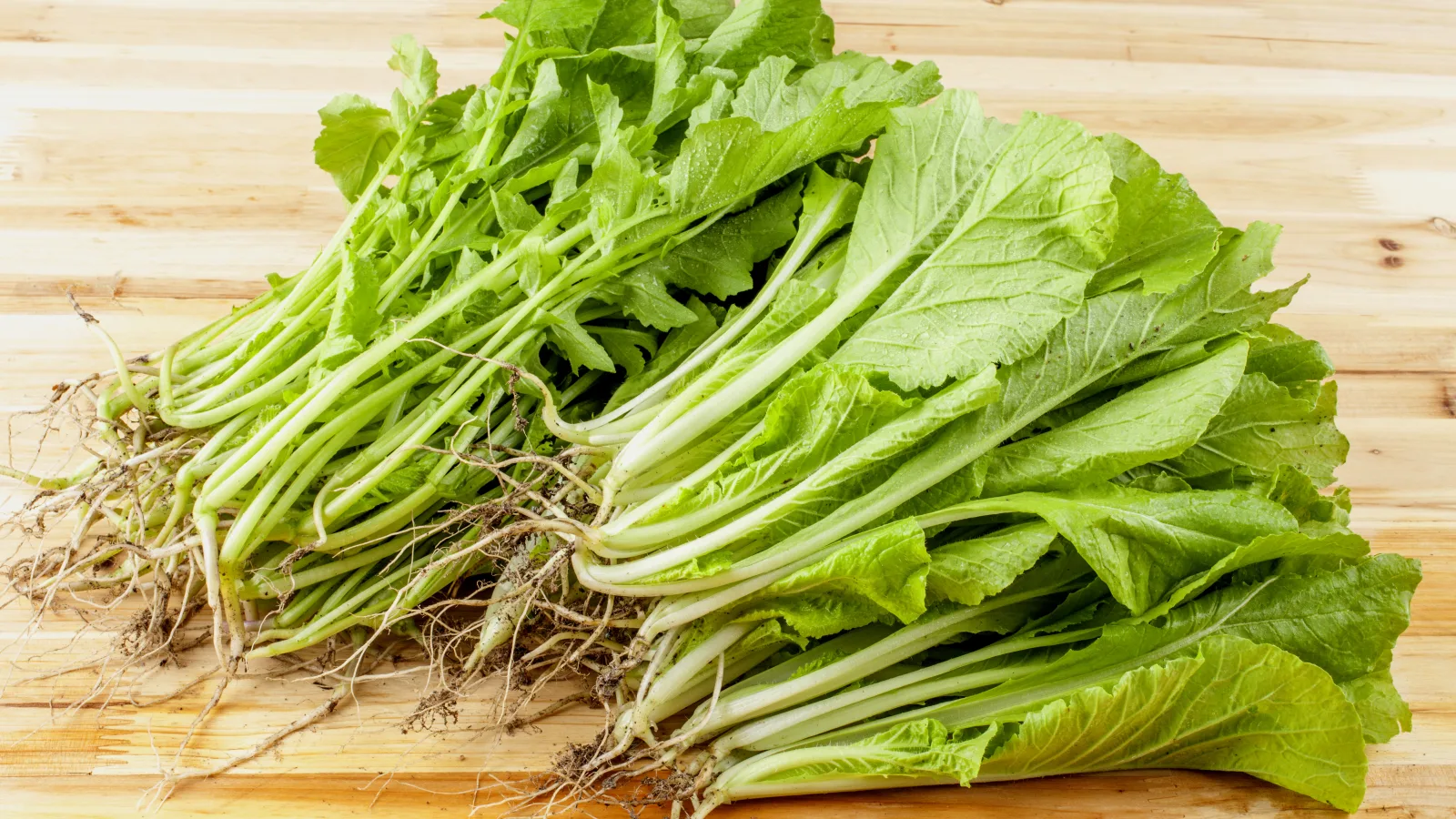
Early-Summer Yeolmu: Half the Crop Is in the Thinning
A week after you sow yeolmu (young summer radish), the seedlings come up shoulder to shoulder—and that crowd is exactly the problem. Thinning them in two rounds is what gives the survivors room to grow broad leaves and straight roots.