

- Type
- Leafy Greens
- Difficulty
- Easy
- Season
- Spring·Fall
- Sowing
- From seed
Chicory
Cichorium intybus
Inulin and lactucopicrin — the bitter leaf
Chicory is a bitter leafy green in the daisy family, genus Cichorium. Keep the names straight: the plant English calls wild lettuce (Lactuca virosa, Lactuca serriola) belongs to Lactuca, the garden-lettuce genus, and is a different plant from chicory altogether. The gogeo (苦苣) listed in the vegetable section of the Donguibogam is generally read today as this group, though some Korean herbal traditions read it instead as the wild sow-thistles known as sseumbagwi. Either way it is a different plant from wageo (萵苣), lettuce, despite the similar name. The leaves go into salads and wraps; the root is roasted as a coffee substitute or processed for its inulin as a dietary-fiber ingredient. Sow the seed and you can start taking outer leaves in about 40 days, and shutting out the light for the last ten days before harvest cuts the bitterness noticeably.
Year-Round Calendar
- 1
- 2
- 3
- 4
- 5
- 6
- 7
- 8
- 9
- 10
- 11
- 12
- 3
- 4
- 8
- 9
- 5
- 6
- 7
- 10
- 11
Where It Grows
- Main producer It produces roughly half the world's root chicory, the raw material for inulin. Belgian endive, the white shoot forced in the dark, also came from here.
- Main producer Nord and Picardy in the north are the growing areas, turning out root chicory and endive together.
- Major producer Its area planted to root chicory for inulin is second only to Belgium's.
- Major producer It is Eastern Europe's main root chicory producer.
- Major producer Veneto and Puglia produce leaf chicory. The red radicchio line branched off here.
- Major producer In Mehsana and Patan in Gujarat it is grown for roots that are roasted before use, and most of the crop goes to Europe.
It is native to a belt running from the Mediterranean coast into West Asia and North Africa, so no single country can be named as its home. Today northwestern Europe handles the roots and Italy the leaves (radicchio), while the practice of eating the leaves as ssam (leaf wraps) grew up in Korea and East Asia. The FAO counts "root chicory" as its own item but files the leaves together with lettuce, so the rankings change completely depending on which set of figures you look at.
- Optimum
- 15~20℃
- Range
- 5~28℃
- Hardiness
- Hardy
- Day length
- Long-day
A cool-weather perennial, it overwinters as a root and takes cold better than lettuce. After a spell of winter cold, lengthening days push up a flower stalk and the leaves turn too tough to eat, so growers after leaves keep it to short runs in spring and autumn. Heat and dry soil sharpen the bitterness fast.
In Korea Nationwide
It is grown nationwide as a wrapping green. Open-field crops run in spring and autumn as a rule, with greenhouses taking over in midsummer and midwinter. In summer the bitterness grows strong and the leaves are hard to use.
How to grow
- Light
- Four to six hours of sun is plenty. Strong midsummer sun pushes the bitterness up, so a spot that falls into afternoon shade is actually better.
- Soil and depth
- Loose, free-draining soil. A pot 20 cm deep does for leaves; go 30 cm or deeper if you want to use the root.
- Spacing
- Space plants 15 cm apart if you plan to pick leaves, and 25–30 cm if you want heads to form, as with radicchio.
- Watering
- Keep the soil evenly moist. Cycles of drying out and then flooding thicken the leaves and drive the bitterness up sharply.
- Feeding
- A base dressing is usually enough. Give a dilute top dressing every three to four weeks. Too much nitrogen and the leaves stretch, the tissue goes soft, and disease follows.
- Harvest
- From 40–50 days after sowing. Taking outer leaves one at a time keeps you picking for more than two months. Leaves picked in the morning are the least bitter. Once a flower stalk rises the leaves go too tough to eat, so pull the whole plant before that. Dig the roots in autumn if you want them.
What makes the difference. To take the edge off the bitterness, cover the plant for the last ten days before harvest with a paper bag or an upturned empty pot to shut out the light. The leaves pale to yellow and lose close to half their bitterness. This is the same principle behind Belgian endive. Bury autumn-dug roots in soil and keep them somewhere dark, and white shoots will rise for a second harvest in winter.
Common problems
- Aphids You will see New leaves curl, sticky honeydew coats them, and black sooty mould settles on top. What to do Wash them off with a jet of water, and pick off badly infested leaves entirely. A yellow sticky trap gives you early warning.
- Slugs You will see Ragged holes appear in the leaves overnight, with silvery slime trails. What to do They shelter under the pot and the saucer during the day, so lift those and collect them. Empty standing water from the saucer and keep the ground beneath dry.
- Downy mildew You will see Angular yellow patches bounded by the veins on the upper leaf surface, with greyish-white mould on the underside. What to do Pick diseased leaves off at once and bag them for disposal. Widen the spacing to open up airflow, and stop evening watering that wets the leaves.
This page describes how a crop is grown and used. It does not claim health effects for any food, nor is it intended to prevent or treat disease. Component and study notes are references only and do not mean the same result occurs in people. Consult a medical professional about health concerns.
Health Benefits
Inulin. Chicory root is 15-20 % inulin by fresh weight. It is a polysaccharide that ferments in the gut and is widely used as a food ingredient; the amounts involved there are on a different scale from what you get eating the leaves as a green.
What the Donguibogam recorded. The vegetable section of the Donguibogam carries an entry called gogeo (苦苣), recorded as cold in nature and bitter in taste. The entry explains that gogeo is the same as yageo, also called pyeongeo, gives the root a separate listing, and stands apart from wageo (萵苣), lettuce, in the same section. Which plant gogeo names today is disputed: some read it as the chicory group, while Korean herbal tradition often reads it as the wild sow-thistles known as sseumbagwi. It is a record from an old medical text, not a modern medical judgement.
What has been confirmed today. Lactucopicrin and lactucin, which give chicory its bitterness, are sesquiterpene lactones of the same family as the compounds in lettuce sap. For the leaves eaten as a vegetable, what has been confirmed in people amounts to composition; beyond that, nothing has been established in modern research.
Nutrition
- Inulin (15-20 % of the fresh root) — A prebiotic fibre
- Lactucopicrin and lactucin (In the latex) — The bitterness
- Folate (110 µg per 100 g) — A water-soluble B vitamin
- Vitamin K (High among leafy greens) — A fat-soluble vitamin
Inulin Chicory root is 15–20% inulin by fresh weight. Inulin is a long chain of fructose units, and the human small intestine has no enzyme to break it, so it travels intact to the large intestine. There it feeds gut bacteria, which is why it is classed as a prebiotic dietary fiber. A large share of the inulin used in fiber supplements and reduced-sugar processed foods is extracted from chicory root.
The bitter compounds Chicory's bitterness comes from lactucopicrin and lactucin. They are sesquiterpene lactones of the same family as the compounds in the white sap that runs from a cut lettuce stem. Outer leaves are more bitter, and so are plants that got a lot of sun and not enough water. Grow the plant with the light shut out and the bitterness drops sharply.
Folate and vitamin K Raw chicory greens carry about 110 µg of folate per 100 g, which is high among leafy vegetables. Vitamin K is on the generous side too. The darker the leaf, the more of both you get.
Anthocyanins in radicchio The red leaves of radicchio hold anthocyanin pigments, and the colour deepens in a cool autumn. Grilling fades the colour but softens the bitterness and brings out sweetness, because some of the bitter compounds break down in the heat.
Pairings
○ Oil and nuts — Bitterness eases when it meets fat. A generous pour of olive oil, or walnuts and pine nuts tossed through, rounds off chicory's edge. Radicchio takes well to being brushed with oil and charred in a pan.
○ Grilled pork belly — Used as a wrap in place of lettuce, chicory's bitterness cuts straight through fatty grilled meat. The leaves are thin without being tough, so one is enough for a wrap. Serving it half and half with lettuce keeps the bitterness from taking over. Lettuce
○ Chicory root coffee — Wash roots dug in autumn, slice them thin, dry them, and roast them dark for something close to the smell of coffee. It has no caffeine, so it is used as a coffee substitute or blended with beans. The habit spread through Europe when Napoleon's blockade cut off coffee, and it survives in New Orleans coffee.
△ Daisy-family allergy — Chicory is in the Asteraceae, so people allergic to mugwort or ragweed pollen can cross-react to it. If your mouth itches or your throat feels tight the first time you eat it, stop and see how it settles. Contact dermatitis from sesquiterpene lactones has also been reported.
△ Raising inulin intake too fast — Inulin ferments in the large intestine and produces gas. Jumping straight to 10 g a day or more in root powder or supplement form tends to bring bloating and loose stools. Build up from a small amount over several days instead. Eating the leaves as a vegetable does not raise this issue.
△ Gallstones and bile duct problems — Chicory root has been reported to increase bile flow. If you have gallstones or a history of bile duct obstruction, avoid concentrated root products and extracts, and check with a doctor before using them. Eating the leaves and taking a concentrated root preparation are two different things.
Varieties
- Green chicory (Seed) — The most common kind. Leaves picked for wraps and salads.
- Radicchio (Seed) — Heads up red. Carries anthocyanins and sweetens when grilled.
- Endive (Seed) — Finely cut, curly leaves. Deeply bitter.
- Chicon (Belgian endive) (Transplant) — The white shoot forced in the dark from roots lifted in autumn.
- Sugarloaf (Seed) — Heads up long and narrow. Less bitter and crisp.
Source: Donguibogam, Vegetable Section (苦苣) · Rural Development Administration (nongsaro.go.kr)
Stories about Chicory
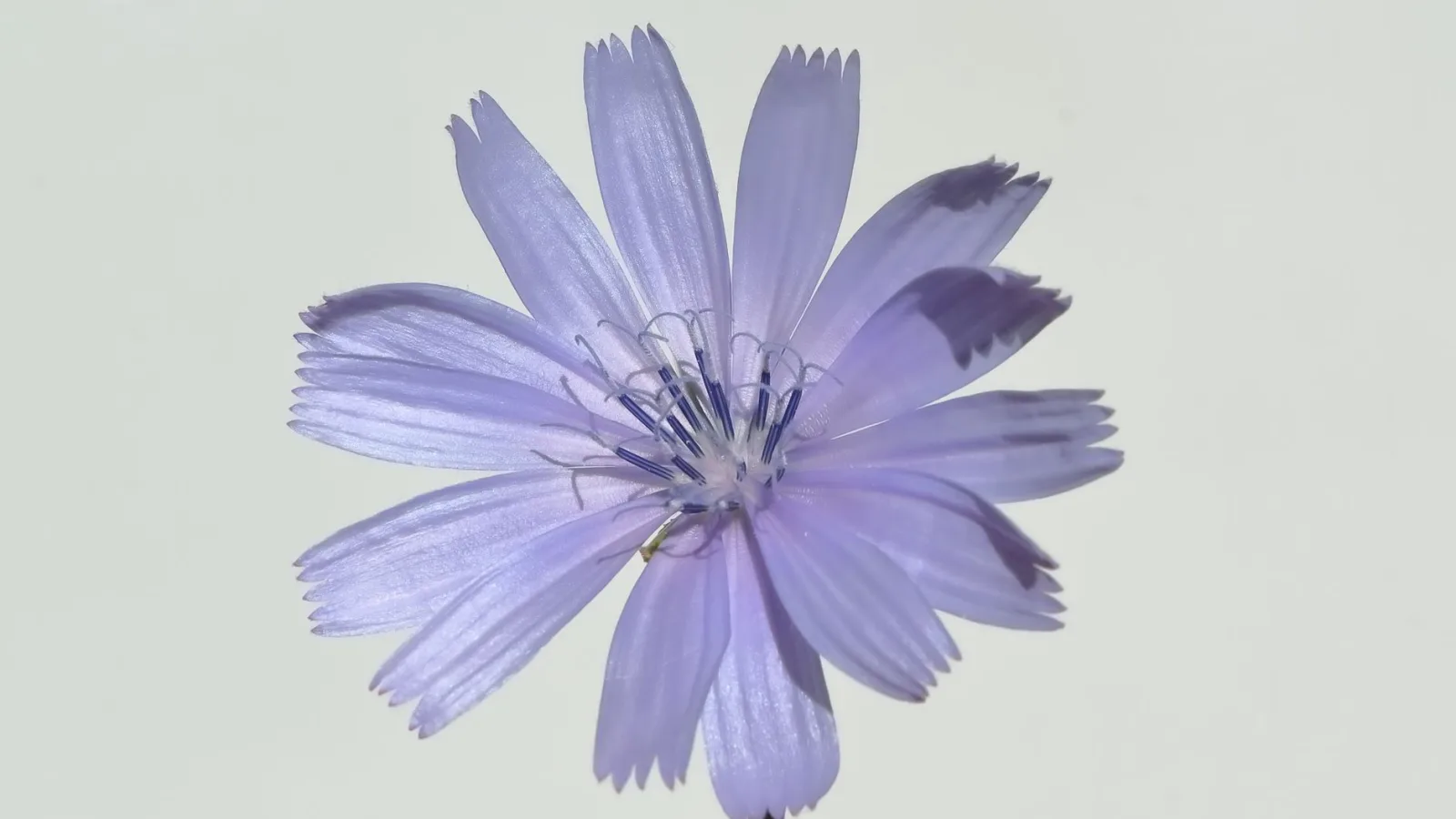
Why Chicory Tastes Bitter — and the Ten Days That Soften It
Chicory's bitterness comes from lactucopicrin and lactucin — a flavor question, not a health one, and one you can settle out in the garden bed. Block the light for the last ten days before harvest and the leaves come up pale and mild.
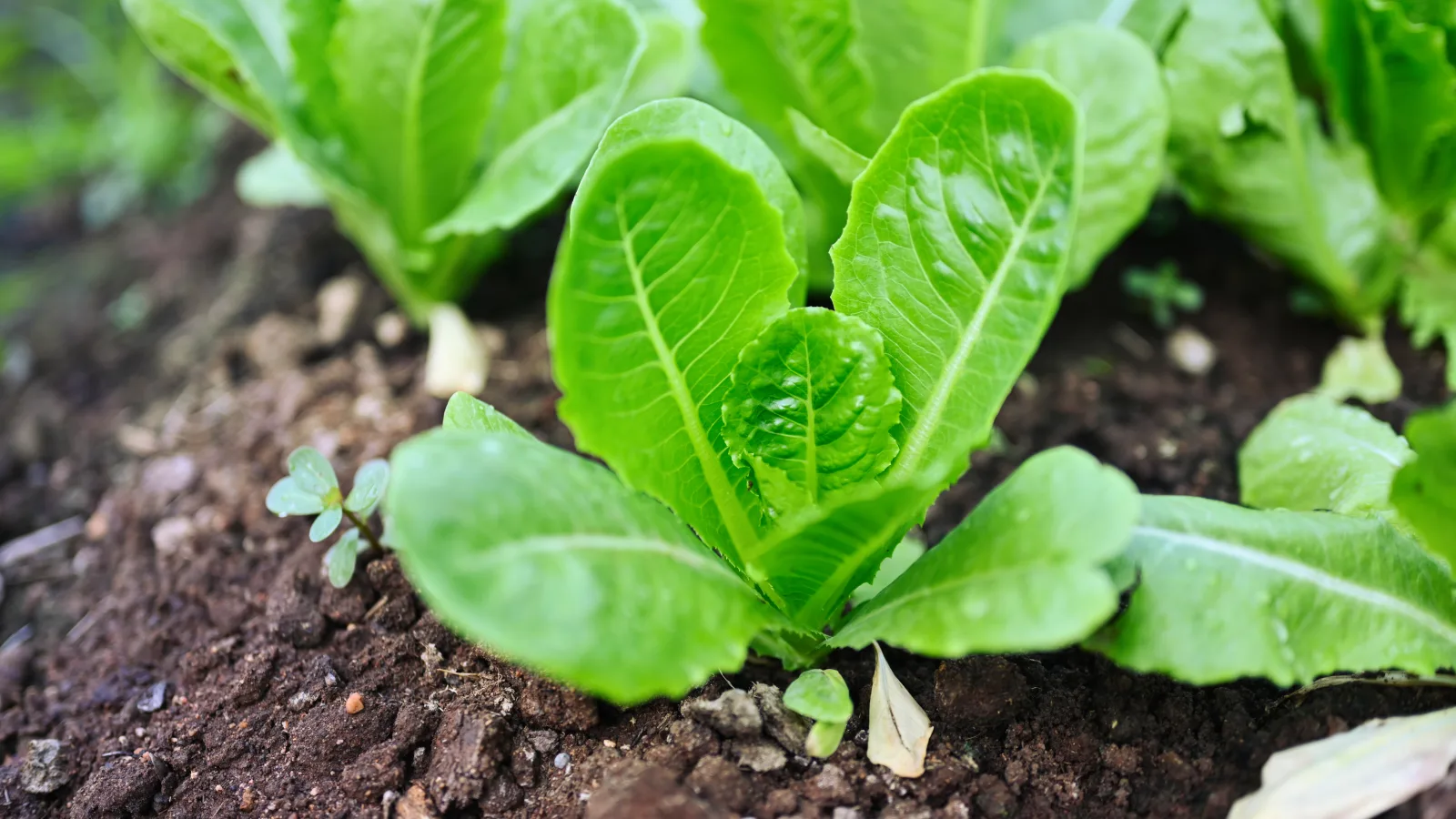
I Gave My Discarded Vegetables Back to the Soil, and My Lettuce Was Never the Same
A 2026 study found that a soil amendment made from vegetable trimmings helped baby lettuce grow as well as chemical fertilizer did, while holding onto far more water. Here's what it means for your own garden.