- Type
- Herbs & Aromatics
- Difficulty
- Easy
- Season
- Spring·Fall
- Sowing
- From seed
White mustard
Sinapis alba
Sinalbin and myrosinase · the pale seed behind yellow mustard
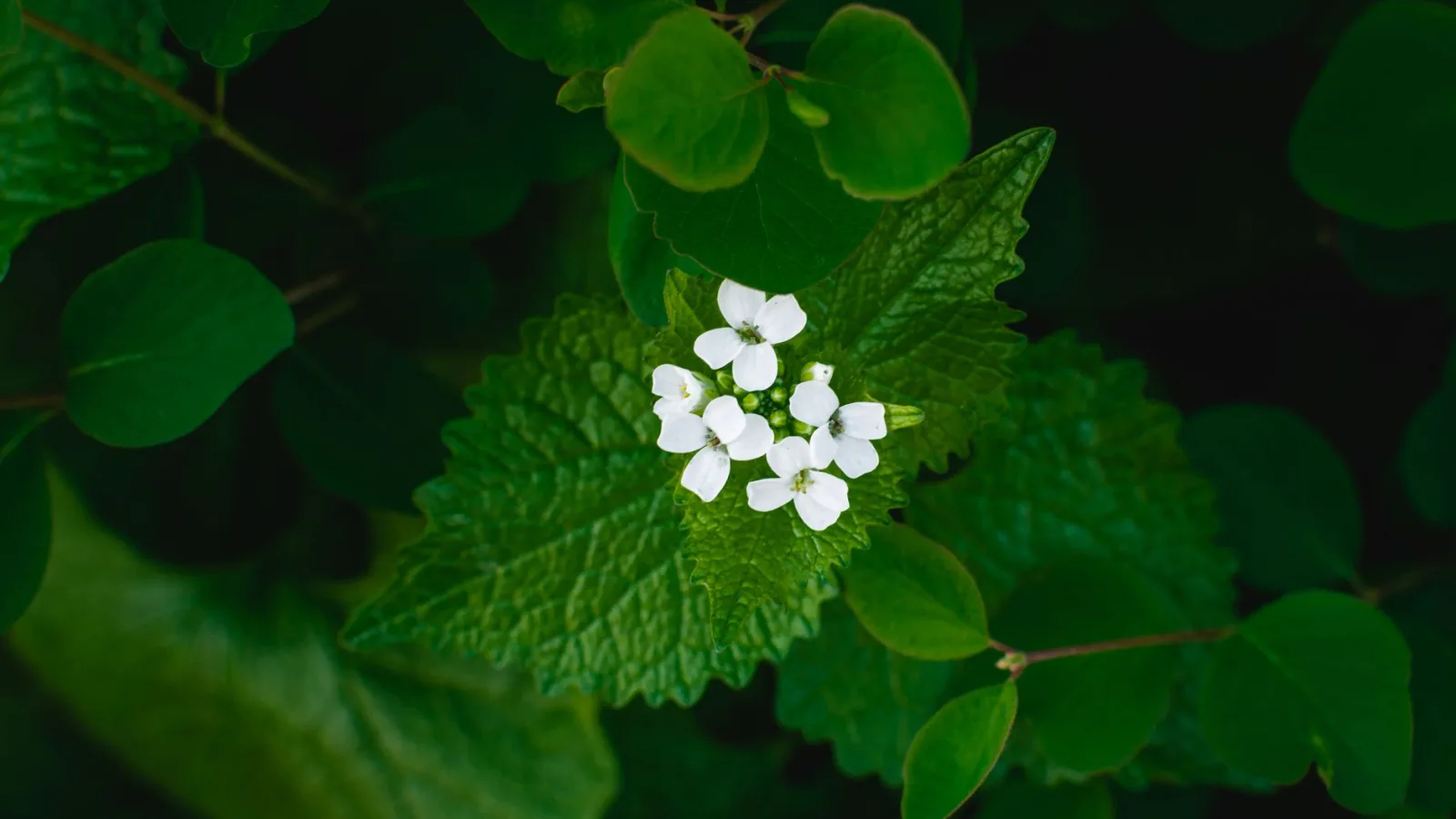
White mustard is a brassica annual whose seed is ground into mustard. The yellow mustard on a supermarket shelf, the one squeezed onto a hot dog, is built on this seed. The seeds are larger and paler than black mustard or leaf mustard seed, and the heat behaves differently too. Sinalbin from white mustard, once ground and mixed with water, turns into a heat that stays on the tongue, while sinigrin from leaf mustard and black mustard turns into something volatile that goes straight up the nose. The Donguibogam lists it in the Vegetable section as 白芥 and records the old Korean name as huingyeja, adding that it came from the western lands and resembles leaf mustard but with white leaves. Dressed as a green it is fiercely hot and good to eat, the entry says. The young leaves are picked for salads, and for seed you sow in spring and leave the pods to dry through early summer.
Year-Round Calendar
- 1
- 2
- 3
- 4
- 5
- 6
- 7
- 8
- 9
- 10
- 11
- 12
- 3
- 4
- 8
- 9
- 5
- 6
- 10
- 11
Where It Grows
-
Main producer
Grown on the cool, dry prairie of Saskatchewan and Alberta, and the world's largest exporter of yellow mustard seed. Harvest August, September
- 8
- 9
- Major producer The dry steppe of the southern Volga is the growing region.
- Major producer In the black-earth belt it is sown in two separate rounds, spring and autumn.
- Major producer The dry prairie of North Dakota and Montana is the growing region, continuous with the Canadian one.
Its home range runs from the Mediterranean coast into West Asia, and since no single country can be named as its origin, no country-of-origin row was entered. It suits a cool, dry steppe climate, so the main growing regions today are the North American prairies and the Black Sea coast; even the mustard sauces of Dijon and Bordeaux are made largely from seed brought in from Canada. The FAO's "mustard seed" category counts white mustard, black mustard and leaf-mustard seed together, so the tonnage that puts Nepal and Myanmar near the top of the rankings is mostly oil-pressing leaf mustard (Brassica juncea), which is not the same plant as white mustard.
- Optimum
- 15~22℃
- Range
- 5~30℃
- Hardiness
- Half-hardy
- Day length
- Long-day
It does well in cool weather and suffers in heat. Lengthening days push it into bolting, so a late spring sowing runs to flower before you get any leaves. Frequent rain while the seed is filling brings mould into the pods, and they split as soon as they dry.
In Korea Nationwide
It can be sown twice a year, spring and autumn, anywhere in the country, and all it has to avoid is the midsummer heat. Commercial cultivation is rare, so most seed is imported.
How to grow
- Light
- Five or six hours of sun a day. Seed production wants more
- Soil and depth
- Free-draining soil at least 20cm deep. A pot is enough if leaf is the aim
- Spacing
- 5 to 10cm sown dense for leaf; 20 to 30cm apart for seed
- Watering
- Soak it when the surface dries. Cut back on water as the pods fill so they dry properly
- Feeding
- A weak feed every fortnight from three weeks after sowing. Stop feeding seed plants once they flower
- Harvest
- Pick outer leaves from 30 to 40 days after sowing. For seed, cut the whole stem once the pods yellow but before they split, hang it upside down to dry, then thresh
What makes the difference. Grind the seed just before use; the aroma lives there. Ground powder loses it quickly, so store the seed whole and sealed and grind small amounts
Why this one is harder. Fully dry pods split on their own and scatter the seed. A day or two can cost you the lot, so cut when the lower pods turn yellow and finish the drying in a paper bag
Common problems
- Flea beetles You will see Small pinprick holes punched densely through the leaves What to do Cover with fleece straight after sowing. If they have already arrived, set yellow sticky traps
- Cabbage white caterpillars You will see Leaves chewed in large pieces, with green caterpillars visible What to do Check the undersides morning and evening and pick them off by hand
- Aphids You will see They mass on new leaves and flower stalks and everything turns sticky What to do Wash them off with a jet of water; if they return, use a soap or oil spray
This page describes how a crop is grown and used. It does not claim health effects for any food, nor is it intended to prevent or treat disease. Component and study notes are references only and do not mean the same result occurs in people. Consult a medical professional about health concerns.
Health Benefits
The old record — baekgae (白芥). The Donguibogam lists the plant in its Vegetable section as 白芥 and gives the old Korean name as huingyeja. It records a warm nature, a pungent taste and no toxicity. It came from the western lands, the entry says, and resembles leaf mustard but with white leaves; dressed as a green it is fiercely hot and good to eat. What an old medical text wrote differs from how it is judged today.
Sinalbin and myrosinase. Food chemistry describes white mustard seed as holding both the glucosinolate sinalbin and the enzyme myrosinase, with the enzyme splitting the glucosinolate to form the pungent compound once the seed is broken and wetted. That is why a whole seed is not hot. This concerns composition and cooking behaviour.
What separates the mustards. Analyses report sinalbin as the principal glucosinolate of white mustard and sinigrin as that of leaf mustard and black mustard. The pungent compounds formed differ in volatility, which is what gives each sauce its character. These are compositional analyses.
Nutrition
- Sinalbin (held in the seed) — the glucosinolate that becomes white mustard's heat
- Myrosinase (held in the same seed) — the enzyme that splits the glucosinolate once the seed is ground and wetted
- Fat (abundant in the seed) — the component behind mustard seed oil
- Mucilage (in the seed coat) — a polysaccharide that thickens on contact with water and gives the sauce its body
The order in which heat is made White mustard seed holds sinalbin, a glucosinolate, and myrosinase, an enzyme, in separate compartments. Only when the seed is ground and meets water do the two meet and the pungent compound form. That is why a whole seed is not hot and a ground, mixed paste is.
Why white mustard and leaf mustard differ The pungent compound from white mustard has low volatility and reads as heat on the tongue, while the one formed from sinigrin in leaf mustard and black mustard is volatile and stings the nose. That single difference decides the character of the sauce.
Hot water kills the heat Mix mustard powder with hot water and the enzyme is destroyed first, so little heat develops. Use lukewarm or cold water and let it stand five to ten minutes. Add vinegar and salt after the heat has come up.
Mucilage in the seed coat The seed coat of white mustard carries a mucilage that thickens on contact with water. That is where a mustard sauce gets its body and its willingness to hold oil.
Pairings
○ Sausage and ham — Yellow mustard made from white mustard has kept company with sausage and ham for a long time. Its heat stays on the tongue and holds down the richness.
○ Vinegar and honey — Ground mustard mixed with vinegar and honey becomes a dressing. Add them after the heat has come up, or the aroma goes with them.
○ Young leaf salad — Pick the young leaves and mix them straight into a salad. They carry the same edge as the gat in gat kimchi, on a far softer leaf.
△ Applied to the skin — Mustard paste spread on cloth and held against the skin was a folk practice, but mustard oil compounds irritate skin and cases of blistering and burn-like injury have been reported. Keep mustard to food and off the skin, and never use it this way on a child.
△ Bringing your face close — The vapour rising from freshly mixed mustard irritates the eyes and the lining of the nose. Do not hold the bowl under your nose, keep your face back while grinding, and ventilate. Do not rub your eyes with mustard on your hands.
△ Mustard allergy — Mustard is a declarable allergen in Europe. If you have ever reacted to mustard, leaf mustard or rapeseed, check for mustard in sauces and spice blends too. Reactions have been reported from very small amounts.
Varieties
- White mustard (seed) — Larger, paler seed. The base of yellow mustard
- Black mustard (seed) — Small, dark red seed. The heat goes up the nose
- Leaf mustard (gat) (seed) — The group grown for leaves and made into kimchi. Its seed becomes Korean and Chinese mustard powder
- Sown thickly for leaf (seed) — Not a cultivar distinction but a method. Sown dense and cut for leaf about a month later
Source: Donguibogam, Vegetable Section 白芥 · Korea National Arboretum, Korean Plant Names Index