- Type
- Trees & Vines
- Difficulty
- Hard
- Season
- Spring
- Sowing
- Plant a sapling
Schisandra
Schisandra chinensis
Lignans, organic acids · the vine berry of five tastes
Schisandra is a deciduous woody vine grown up a trellis. Plant saplings in March or April and build the trellis first; the first crop usually comes in the third year, cut cluster by cluster with scissors in August or September once the berries redden. The roots run shallow, so summer drought and hard sun hurt it, and the ground is best kept under straw or a mulch of cut grass. The Donguibogam lists it in the Herb section as 五味子, giving it a warm nature and a sour taste, though some call it slightly bitter, with no toxicity. The same entry explains the name: the skin and flesh are sweet and sour, the seed inside pungent and bitter, and all of it carries salt, so it holds all five tastes.
Year-Round Calendar
- 1
- 2
- 3
- 4
- 5
- 6
- 7
- 8
- 9
- 10
- 11
- 12
- 3
- 4
- 8
- 9
Where It Grows
- Main producer The buk-omija (northern schisandra) growing areas of Jilin, Liaoning and Heilongjiang lead world supply. What is traded in central China as nam-omija is a different species, Schisandra sphenanthera.
-
Major producer
Mungyeong and Sangju in North Gyeongsang, along with Jangsu in North Jeolla, are the representative growing areas. Harvest August, September
- 8
- 9
- Wild population It grows wild in the forests of Primorsky Krai and Khabarovsk.
- Wild population It occurs in the mountains of Hokkaido and northern Honshu.
Its home is the northern temperate forest spanning the Korean Peninsula, northeastern China and the Russian Far East, and cultivation stays within that same range. Because the origin cannot be pinned to a single country, no country-of-origin row has been set up. The nam-omija (southern schisandra) of central China is a different species and is not counted alongside it.
- Optimum
- 15~25℃
- Range
- 0~30℃
- Hardiness
- Hardy
A deciduous woody vine of mountain country with cool summers. It endures winters of around −30℃, but its roots are shallow, which leaves it weak against summer drought and the full midday sun.
Harvested 3–5 years after planting. Fruit begins to set in the third year after the seedlings go in, and a proper picking comes in the fourth or fifth year. The month of planting and the month of the first harvest do not fall in the same year.
In Korea Mountain areas
Inland mountain country with cool summers suits it best. Mungyeong and Sangju in North Gyeongsang, Jangsu in North Jeolla, and Inje in Gangwon are the known areas.
How to grow
- Light
- A spot with morning sun and shade from the midsummer afternoon. In all-day hard sun the leaves scorch
- Soil and depth
- Humus-rich, free-draining ground. The roots are shallow and suffer as soon as the soil dries
- Spacing
- 60 to 80cm between plants, 2.5 to 3m between rows. Build a trellis about 2m high and train the stems up it
- Watering
- Shallow roots cannot ride out a summer drought. Mulch with straw or cut grass and soak thoroughly when it dries
- Feeding
- A ring of well-rotted compost around the shoulder of the bed in spring is enough. Too much nitrogen gives long vine and few berries
- Harvest
- Cut whole clusters with scissors in August or September, once the berries have reddened. The first crop usually comes in the third year after planting. Fruit for drying goes in the shade until the surface moisture is gone, then out into the sun
What makes the difference. Build the trellis in the planting year. Putting supports in after the vine has run damages the stems. Besides March and April, saplings can also go in during late autumn once the leaves have dropped
Why this one is harder. Roots rot where water stands. Raise the bed at least 20cm and cut drainage channels before the rainy season
Common problems
- Spider mites You will see Leaf undersides stippled yellow and drying, with fine webbing What to do Wet the undersides of the leaves to keep humidity up; if it spreads, apply an approved organic product to the leaf backs
- Powdery mildew You will see A dusting of white spreading across the upper leaf surface What to do Thin the vine so air moves through and strip the lowest leaves. Take affected leaves off the plot
- Stink bugs You will see Ripening berries going patchy white and turning soft What to do Collect them by hand early in the morning. Keep the grass around the trellis cut short
This page describes how a crop is grown and used. It does not claim health effects for any food, nor is it intended to prevent or treat disease. Component and study notes are references only and do not mean the same result occurs in people. Consult a medical professional about health concerns.
Health Benefits
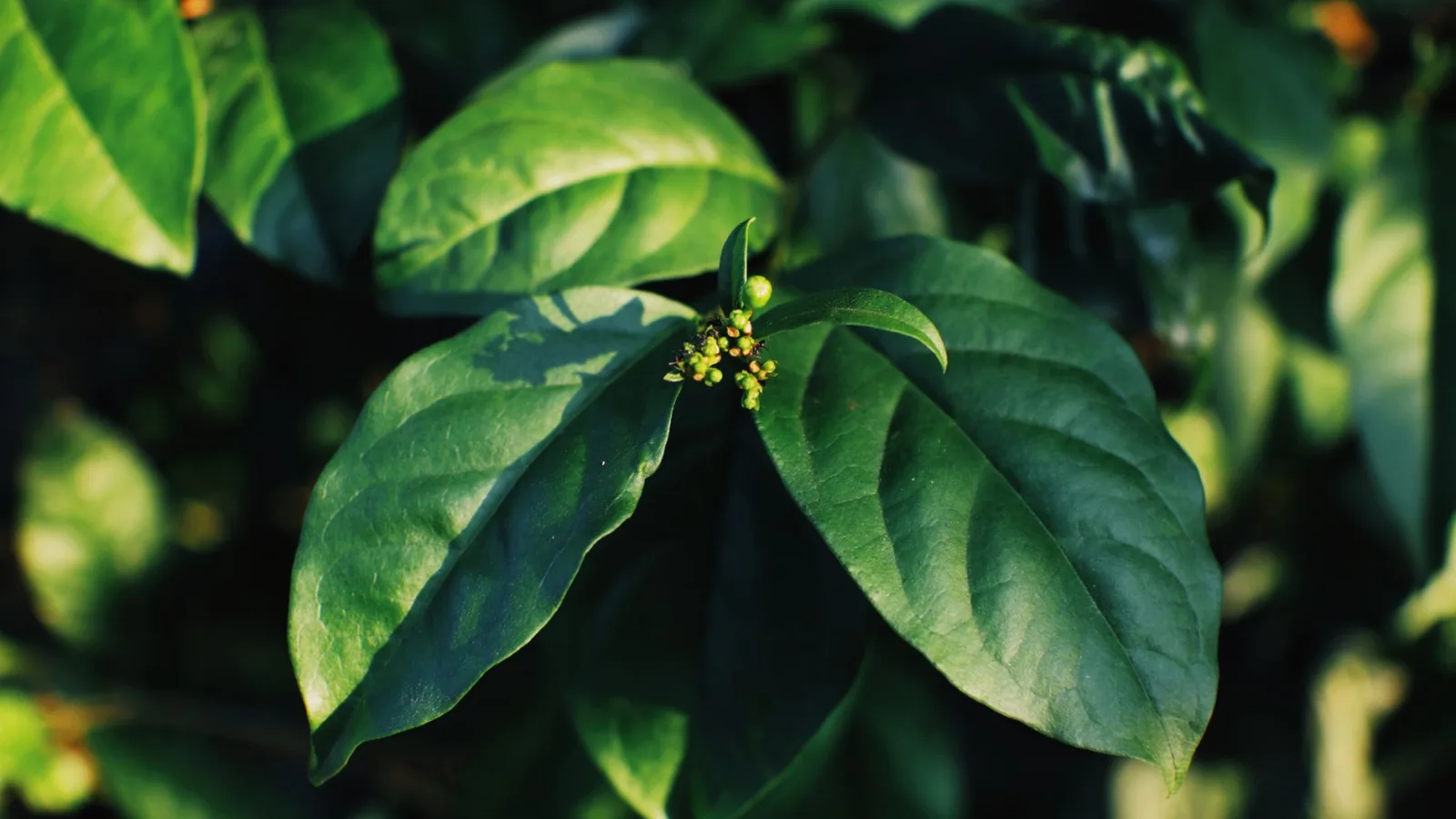
What the Donguibogam records — the name, the plant and the harvest. The Donguibogam lists schisandra in the Herb section as 五味子. It gives a warm nature and a sour taste, notes that some call it slightly bitter, and records no toxicity. It explains the name: the skin and flesh are sweet and sour, the seed inside pungent and bitter, and all of it carries salt, so the fruit holds all five tastes. It describes a plant of deep mountains with red stems that climbs as a vine, leaves like apricot leaves, yellowish-white flowers, and berries the size of peas clustered at the stem tips, green when young and turning red-purple when ripe. Berries are gathered in the eighth lunar month and dried in the sun; for medicinal use they are sun-dried raw with the seed left in. It adds that the fruit from Hamgyeong and Pyeongan provinces was rated best in Korea. This is a historical medical record and differs from modern medical judgment.
Analysis of lignan composition. Schisandrin and gomisin-type lignans have been isolated from the berry and seed, with analyses placing more of them in the seed than in the skin and flesh. Comparisons also report that steeping temperature and time change how much is drawn out. This is compositional analysis, not a statement about effects.
Organic acid composition and sourness. Analyses report the sourness of schisandra as coming from malic, citric and tartaric acids. Comparisons of cold-steeped and boiled preparations also record different compositional profiles. The entry stays with the compositional record.
Nutrition
- Lignans (schisandrin, gomisins) (reported to concentrate in the seed) — lignans characteristically reported in the genus Schisandra
- Organic acids (malic, citric, tartaric) (account for most of the sourness) — the acids behind the sour taste
- Anthocyanins (held in the red skin) — the pigment giving the skin its red colour
Organic acids and sourness The sourness of schisandra is reported to come from malic, citric and tartaric acids. Sugars rise as the berry reddens, but the acidity stays high. That is why the fresh berry is steeped or preserved rather than eaten straight. It is better not to brush hard immediately after drinking something this acidic.
Lignans and the seed Schisandrin and gomisin-type lignans have been isolated from the berry, with analyses placing more of them in the seed than in the skin and flesh. The direction of taste matches the Donguibogam's note that the seed inside is pungent and bitter. Grinding the seed or boiling the fruit a long time brings that out. In practice, how you steep it changes what ends up in the cup.
Anthocyanin pigment The red of schisandra comes from anthocyanin-type pigments in the skin. They read clear red in acid and turn muddy as conditions move alkaline. A drop of lemon juice brightening a jug of cold-steeped omija water is that same chemistry. The pigment is sensitive to light and heat, so long boiling or a bright shelf will fade it.
Pairings
○ Cold steeping — Steep dried berries in cold water for eight to twelve hours. Boiling in hot water draws bitterness and astringency out of the seed. Strain out the solids afterwards and keep the liquid refrigerated.
○ Preserved in honey or sugar — Layer fresh berries with an equal weight of sugar and the juice comes up. The high acidity keeps it reasonably well, but scald the jar first and refrigerate once it is made. Do not keep the strained solids long.
○ Pear and pine nuts — Chilled omija water with thin-sliced pear and pine nuts floated on top is a long-standing summer dish. The sweetness of the pear takes the edge off the acid. Add ice only just before serving so the flavour is not watered down. Asian Pear · Korean Pine Nut
△ Long boiling — Boiled a long time, the seeds break down and release strong bitterness and astringency. Heat also fades the pigment and dulls the colour. Cold water is the default for steeping; if it has to be warmed, keep it brief.
△ When taking medication regularly — Schisandra constituents have been reported to affect the activity of enzymes that process certain drugs. Anyone on daily medication who wants to drink strong omija regularly should speak with their doctor or pharmacist first. An occasional cup and several strong cups a day are not the same thing.
△ Using wild-gathered fruit as it comes — Several different plants carry omija in their Korean name. Kadsura japonica of the south coast and Jeju is an evergreen vine in another genus, and Schisandra repanda on Jeju is a separate species whose berries ripen black. Do not dig or strip wild stands; buy saplings with the botanical name confirmed.
Varieties
- Schisandra chinensis (northern omija) (sapling) — Almost all planted stock is this species. The berries ripen red
- Mungyeong local line (sapling) — The line carried on around Mungyeong in North Gyeongsang, where Korean cultivation is concentrated
- Schisandra repanda (black omija) (sapling) — A different species growing on Jeju. The berries ripen black. Do not dig wild plants
- Kadsura japonica (southern omija) (sapling) — An evergreen vine of the south coast and Jeju, in a different genus. Only the name is close, so check the botanical name when buying saplings
Source: Donguibogam, Herb Section 五味子 · Rural Development Administration (Nongsaro) · Korea National Arboretum species database