- Type
- Herbs & Aromatics
- Difficulty
- Moderate
- Season
- Fall
- Sowing
- Division
Peony
Paeonia lactiflora
Paeoniflorin · the root beneath the garden peony
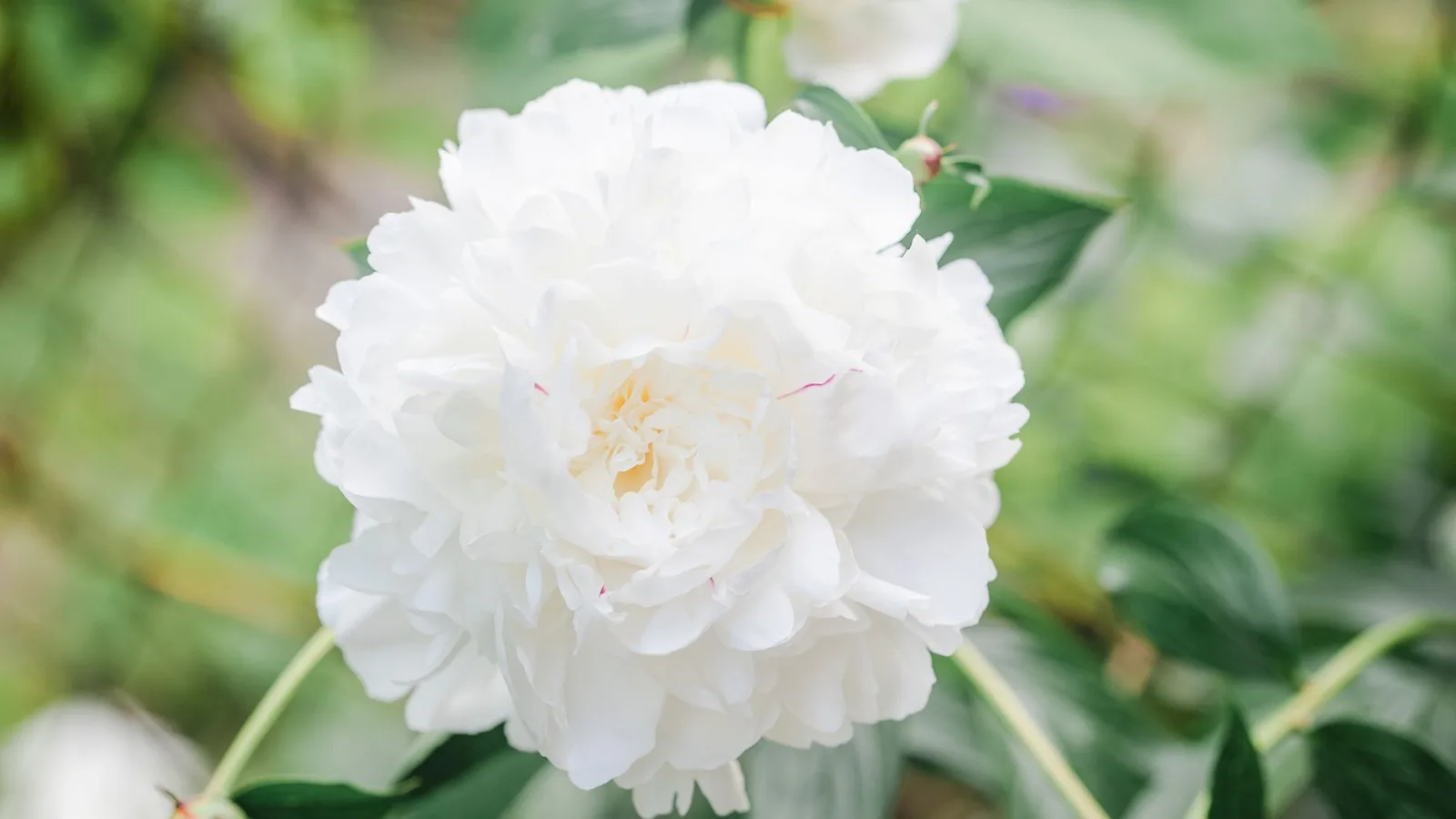
Peony is a herbaceous perennial for the flower bed, known in Korean as hambak-kkot, the generous flower. In May a bloom the size of a palm opens, and after several seasons the thickened root is lifted and dried. That dried root is the jakyak of ssanghwa tea and of many prescriptions, and the market divides it into red and white, jeokjakyak and baekjakyak. Paeoniflorin, a glycoside, was isolated from the root and now serves as its marker compound. The Donguibogam lists it in the Herb section as jakyak (芍藥), also called haechang (解倉), and records a nature neutral but slightly cold, a taste bitter and sour, and slight toxicity. It gives the harvest time — the plant grows in hills and fields, and the root is lifted in the second and eighth lunar months and dried in the sun — and instructs that a root raised on household manure be passed over in favour of one grown wild in the mountains. It leaves a selection rule too: the mountain plant with single red flowers is graded highest. Digging a root and decocting it yourself is not something to do; where it is used as medicine, follow a practitioner's preparation.
Year-Round Calendar
- 1
- 2
- 3
- 4
- 5
- 6
- 7
- 8
- 9
- 10
- 11
- 12
- 9
- 10
- 9
- 10
Where It Grows
- Main producer Produces most of the peony root used as medicine. Bozhou in Anhui, Hangzhou in Zhejiang, and Sichuan are long-established growing areas.
-
Major producer
The growing areas are cool inland districts such as Uiseong and Yeongju in North Gyeongsang and Pyeongchang in Gangwon. Harvest September, October
- 9
- 10
- Major producer Produces more than anywhere else in the world, as a cut flower rather than for the root, cutting and exporting in May and June.
- Major producer Grown for medicinal use in Hokkaido and Nara Prefecture.
- Wild population Wild populations are distributed across the eastern grasslands and foothills.
- Wild population Grows wild on the grasslands and forest margins from southern Siberia to the Primorsky region.
It is native to the grasslands and forest margins of Northeast Asia, stretching from northern China across Mongolia, southern Siberia and the Korean peninsula, so it cannot be pinned to a single country and no country-of-origin row has been set up. Regions that grow it for the root (China, Korea, Japan) and regions that grow it as a cut flower (the Netherlands and the rest of Europe) raise the same species for different purposes, which makes output hard to compare in a single line. The tree peony, commonly grouped with it in flower beds, is a shrub while the peony here is a herbaceous plant, so they are different species.
- Optimum
- 15~25℃
- Range
- 5~30℃
- Hardiness
- Hardy
A perennial that must go through winter cold. The buds below ground need several weeks at 0–7℃ before flower stalks will rise the following year, so in places with warm winters the plant puts out leaves but no flowers. It is weak against summer heat and standing water.
Harvested 3–4 years after planting. The roots are divided and planted in autumn, grown for three or four years, then dug up in autumn. The year of planting and the year of harvest are different, and if the plant is moved during that period, everything starts over from the beginning.
In Korea Nationwide
Inland and mountain areas with sufficiently cold winters are better, and in the warm-wintered southern lowlands the flower stalks do not rise well. Uiseong and Yeongju in North Gyeongsang and Pyeongchang in Gangwon are the known areas.
How to grow
- Light
- Full sun all day. In shade the buds never stand up
- Soil and depth
- Rich, free-draining soil at least 40cm deep. Standing water rots the root
- Spacing
- 80cm to a metre between crowns. The clump thickens every year, so allow for it from the start
- Watering
- Keep it from drying out through the first year only. Once established it largely carries itself on rainfall
- Feeding
- Work compost around the crown in autumn. Heavy nitrogen builds leaf and cuts the flowers
- Harvest
- The flowers open in May. Roots are lifted in autumn from the third or fourth season on; the old text records lifting them in the second and eighth lunar months and drying them in the sun
What makes the difference. If the buds sit deeper than 3 to 5cm below the surface at planting, the plant may not flower for years. Planting shallow is the trick
Why this one is harder. The root only thickens after several seasons in one place, and moving it starts that clock over. A transplanted peony often skips flowering the following year, so settle the position at the outset
Common problems
- Botrytis blight You will see Buds collapse brown and a grey dust settles on them What to do It spreads when wet weather lingers. Remove affected buds and leaves and open the spacing for airflow
- Powdery mildew You will see Leaf surfaces whiten as though floured in summer What to do Thin the clump for airflow and take off the affected leaves. Do not water over the foliage
- Root rot You will see Shoots fail to appear in spring, or start and then wilt What to do Avoid spots where water sits and raise the bed. Dig out rotted crowns and do not replant in the same place
This page describes how a crop is grown and used. It does not claim health effects for any food, nor is it intended to prevent or treat disease. Component and study notes are references only and do not mean the same result occurs in people. Consult a medical professional about health concerns.
Health Benefits
What the Donguibogam records — jakyak (芍藥). The Donguibogam lists the plant in its Herb section as jakyak (芍藥), also called haechang (解倉). It records a nature neutral but slightly cold, a taste bitter and sour, and slight toxicity. It grows in hills and fields, and the root is lifted in the second and eighth lunar months and dried in the sun; the text instructs that a root raised on household manure be passed over in favour of one grown wild in the mountains. It grades the mountain plant with single red flowers highest, and divides the material into a red kind and a white kind. The entry quotes the Bencao. This is a historical medical record and differs from modern medical judgment.
Analyses of paeoniflorin. The monoterpene glycoside paeoniflorin was isolated from peony root and is taken as the marker compound in herbal material standards today. These are compositional analyses and have nothing to do with preventing or treating disease.
Nutrition
- Paeoniflorin (isolated from the root) — the monoterpene glycoside used as the marker compound for peony root
- Tannins and gallotannins (present in the root) — polyphenols discussed alongside astringency
- Anthocyanins (petal pigments) — the pigments that colour the red petals
- Starch (accumulates in the root) — what builds the root as it thickens over several seasons
Not a vegetable Peony is not a vegetable for the table. The flower is grown in the bed, and the root, after several seasons, is lifted and dried for use as a herbal material. Everything said here about composition refers to that dried root and is not an instruction to decoct one at home.
Paeoniflorin The monoterpene glycoside paeoniflorin was isolated from peony root and now serves as the marker compound in herbal material standards. This entry stays with the compositional record.
Red and white peony root The market splits the material into red and white, which most often distinguishes root dried with the skin on from root peeled before drying. The name of a separate white-flowered species, Paeonia japonica, overlaps with the same term, which keeps the confusion alive. Check which one a seller means.
Petal pigment The colour of the red petals comes from anthocyanins. In double ornamental types the petals stack in several rows, so the colour reads thicker.
Pairings
○ Planting after early bulbs — Peony flowers in May and the space looks empty until then. Early spring bulbs in front of it carry the bed through in sequence. Do not plant directly over the peony crown.
○ A ring support — The flowers are large and heavy, and rain lays the whole stem down. Fit a ring support before the buds swell. Once the flowers are over, cut only the flower stems away.
○ Dried root — a practitioner's preparation — Dried peony root goes into ssanghwa tea and many other prescriptions. Which prescription and how much is a practitioner's decision. Root dug from a flower bed does not go in as it is.
△ Digging and decocting it yourself — Do not decoct peony root dug from a garden or a hillside. The old text itself recorded slight toxicity, and what is used as a herbal material today has been processed to a standard and tested. Where it is needed as medicine, follow a practitioner's preparation.
△ Plants bought as ornamentals — Plants and roots bought at a flower market for their blooms are not used as herbal material. Sprays applied while growing them can remain in the root, and they were never raised for that purpose.
△ Confusion with tree peony — Peony is a herbaceous plant whose stems die back in winter; tree peony, moran, keeps woody stems. Tree peony root bark is used separately as mokdanpi, so the two are never substituted. Leaves alone will not separate them — check the winter stems.
Varieties
- Single red types (division) — The form the Donguibogam singled out for medicine. One row of petals, red flowers
- Double ornamental types (division) — The group widely planted in beds. Petals layered many rows deep
- Paeonia japonica (distinction) — A different species with white flowers. The Korean market name baekjakyak also refers to peeled, dried root of Paeonia lactiflora, so the names overlap
Source: Donguibogam, Herb Section 芍藥 · Korea National Arboretum, Korean Plant Names Index