

- Type
- Legumes
- Difficulty
- Moderate
- Season
- Summer
- Sowing
- From seed
Peanut
Arachis hypogaea
Unsaturated fats and plant protein - a seed that turns nutty when roasted
The peanut is a legume with a curious habit: after its flowers fade, the stalk bends down and the pod burrows into the soil to mature underground. That trait gives the plant its Korean name, nakhwasaeng (落花生), literally "fallen-flower fruit." Nutritionally, the heart of the peanut is its unsaturated fats, such as oleic and linoleic acid, along with plant protein and vitamin E. After harvest, dry the pods thoroughly and keep them somewhere cool and dry: stored damp, peanuts grow mold that can produce aflatoxin, and roasting or boiling does not reliably remove it. Discard any kernels that are moldy or taste bitter or musty. One more caution: peanuts are among the most common food allergens, so they should be handled with care.
Year-Round Calendar
- 1
- 2
- 3
- 4
- 5
- 6
- 7
- 8
- 9
- 10
- 11
- 12
- 5
- 9
- 10
Where It Grows
-
Main producer
Produces more than a third of world output. The sandy soils of Shandong and Henan are the heartland. Harvest September, October
- 9
- 10
- Main producer Grown in the semi-arid west, in Gujarat, Rajasthan and neighbouring states, timed to the rainy season.
- Major producer The northern savanna is the growing region, and a long-established source of oil-grade peanuts.
-
Major producer
Centred on the sandy-soil belt of the southeast, in Georgia, Alabama and nearby states. Harvest September, October
- 9
- 10
- Major producer Grown in the rain-fed farming belt along the southern edge of the Sahel.
- Major producer The heart of the West African peanut belt, with a high share of output going to export.
Cultivation began in southern South America, across the Gran Chaco region stretching from southern Bolivia into northern Paraguay. Because the crop's origin cannot be pinned to a single country, no country-of-origin row has been given. From the 16th century onward it travelled by ship to Africa and Asia, and today China and India together account for more than half of world production, while West Africa remains a source of oil-grade peanuts.
- Optimum
- 25~30℃
- Range
- 15~35℃
- Hardiness
- Not hardy
Peanuts grow where the frost-free season is long and summers are hot. Seeds will not germinate below 15℃, and if the soil hardens or dries out while the pods are filling, the pegs cannot push down into it and yields fall sharply. Around harvest, by contrast, dry weather is welcome, since it makes curing easier.
In Korea Nationwide
Well-drained sandy fields suit the crop best, so most of it is grown in the sandy-soil belt along the west coast and on the sandy ground beside the large rivers. Because it has to be lifted before the first frost, growers in the central region and further north have little room to push back their planting dates.
How to grow
- Light
- It wants a lot of sun
- Soil and depth
- 30cm deep and loose. Nothing forms in compacted ground
- Spacing
- 30cm
- Watering
- Generous once the flowers have gone and the nuts are filling
- Feeding
- A legume, so little. Work in lime instead
- Harvest
- Before the frosts, when the leaves yellow. Lift the whole plant
What makes the difference. After flowering the peg drives into the soil and the nut forms on its tip. Draw soil up around the plant at that point and you get more
Common problems
- Chafer grubs You will see Nuts gnawed underground What to do Never use half-rotted compost
This page describes how a crop is grown and used. It does not claim health effects for any food, nor is it intended to prevent or treat disease. Component and study notes are references only and do not mean the same result occurs in people. Consult a medical professional about health concerns.
Health Benefits
The old name nakhwasaeng (historical record). Once the flower has fallen, the peanut's ovary stalk burrows into the soil and the pod fills out underground. Old records took that habit straight into the name nakhwasaeng (落花生), and the pod still ripens the same way today.
Unsaturated fats and vitamin E (composition). Peanuts are rich in unsaturated fats and vitamin E, so they turn up inside research that treats nuts as a group; with nothing established for peanuts on their own, what can be said for now stops at composition.
Nutrition
- Unsaturated fats (oleic and linoleic acid) (Rich, savory fats) — The bulk of the seed's fat
- Plant protein and vitamin E (Present) — Principal components of the legume seed
Unsaturated fats & vitamin E The nutty richness of peanut comes from unsaturated fats such as oleic and linoleic acid, and vitamin E is present alongside them.
Plant protein As befits a legume crop, peanut is rich in plant protein.
Aflatoxin & storage Stored damp, peanuts grow mold that can produce aflatoxin, a mold toxin that roasting or boiling does not reliably destroy. Dry the crop thoroughly after harvest and keep it somewhere cool and dry; shelled kernels go into a sealed container in the refrigerator or freezer. Pick out and discard any kernel that shows mold or tastes bitter or musty, and throw out the whole bag if several such kernels turn up.
A major allergen Peanut is among the most common food allergens. In someone sensitized, a trace can bring on hives, vomiting or difficulty breathing, and the reaction can progress to anaphylaxis. Roasting and boiling leave the allergenic proteins intact. Start a child on a very small amount and watch the response, and where peanut allergy runs in the family, seek medical advice before the first taste. Children under four are not given whole peanuts, which are a leading choking hazard; grind them fine or serve them as a butter instead. Peanut finds its way into snacks, sauces and oils, so check the labels.
Pairings
○ Anchovies (ttangkong-myeolchi-bokkeum) — Stir-fried with tiny dried anchovies, peanuts make ttangkong-myeolchi-bokkeum, a classic Korean side dish where calcium from the anchovies meets the nut's rich, savory fat.
○ Soy-braised peanuts (ganjang-jorim) — Simmered whole in soy sauce, peanuts make a savory braise that works as both a rice side dish and a snack.
○ Roasted as a snack — Roasted and eaten in moderate amounts, peanuts make a satisfying, filling snack.
△ Peanut allergy - even a trace is avoided — Peanut is one of the most common food allergens. In someone sensitized, a trace can trigger a severe reaction and can progress to anaphylaxis, so it is avoided outright. Roasting and boiling leave the allergenic proteins intact. Start a child on a very small amount and watch the response, and where peanut allergy runs in the family, seek medical advice before the first taste.
△ Damp or moldy kernels - not eaten — Peanuts kept damp grow mold that can produce aflatoxin, and roasting or boiling does not reliably remove it. Pick out and discard any kernel showing mold or tasting bitter or musty. Dry pods thoroughly after harvest and keep them cool and dry; shelled kernels belong in a sealed container in the refrigerator or freezer.
△ Children under four - no whole peanuts — Whole peanuts are a leading choking hazard for small children. Children under four are not given whole peanuts; grind them fine or serve them as a butter instead. Peanut butter is thick enough to cling in the throat, so spread it thin or loosen it before serving. Keep children seated while they eat rather than walking or running, and stay with them.
Varieties
- Small-seeded local type (Seed) — Small kernels on upright plants that finish early, a good fit for a tight bed and for roasting.
- Large-seeded type (Seed) — Bigger pods and kernels on spreading stems; it needs a longer season and suits boiled peanuts.
- Black peanut (dark seed coat) (Seed) — The inner skin is dark red-black and the kernels are long; the color stays put after boiling.
Source: Rural Development Administration (Nongsaro) · traditional herbal texts (nakhwasaeng, the herbal name for peanut)
Stories about Peanut
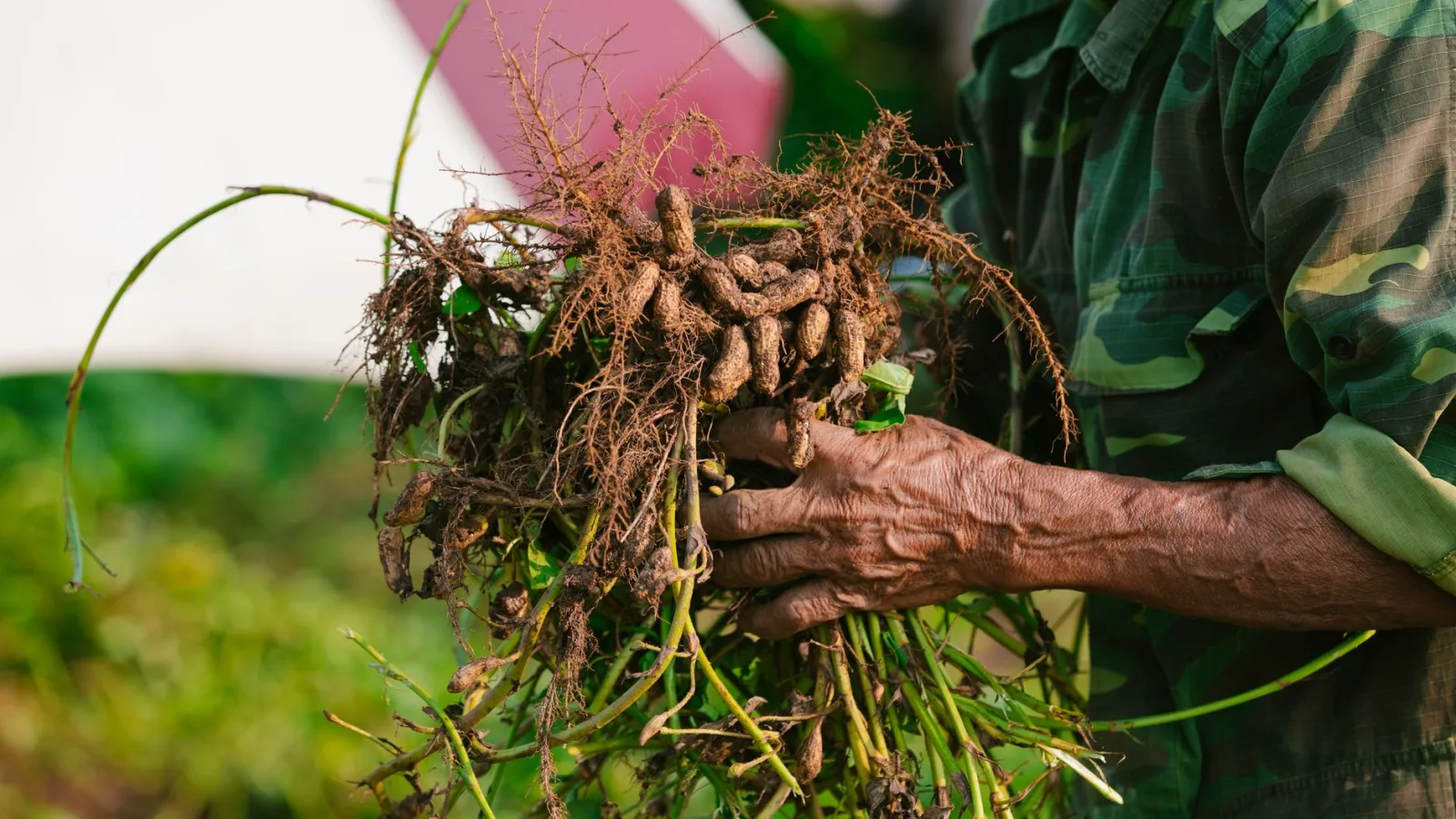
Peanuts: Health Through the Eyes of Dongui Bogam
Peanuts grow underground after their flowers fade, which earned them the old name "fallen-flower fruit." Korean medical tradition saw them as sweet and neutral in nature—a nourishing food that strengthens digestion and moistens the lungs—a view modern nutrition echoes in its own language.
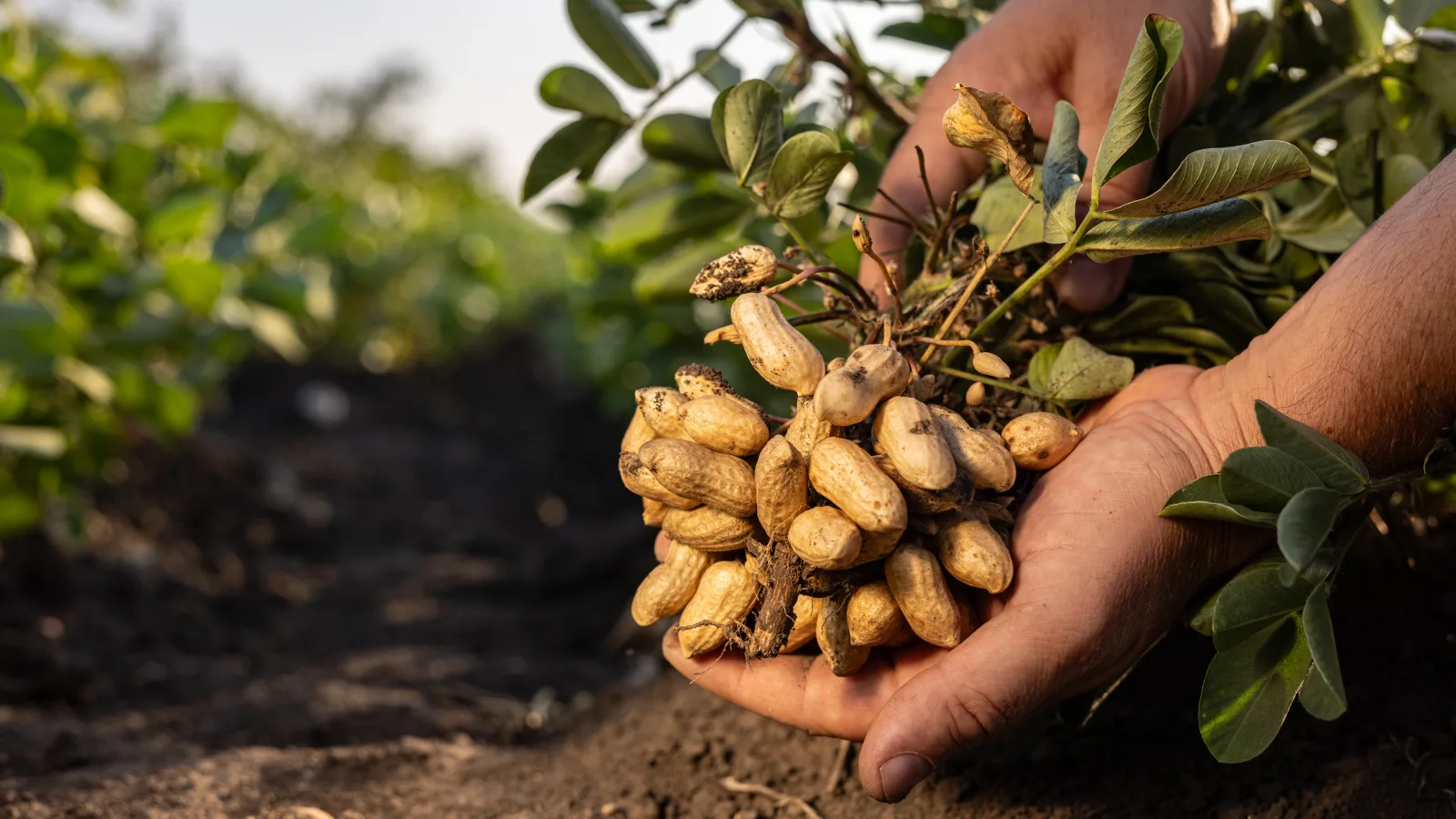
The Peanut Genome Has Been Fully Decoded for the First Time
An international team has decoded the entire peanut genome for the first time, untangling a large, complex code that formed when two wild species crossed long ago. The breakthrough promises faster breeding of hardier, safer varieties—plus a good reason to grow a few plants in your own garden this year.