- Type
- Herbs & Aromatics
- Difficulty
- Easy
- Season
- Summer
- Sowing
- From seed
Fringed pink
Dianthus chinensis
Anthocyanins · a summer perennial of verges and bed edges
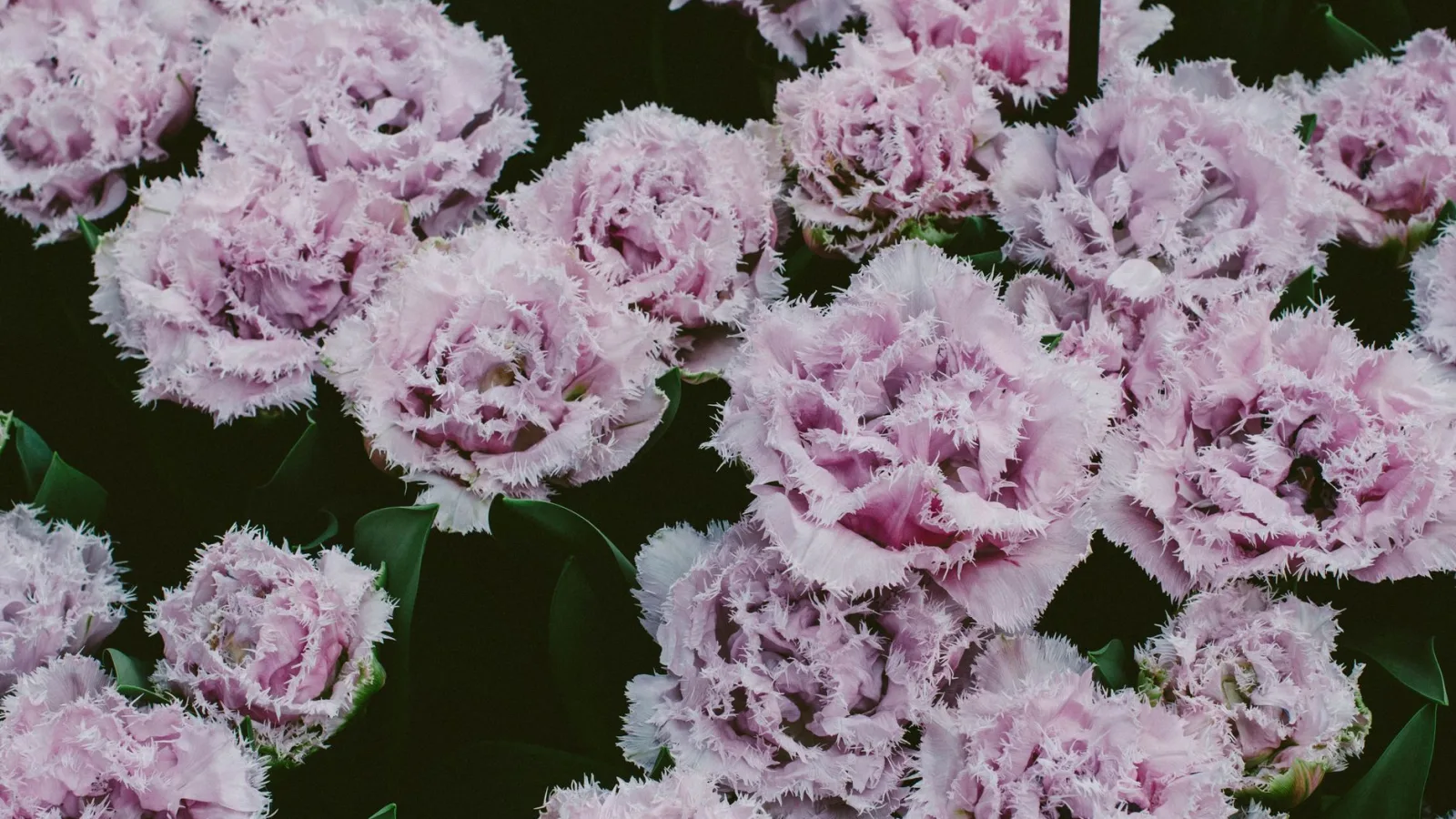
Fringed pink flowers all summer along sunny verges, gravel banks and the edges of beds. Its Korean name comes from the shape of an old woven hat, and in Chinese characters it was written 石竹, the stone bamboo. The Herb section of the Donguibogam enters it as 瞿麥 under the Korean name seokjukhwa and explains the name directly: the seed resembles a grain of barley. Its nature is set down as cold and its taste as bitter and pungent, with a note that some call it sweet, and it is recorded as having no toxicity. The text says seed and leaves were gathered together after the start of autumn and dried in the shade, and adds that stem and leaf were not used, only the husk of the fruit. It also carries a caution against use in pregnancy, which is reason enough not to brew it on the strength of an old record. The use it has in a kitchen today goes no further than scattering the petals over a salad or a cake, with the white base of each petal trimmed off because it is bitter.
Year-Round Calendar
- 1
- 2
- 3
- 4
- 5
- 6
- 7
- 8
- 9
- 10
- 11
- 12
- 4
- 9
- 6
- 7
- 8
Where It Grows
- Main producer It grows wild in the fields and on the slopes of North China and the Northeast, and nearly all of the material used medicinally comes from here as well.
- Wild population It grows wild on sunny roadsides and riverside gravel throughout the country.
- Wild population It occurs on dry ground in grassland and at the foot of mountains.
- Wild population It occurs on dry slopes in southern Siberia and the Far East.
It is native to the temperate zone of East Asia, from northern China through the Korean Peninsula, Mongolia and the Russian Far East; because it cannot be pinned to a single country, no country-of-origin row has been set up. In Europe and North America it arrived as a garden plant and is grown in flower beds, where its name is often confused with that of several other pinks (Dianthus), the carnation among them.
- Optimum
- 15~25℃
- Range
- 5~30℃
- Hardiness
- Hardy
This is a plant of sunny, sharply drained gravelly ground. It takes winter cold well, but where water sits, the crown rots during the rainy season. The cooler the summer, the longer the flowering continues.
In Korea Nationwide
It grows wild on sunny roadsides and riverside gravel beds throughout the country. Sown in spring, it flowers from that summer; sown in autumn, it flowers from the following year.
How to grow
- Light
- Six hours of sun or more. In shade the stems flop and the flowers come few
- Soil and depth
- Free-draining soil with sand in it. This is a plant of gravel and rock crevices, and rich, heavy ground actually weakens it
- Spacing
- 20 to 25cm between plants. Crowded, damp collects at the crown and it rots
- Watering
- Water when the surface dries. Frequent watering softens the crown, so keep it on the dry side
- Feeding
- A base dressing is enough. Heavy feeding builds leaf and cuts the number of flowers
- Harvest
- June to August, picked on the morning of a clear day with the flowers fully open. Pull the petals and cut the white base away before use
What makes the difference. Cut spent flowers off promptly and new stalks keep coming all summer. Leave only a few stems if you want seed
Why this one is harder. It is perennial, but after three or four years the centre of the clump opens up and flowering falls off. Lift it in spring, split it into two or three and replant to keep it going. Where water sits, it will not get through the summer rains
Common problems
- Aphids You will see Colonies on the buds and new shoots What to do Wash them off with a jet of water. On plants whose flowers you will eat, strip them by hand rather than spraying
- Crown rot You will see The centre of the plant goes brown and soft in the rainy season and collapses What to do Raise the bed so water does not sit and widen the spacing. Dig out collapsed plants and let the ground dry
- Leaf dieback You will see Lower leaves brown off from the tips What to do Common on old clumps. Clear the dead leaves for airflow, and lift and divide clumps of three or four years in spring
This page describes how a crop is grown and used. It does not claim health effects for any food, nor is it intended to prevent or treat disease. Component and study notes are references only and do not mean the same result occurs in people. Consult a medical professional about health concerns.
Health Benefits
The old record — gumaek (瞿麥). The Donguibogam lists it in the Herb section as 瞿麥 under the Korean name seokjukhwa. Its nature is set down as cold and its taste as bitter and pungent, with a note that some call it sweet, and it is recorded as having no toxicity. It gives 石竹 as an alternative name, says the plant grows everywhere, and explains the name directly: the seed resembles a grain of barley. Seed and leaves were gathered together after the start of autumn and dried in the shade, the entry says, adding that stem and leaf were not used, only the husk of the fruit, and carrying a caution against use in pregnancy. What an old medical text wrote differs from how it is judged today.
Saponins of the genus Dianthus. Analyses report triterpene-type saponins isolated from Dianthus species, with relatively more in the seed and leaves. This is an analysis of composition.
Flower colour and anthocyanins. Pigment analysis confirms that the pink and red of the petals come from anthocyanins, and reports that the shade shifts with acidity. This is a record of how the pigment behaves.
Nutrition
- Anthocyanins (the pigment of the petals) — the pigment behind the pink to red colouring
- Saponins (reported across the genus Dianthus) — triterpene-type glycosides
- Flavonoids (present in flowers and leaves) — compounds reported in the genus Dianthus
The petal pigment The pink and red of the petals come from anthocyanins. The shade shifts with acidity, so scattered over a salad dressed with vinegar the colour sharpens. This is a record of how the pigment behaves.
Trim the white base The bitterness sits in the white portion at the base of each petal. Pull the petals off, cut that base away with scissors and use only the coloured upper part. Rinse lightly, shake dry and scatter them straight away.
Saponins of the genus Dianthus Triterpene-type saponins are reported across the genus Dianthus, with analyses putting relatively more in the seed and leaves. What the old record handled as a drug was the seed and leaves rather than the petals. This entry stays with the compositional record.
Only flowers grown to be eaten Plants from a florist were raised to be looked at, and there is no telling what was applied to them or when. Anything to be eaten is sown and grown separately for that purpose, and rinsed lightly under running water after picking to shake insects out.
Pairings
○ Scattered over salad — Scatter trimmed petals across a finished salad. A vinegar dressing sharpens the colour. They weigh nothing, so add them last or they get crushed.
○ Crystallised petals for cake — Brush the petals with a thin coat of egg white, dust them with fine sugar and dry them; they keep as decoration for a long time. Seal them in a container once bone dry. A touch of damp softens them within a day.
○ Frozen into ice cubes — Set a petal in each compartment of an ice tray and fill with water. Floated in a drink, the colour releases as the cube melts. Trim the white base first or a bitter note comes with it.
△ Not used in pregnancy — The Donguibogam attaches a caution against use in pregnancy to its 瞿麥 entry. That record concerns the seed and leaves handled as a drug, so in pregnancy do not go beyond scattering petals as a garnish and never decoct the seed or leaves.
△ Do not decoct seed or leaves on your own — The part the old record says to use is the husk of the fruit, and it states plainly that stem and leaf are not used. Which part, and how much, is exactly what varies with this plant, so do not brew it from a field guide. If it is to be used as medicine, consult a practitioner.
△ Florist plants and roadside flowers — Do not pick and eat from florist stock or from roadside and park beds. That ground has met both spray and exhaust. Sow flowers for the table separately in a corner of the plot.
Varieties
- Fringed pink (Dianthus chinensis) (seed) — The base species, native to Korean verges and hill slopes. Petal tips shallowly cut
- Large pink (Dianthus longicalyx) (seed) — Petals cut deep into threads, hanging like a tassel. Native to hills and fields
- Sweet william (Dianthus barbatus) (seed) — Small flowers packed into a cluster. Widely planted in beds
Source: Donguibogam, Herb Section 瞿麥