- Type
- Tubers & Storage Roots
- Difficulty
- Moderate
- Season
- Spring·Fall
- Sowing
- Root division
Chinese asparagus
Asparagus cochinchinensis
Steroidal saponins and polysaccharides · the tuber steamed into candied root
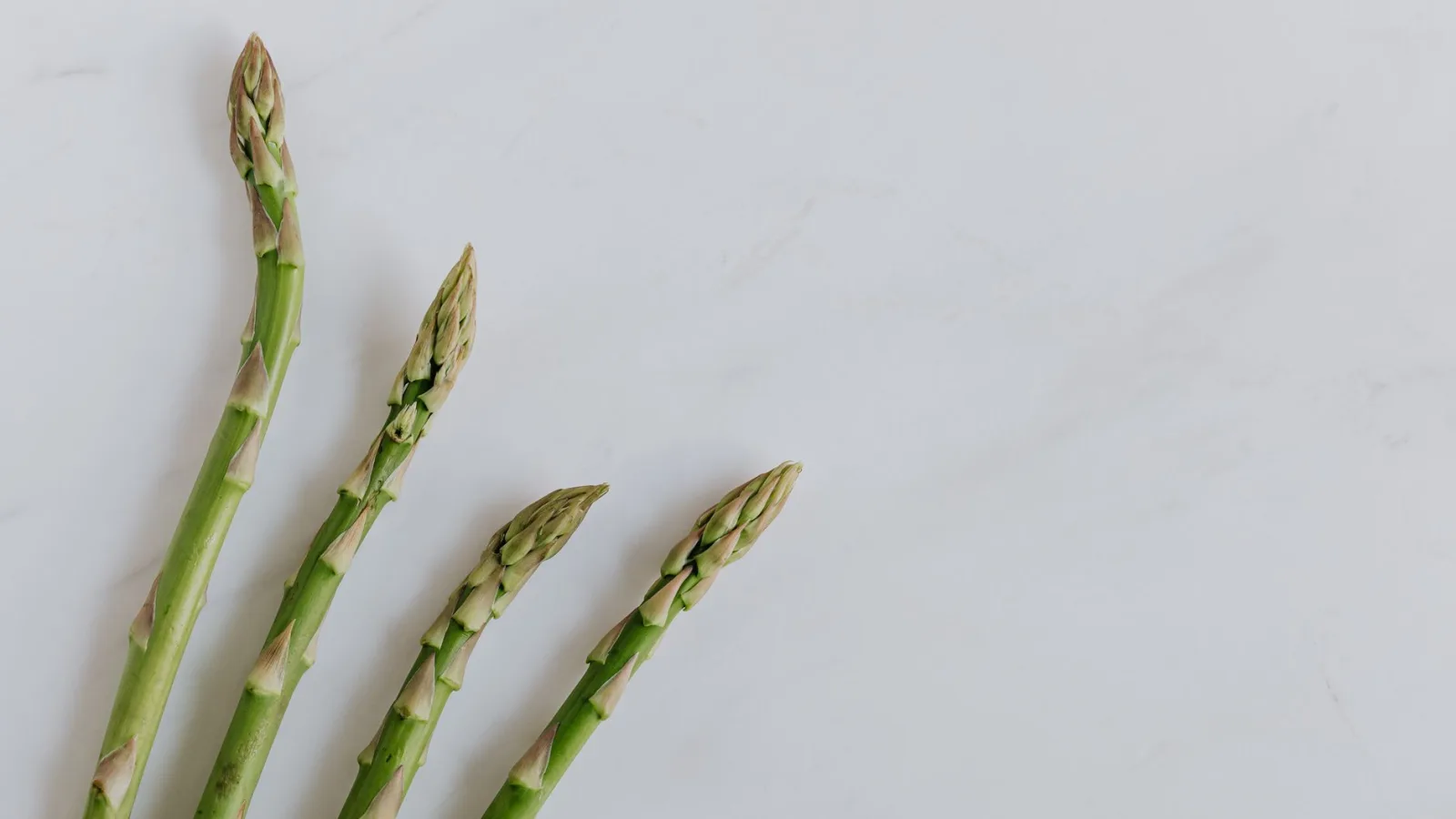
Chinese asparagus is a perennial that runs slender stems and hangs a cluster of spindle-shaped tubers underground. It belongs to the same genus as garden asparagus, and the young shoots that come up in spring look like a thinner version of them. In Korea it grows wild on coastal hillsides in the south and is also planted in fields and lifted. Lifted roots are peeled, the tough core is pulled out, and they are then steamed and dried, candied in sugar, or simmered into a tea. Pulling the core is a step carried straight down from the old record: the Donguibogam says to steep the root in boiled water, split it and take the core out before use. It sets the nature down as cold, the taste as bitter and sweet, and free of toxicity, and says the root is dug in the second, third, seventh and eighth months by the lunar calendar and dried in the sun. Thick, sweet-tasting roots were reckoned the good ones, and a folk note adds that in Korea the plant is found only in Chungcheong, Jeolla and Gyeongsang.
Year-Round Calendar
- 1
- 2
- 3
- 4
- 5
- 6
- 7
- 8
- 9
- 10
- 11
- 12
- 3
- 4
- 10
- 11
Where It Grows
- Main producer Guizhou is the largest producer, followed by Guangxi, Sichuan, and Yunnan. It is grown in the limestone country of the subtropical mountains.
-
Wild population
It grows wild on coastal hillsides along the west coast from South Chungcheong southward, along the south coast, and on Jeju, and some is planted in fields. Harvest October, November
- 10
- 11
- Wild population It grows wild along the warm coasts from southwestern Honshu through Kyushu to Okinawa.
- Major producer It is grown in the northern mountains.
It is native to, and distributed across, the warm zone stretching from southern East Asia to northern Southeast Asia. Commercial cultivation is virtually all in China; in Korea and Japan it is dug from wild stands or grown on a small scale. It belongs to the same genus as asparagus, but differs in that the part eaten is the underground tuberous root rather than the young shoot.
- Optimum
- 18~26℃
- Range
- 8~32℃
- Hardiness
- Half-hardy
This is a plant of warm southern coasts. It tolerates summer heat well but is sensitive to winter cold, and in open fields in the central inland regions its tuberous roots freeze. It grows well where drainage is good and winters are mild, such as sandy ground near the sea.
Harvested 2–3 years after planting. Roots are divided and planted in spring, grown for two to three years, and dug in autumn. The planting month and the harvest month do not fall in the same year.
In Korea Southern Korea
Its native range is the southern coast and islands, where winters are mild. Wando and Jindo in South Jeolla, Geoje in South Gyeongsang, and Jeju are known sites.
How to grow
- Light
- Half a day of sun or more. A little shade at midday in summer keeps the foliage from scorching
- Soil and depth
- Free-draining sandy loam at least 40cm deep. The tubers spread sideways, so raise the bed
- Spacing
- 40cm between plants, 60cm between rows. The stems scramble, so give them a support
- Watering
- Only worth watching through a summer drought. Standing water turns the tubers soft
- Feeding
- Base compost at planting, then one spring feed from the second year. Heavy nitrogen builds stem and nothing else
- Harvest
- Lift in October or November two or three years after planting, once the stems have yellowed off. The tubers spread wide, so start digging a hand's span out from the crown
What makes the difference. Wash lifted roots at once, peel them, soak and split them lengthwise to pull the core, then steam or candy them. Left to sit, the skin clings and will not come away
Why this one is harder. The stems run over two metres and tangle without support. And the roots need two or three years to thicken, which makes the bed arithmetic different from a crop that finishes in one season
Common problems
- Aphids You will see Colonies on the running tips, leaves turning sticky What to do Wash them off with a jet of water; if it recurs, use an egg-yolk oil spray. Untangle crowded growth first
- Leaf scorch You will see After the rains the tips of the fine leaves brown and burn back What to do It spreads when damp lingers. Thin the lower growth for airflow and cut away damaged stems
- Chafer grubs You will see Lifted tubers show chewed holes What to do Turn the soil before planting and pick the larvae out. Do not dig in unfinished compost
This page describes how a crop is grown and used. It does not claim health effects for any food, nor is it intended to prevent or treat disease. Component and study notes are references only and do not mean the same result occurs in people. Consult a medical professional about health concerns.
Health Benefits
The old record — cheonmundong (天門冬). The Donguibogam lists it in the Herb section as 天門冬. It sets the nature down as cold, the taste as bitter and sweet, and free of toxicity. The root is dug in the second, third, seventh and eighth months by the lunar calendar and dried in the sun, and before use it is steeped in boiled water, split and cored — the text records that preparation directly. Thick, sweet-tasting roots were reckoned the good ones, and a folk note adds that in Korea it is found only in Chungcheong, Jeolla and Gyeongsang. What an old medical text wrote differs from how it is judged today.
Steroidal saponins in the genus Asparagus. Steroidal saponin glycosides have been isolated from Asparagus species in repeated analyses, with several reported from the tubers of this one. These are compositional analyses and have nothing to do with preventing or treating disease.
Storage polysaccharide in the tuber. The spindle-shaped tuber is analysed as a storage organ for polysaccharide. The mucilage seeping from a cut surface and the body of the decoction are discussed alongside it. This concerns composition and cooking behaviour.
Nutrition
- Steroidal saponins (distributed through the tubers) — a glycoside group reported across the genus Asparagus
- Polysaccharides (the storage material of the tuber) — high-molecular carbohydrates stored in the root
- Mucilage (seeps stickily from a cut surface) — a readily water-soluble polysaccharide
- Asparagine (reported in Asparagus species) — one of the amino acids
Pulling the core A tough core runs down the middle of each tuber. Soaking the root, splitting it lengthwise and drawing that core out is a step carried from the old record to the present day. Left in, it makes the texture coarse and the bitterness sharper. The skin comes off at the same time.
Storage polysaccharide in the tuber The spindle-shaped tuber is an organ where the plant stores what its leaves made, as polysaccharide. That is also why a sticky mucilage seeps from a cut surface. Simmered in water, it gives the liquid a little body.
Steroidal saponins Analyses report steroidal saponin glycosides isolated from Asparagus species, with several found in the tubers of this one. This entry stays with the compositional record.
Sugar in the candied form Candied cheonmundong is made by simmering the root a long time in sugar or honey. More of what ends up on the plate is added sugar than root, so count that in when it sits out as a snack. Simmered as a tea, no sugar goes in at all.
Pairings
○ Sugar or honey — candied root — Blanch the cored roots and simmer them slowly in sugar or honey until they turn translucent and chewy. Drain off the syrup in a sieve afterwards and cool them on baking paper.
○ A steamer — steaming then drying — Steaming the prepared roots over a full boil and drying them in the sun is the old method. Steaming deepens the colour to yellow-brown and firms the tissue so it keeps. Seal the dried pieces in a container.
○ Water — simmering a tea — Put a few dried pieces into cold water, bring it up and hold it gently once it boils. The mucilage draws out and gives the liquid a little body. If the bitterness is too much, add a split jujube.
△ Digging roots in the wild — A scrambling plant is hard to identify from what shows above ground, and its roots harder still. Southern coastal hillsides also carry other climbers with thick roots, such as Smilax china. If the species is not certain, do not dig it and do not eat it.
△ Roots with the core left in — Take the tough central core out before use. Left in, its bitterness and coarse texture stay in the dish. Soak the root and split it lengthwise and the core lifts out by hand.
△ On medication or pregnant — This root has long been handled as a medicinal material. Anyone on medication, pregnant or nursing should not simmer it strong and drink it daily, even as tea. A little of the candied form and a decoction are not the same quantity.
△ A previous reaction to asparagus — Cheonmundong belongs to the same genus as garden asparagus. If eating or handling asparagus has ever brought hives or itching, start with a very small amount and watch how the body responds. Stop at once if a reaction appears.
Varieties
- Wild coastal stock (root) — Growing on southern coastal hillsides. The roots run small and uneven
- Field-grown (root) — Set on raised beds and grown several years. Thicker roots of even size
- Steamed and dried (dried) — The trade form: steamed then dried, a yellow-brown colour and tacky to the touch
- Candied root (processed) — Simmered down in sugar or honey. Eaten as it is
Source: Donguibogam, Herb Section 天門冬 · Rural Development Administration (Nongsaro)