- Type
- Gourds & Squash
- Difficulty
- Moderate
- Season
- Summer
- Sowing
- Transplant
Bitter Melon (Yeoju)
Momordica charantia
Charantin and momordicin, in a summer gourd with a sharp bitterness
Bitter melon, known in Korea as yeoju and written with the characters for gogwa (苦瓜), is a cucurbit whose warty skin and pronounced bitterness are its signatures, and that bitterness comes from cucurbitacins such as momordicin. Compounds such as charantin and polypeptide-p have long been studied, but most human research has given powders or extracts as a supplement and the results diverge, so it cannot be read as the same condition as eating the fruit as a dish. To tame the bitterness, slice it thin, salt it briefly, then rinse before stir-frying with egg or pork. Spit out the seeds, and during pregnancy avoid juices, powders and supplements beyond ordinary dietary amounts.
Year-Round Calendar
- 1
- 2
- 3
- 4
- 5
- 6
- 7
- 8
- 9
- 10
- 11
- 12
- 4
- 5
- 7
- 8
- 9
Where It Grows
- Main producer Known as kugua, it is grown most heavily in the south — Guangdong, Guangxi, and Hainan.
- Main producer Known as karela, it is grown across the country, and the area under cultivation is extensive. Many of the local types bear small fruits studded with sharp, pointed bumps.
- Major producer It is a common summer vegetable, planted twice — before and after the rainy season.
- Major producer Known as ampalaya; along with the fruit, the young shoots are also eaten as greens.
- Major producer It is grown year-round in the Mekong Delta.
-
Major producer
Okinawa, home of goya, is the flagship growing area, and cultivation has spread into southern Kyushu. Harvest June, July, August
- 6
- 7
- 8
The plant is native to tropical Asia, centered on India; because it cannot be traced to any single country, we have not included an origin row. As it settled in as karela in India, kugua in China and Taiwan, ampalaya in the Philippines, and goya in Okinawa, Japan, its names and varieties went their separate ways. Its home ground is the tropical and subtropical lowlands; in temperate regions it is grown as a summer-only crop. Since the FAO keeps no separate entry for bitter melon, country-by-country rankings rely on each nation's own statistics.
- Optimum
- 24~31℃
- Range
- 18~35℃
- Hardiness
- Not hardy
- Day length
- Short-day
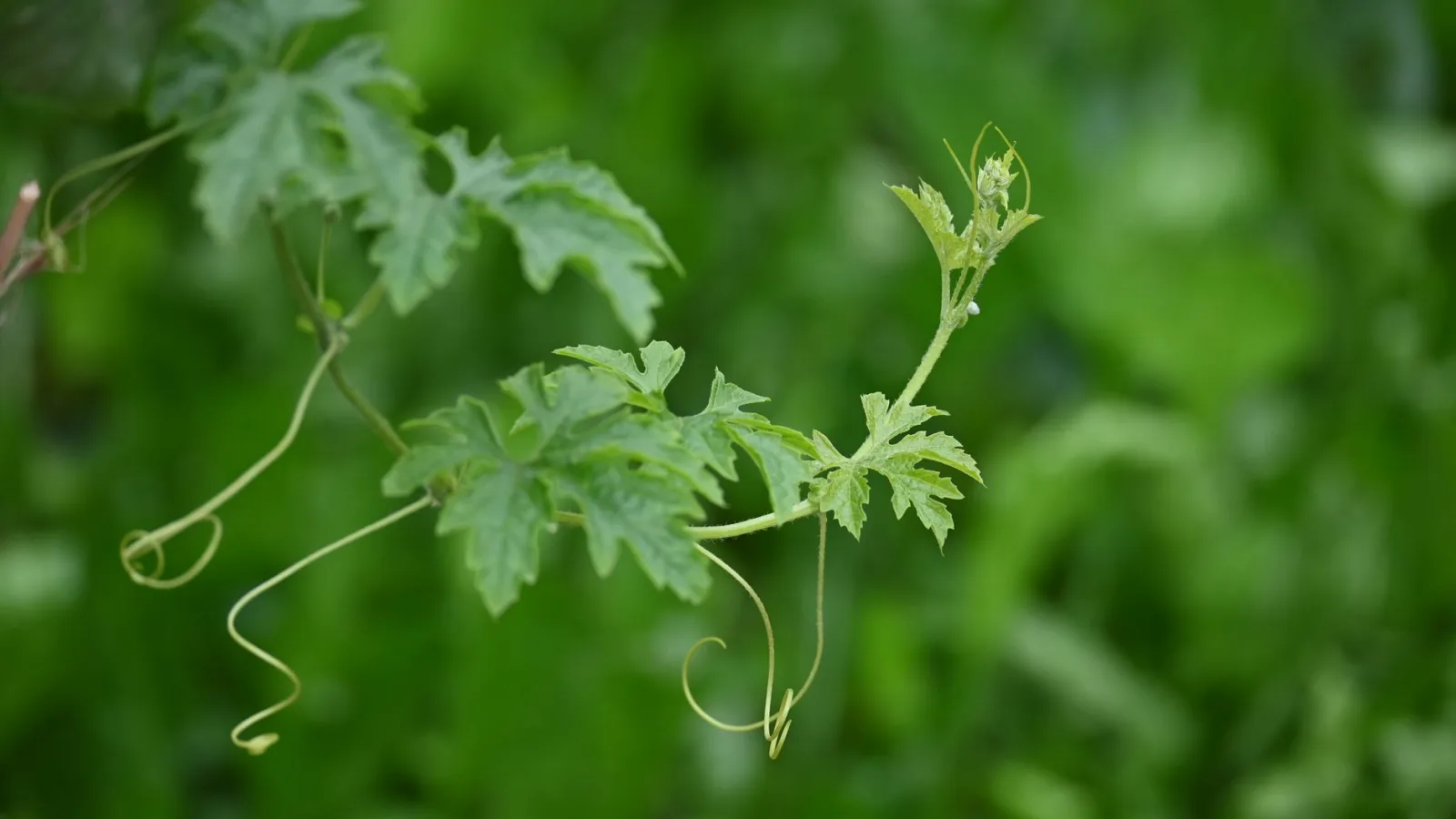
Bitter melon is a vine that grows through hot, humid summers. As the days shorten, more female flowers appear, and the fruit sets readily from late summer on. Growth stops below 18℃, and a single frost kills the plant.
In Korea Nationwide
It is grown nationwide as a summer-only crop. In the south and on Jeju the harvest runs long, while in the central region it is concentrated from July to September.
How to grow
- Light
- It wants a lot of sun
- Soil and depth
- 30cm deep or more
- Spacing
- 60cm
- Watering
- Steady
- Feeding
- Every two or three weeks
- Harvest
- Pick it green. Left to yellow it softens and the seeds harden
What makes the difference. It climbs, so it needs netting. Trained up a window it doubles as summer shade and saves floor space
Common problems
- Aphids You will see Sticky new growth What to do Wash them off
This page describes how a crop is grown and used. It does not claim health effects for any food, nor is it intended to prevent or treat disease. Component and study notes are references only and do not mean the same result occurs in people. Consult a medical professional about health concerns.
Health Benefits
What the composition shows. The bitterness of bitter melon comes from cucurbitacins such as momordicin. Charantin is a mixture of steroidal saponins, and polypeptide-p is a plant protein reported to resemble insulin in structure. That is as far as the compositional analysis goes.
Supplement research is not the same as food. Most research pairing bitter melon with blood sugar has used powders or extracts given as a supplement at a set dose, a different condition from eating the unripe fruit as a dish. The studies also report results that diverge from one another.
Points to watch when eating it. Spit out the seeds. Vicine in bitter melon seeds has been reported to be able to trigger hemolysis in people with G6PD deficiency. During pregnancy, juices, powders and supplements beyond ordinary dietary amounts are advised against, and anyone taking a glucose-lowering medication should talk with their clinician before eating large amounts regularly.
What can be said today. For the unripe fruit eaten as a vegetable, what modern research has established amounts to its composition and its high vitamin C content. Anything beyond that needs more evidence.
Nutrition
- Charantin (A mixture of steroidal saponins) — A compound isolated from bitter melon, still under study
- Polypeptide-p (A plant protein reported to resemble insulin in structure) — A compound isolated from bitter melon, still under study
- Momordicin (A cucurbitacin (the source of bitterness)) — The compound behind the bitter taste
Charantin & polypeptide-p These compounds, isolated from bitter melon, have been studied for a long time. Human evidence is still accumulating and the results are mixed.
Vitamin C & bitter compounds Bitter melon is rich in vitamin C, and cucurbitacins such as momordicin give it its distinctive bitterness. The bitterness is reduced by salting in brine or by blanching.
The seeds and the red aril In a ripe fruit the red aril around the seeds tastes sweet and is sometimes eaten, but the seeds themselves contain vicine, which has been reported to be able to trigger hemolysis in people with G6PD deficiency. Spitting the seeds out is the safer course.
Pairings
○ Egg (bitter melon stir-fry) — Bitter melon's sharpness pairs well with the softness and savory depth of egg. The classic example is Okinawan goya champuru, a stir-fry of bitter melon, egg, tofu and pork.
○ Pork and tofu — Stir-fried with fatty pork or mild tofu, the bitterness is mellowed and balanced out by the protein.
○ Salting (to draw out bitterness) — Slicing bitter melon thin, salting it, then rinsing reduces the bitterness and makes it easier to eat. This is the standard prep step before cooking.
△ Use caution with blood-sugar-lowering medications — Bitter melon can lower blood sugar, so eating large amounts alongside diabetes medication raises concerns about hypoglycemia. If you're on medication, it's safest to check with a healthcare professional before going beyond normal dietary amounts.
△ In pregnancy, keep to ordinary food amounts — Bitter melon contains momorcharin and related compounds reported in connection with uterine contraction, so concentrated forms such as juice or supplements are advised against during pregnancy. Keep to the amount eaten as a side dish rather than daily large servings, and ask a doctor if pregnant, planning a pregnancy, or nursing.
△ Spit out the seeds — especially children — The red coat around ripe seeds tastes sweet and children pick at it. The seeds contain vicine, which can cause haemolysis in people with G6PD deficiency, and larger amounts have been reported to cause vomiting and diarrhoea. Remove the seeds before eating, and do not leave split ripe fruit where children play.
Varieties
- Local short type (Transplant) — Fruit is 15-20 cm with coarse ridges and a strong bitterness; salt and rinse it to soften that.
- Long green type (Okinawan goya) (Transplant) — Around 30 cm long and dark green, with thick flesh that holds up in a stir-fry.
- White bitter melon (baek-yeoju) (Transplant) — Pale white skin and milder bitterness, so it can be sliced thin and served raw.
Source: Rural Development Administration (Nongsaro) · Bencao Gangmu (Compendium of Materia Medica)