

- Type
- Herbs & Aromatics
- Difficulty
- Moderate
- Season
- Spring·Summer
- Sowing
- Transplant
Korean Angelica
Angelica gigas
Decursin, essential oils · an aromatic wrapping leaf
Korean angelica is a perennial in the carrot family, native to Korea's hills and also grown in cultivation. In the city you meet the leaf long before the root. Leaves picked in spring are used as a wrap for grilled meat, and the leaf alone carries a heavy scent. Foraging, though, is a different matter. At the young-leaf stage the plant looks very much like jirigang-hwal, commonly called gae-danggwi, a toxic plant behind repeated poisonings. In flower the two separate clearly, deep purple against white, but there are no flowers in the season the leaves are picked. Do not eat foraged plants; use leaves only from a plant raised from identified stock. The Donguibogam lists it in the Herb section as 當歸, giving it a warm nature and a taste both sweet and pungent, with no toxicity. It records that the plant grows in hills and fields or is cultivated, and that the root is dug in the second and eighth lunar months and dried in shade. The same entry rates roots that are thick-fleshed and not shrivelled as the good ones, and singles out a shape said to resemble a horse's tail.
Year-Round Calendar
- 1
- 2
- 3
- 4
- 5
- 6
- 7
- 8
- 9
- 10
- 11
- 12
- 3
- 4
- 5
- 6
- 7
- 8
Where It Grows
-
Main producer
This is the center of growing and using Korean angelica (Angelica gigas). Well-known areas include Pyeongchang, Jeongseon, and Hongcheon in Gangwon; Bonghwa and Yeongju in North Gyeongsang; and Jecheon in North Chungcheong. Harvest October, November
- 10
- 11
- Major producer Minxian County in Gansu Province is the largest producing area. Note, however, that the danggui grown there is Chinese angelica (Angelica sinensis), a different species from Korean angelica.
- Major producer The toki grown in Hokkaido and Nara is Japanese angelica (Angelica acutiloba), likewise a different species.
Korean angelica is a species distributed across the Korean Peninsula, northeastern China, and parts of Japan, and Korea is the center of its cultivation and use. The same name — danggwi in Korean, danggui in Chinese, toki in Japanese — refers to a different species in each country (Angelica sinensis in China, Angelica acutiloba in Japan), so painting them onto one map would make them look like the range of a single species; the species must be identified and kept distinct.
- Optimum
- 15~22℃
- Range
- 5~28℃
- Hardiness
- Hardy
The plant prefers cool summers, and mountainous areas with an average annual temperature of around 10–13℃ are considered the best sites. Its roots overwinter in frozen ground, but it is vulnerable to summer heat and to the excess moisture of the rainy season, so it takes raised beds and borrowed shade to get it through the summer.
Harvested 2–2 years after planting. Planted in spring, only the leaves are picked that first year, and the root is dug in the autumn of the following year. The month of planting and the month of digging the root do not fall in the same year. If a flower stalk rises in the second year, the root turns woody and becomes unusable.
In Korea Nationwide
To grow thick roots, the cool-summer mountains of Gangwon and North Gyeongsang are the best ground; if the goal is only to pick the leaves, it can be grown in home gardens anywhere in the country. Pyeongchang and Jeongseon in Gangwon, Bonghwa in North Gyeongsang, and Jecheon in North Chungcheong are well known.
How to grow
- Light
- Prefers partial shade. Leaves scorch in a spot that takes full midsummer sun all day
- Soil and depth
- Free-draining soil rich in organic matter, at least 30cm deep. The root goes straight down, so clear the stones first
- Spacing
- 30cm between plants, 45 to 50cm between rows. Growing for leaf, you can plant a little tighter
- Watering
- Water when the surface dries. Standing water rots the root, so raise the bed
- Feeding
- Work well-rotted compost in as a base dressing, and if you are cropping leaf continuously, give a dilute liquid feed monthly
- Harvest
- Take young leaves from May through summer, three or four at a time from the outside. Leave the centre so the plant keeps producing. Roots are lifted in the autumn of the second year
What makes the difference. A flower stem in the second year turns the root woody and useless. If you want the root, cut the stem the moment you see it. Growing for leaf only, the flowers can stay
Why this one is harder. Summer heat and waterlogging are the weak points. Raise beds by 20cm or more so the monsoon does not soften the roots, and borrow shade netting or the shadow of a taller crop through high summer
Common problems
- Aphids You will see Colonies on new shoots and flower stems; leaves curl What to do Wash off with a jet of water; if it recurs, spray egg-yolk oil. Avoid any spray on leaves you will pick soon
- Swallowtail caterpillars You will see Leaves stripped to the veins, with fat green caterpillars on them What to do With only a few, move them by hand. They feed on carrot-family leaves, so they survive relocation
- Leaf spot You will see Brown spots on the leaf that spread until the leaf dries out What to do Pick affected leaves and take them off the plot. Widen the spacing for airflow and water the soil, not the foliage
This page describes how a crop is grown and used. It does not claim health effects for any food, nor is it intended to prevent or treat disease. Component and study notes are references only and do not mean the same result occurs in people. Consult a medical professional about health concerns.
Health Benefits
What the Donguibogam records — nature, taste, harvest and quality. The Donguibogam lists the plant in the Herb section as 當歸. It gives a warm nature and a taste both sweet and pungent, with no toxicity. It records that the plant grows wild in hills and fields or is cultivated, and that the root is dug in the second and eighth lunar months and dried in shade. Roots that are thick-fleshed and not shrivelled are rated best; the text adds that plump, unshrivelled roots are preferable and that a horse's-tail shape is a good one. This is a historical medical record and differs from modern medical judgment.
Coumarin profiles across species. Compositional analyses report decursin and decursinol angelate as the main coumarins of the Angelica gigas root, while the root of Angelica acutiloba is led by ligustilide-type compounds. The result is that plants traded under one common name can differ in composition by species. This concerns compositional analysis and has no bearing on preventing or treating disease.
Nutrition
- Decursin and decursinol angelate (the main coumarins of the Angelica gigas root) — the marker compounds that separate this species from other angelicas
- Essential oil (terpenes) (present in both leaf and root) — the distinctive scent you get eating the leaf raw
- Coumarins (widespread across the carrot family) — a compound class reported to irritate skin in combination with sunlight
Where the leaf scent comes from Rub an angelica leaf and the scent that rises comes from its essential oil, a mix of volatile terpenes. Young leaves smell rounder; the scent turns coarse as they age. Heat drives it off, so the leaf is at its most aromatic used raw as a wrap. If you blanch it, keep it brief and do not leave it soaking in cold water.
Telling it apart from jirigang-hwal (gae-danggwi) Korean angelica and jirigang-hwal sit in the same family, and the leaves alone are hard to tell apart. Jirigang-hwal, commonly called gae-danggwi, is a toxic plant, and poisonings from picking the wrong one recur year after year. In flower the two part clearly, deep purple for Korean angelica against white for jirigang-hwal, but there are no flowers in the season the leaves are picked. A foul smell from a cut root is sometimes offered as a test, but it is not a basis a beginner should lean on. Where there is any doubt, leave the plant standing. Buying a plant of identified species, growing it in a bed or a pot and using only those leaves is the safe route.
Coumarin profile of the root The root of Angelica gigas is reported to carry decursin and decursinol angelate as its principal coumarins. Analyses place the root of Angelica acutiloba in a different profile, led by ligustilide-type compounds. Two plants can be sold under the same name and still differ in composition. It is worth checking the botanical name when buying plants.
Dried leaf versus fresh Drying costs the leaf much of its essential oil and the scent thins. Slow drying in shade holds the scent better than drying in sun, which is why that has always been the method. Keep dried leaf sealed and cool, and use it within six months. Freezing keeps the aroma but leaves the leaf too limp to wrap with.
Pairings
○ Wrapping grilled meat — The leaf is thicker and far more aromatic than lettuce, which is what balances it against fatty grilled meat. Leaves picked young, before they reach palm size, are the tender ones. On tougher leaves, strip the stalk and use only the blade.
○ Doenjang and ssamjang — The salt and savour of fermented soybean paste tames the leaf's scent, which makes a first encounter easier. Use a small dab so the leaf still comes through. Shredded leaf also goes into doenjang soup right at the end.
○ An infusion of dried leaf — Shade-dried leaf steeped briefly in hot water gives a clean, aromatic cup. Two to three minutes is plenty; longer turns it bitter. Simmering the root into a strong decoction belongs to herbal-material use and is outside the scope of this entry.
△ Foraged plants — confusion with jirigang-hwal — Jirigang-hwal, commonly called gae-danggwi, closely resembles Korean angelica and is a toxic plant behind repeated serious poisonings. In flower the two part clearly — deep purple for angelica, white for jirigang-hwal — but at the young-leaf stage, exactly when foragers pick, they are very hard to tell apart. Do not eat foraged plants; use only leaves from plants you raised from identified stock. The smell of a cut root is sometimes offered as a test, but it is not something a beginner should rely on.
△ Leaf sap plus strong sun — Carrot-family plants carry coumarin-type compounds, and cases are reported of skin reddening or blistering where sap sat on skin under prolonged strong sun. Wear gloves when trimming a large batch in midday summer heat, and wash with soap if sap gets on your hands. Wash a child's hands too after they have been handling the leaves.
△ While taking anticoagulants — Angelica species have been reported as possibly interacting with anticoagulants such as warfarin. Anyone on such medication should hold off on suddenly eating large amounts of the leaf or drinking strong infusions until they have spoken to their doctor or pharmacist. The same applies during pregnancy or before surgery. A few leaves as a wrap and a strong decoction are not the same thing.
Varieties
- Chamdanggwi (Korean angelica) (seedling) — Angelica gigas Nakai. Deep purple flowers. Young leaves as a wrap, root used as a herbal material
- Wae-danggwi (Japanese angelica) (seedling) — Angelica acutiloba. Softer leaves; the 'danggwi leaf' sold as a salad green is usually this one
- Chinese angelica (seed) — Angelica sinensis. Grown mainly in China and Taiwan. Rarely field-grown in Korea
Source: Donguibogam, Herb Section 當歸 · Rural Development Administration (Nongsaro) · Korea Biodiversity Information System
Stories about Korean Angelica
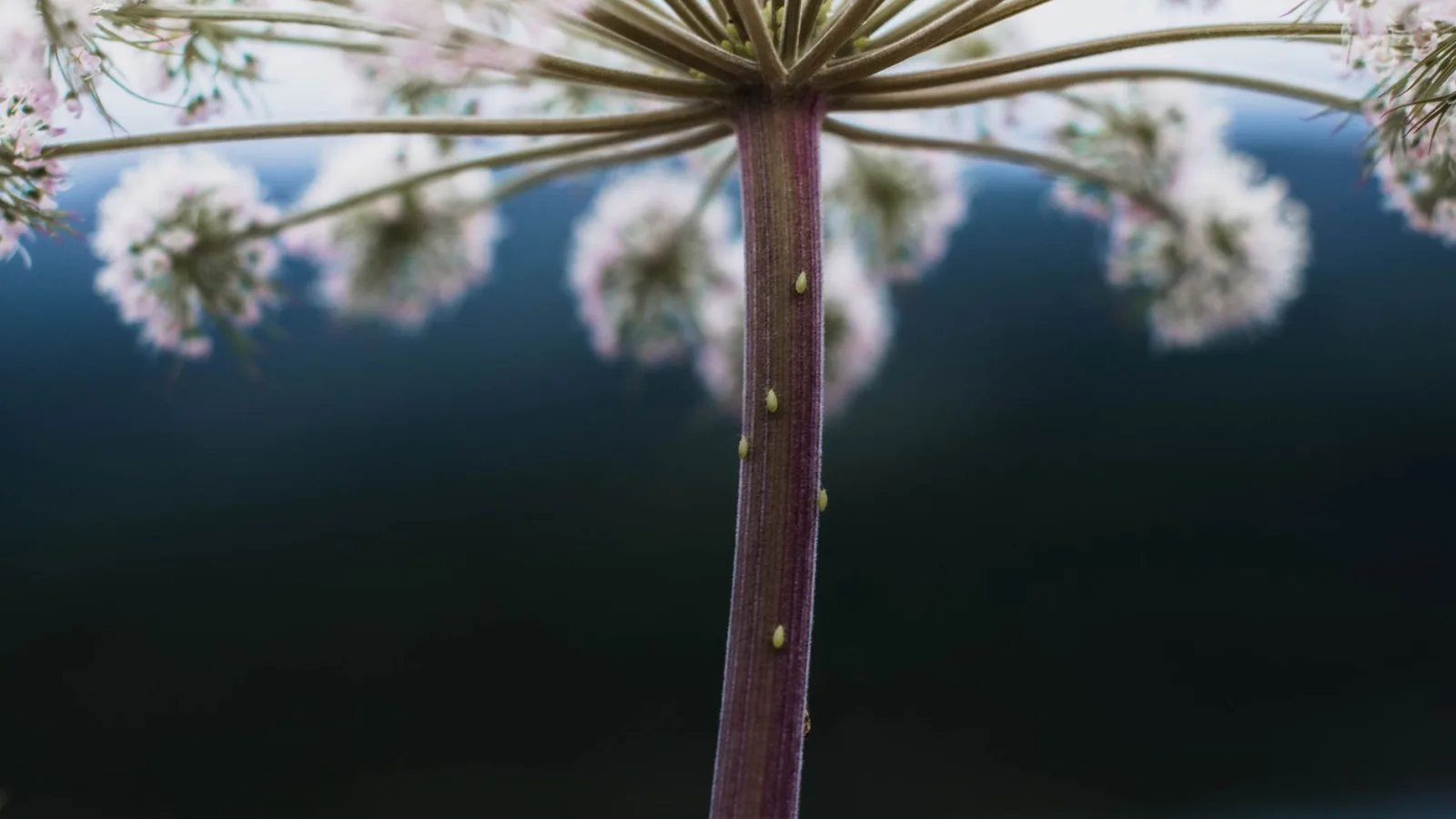
Korean Angelica: At the Young-Leaf Stage, You Can't Tell It from Its Poisonous Twin
Young Korean angelica leaves are nearly impossible to distinguish from a poisonous lookalike, which is why foraged plants stay off the plate. Start with a seedling whose species you can verify, pick the leaves young, and know when that strong fragrance calls for caution.
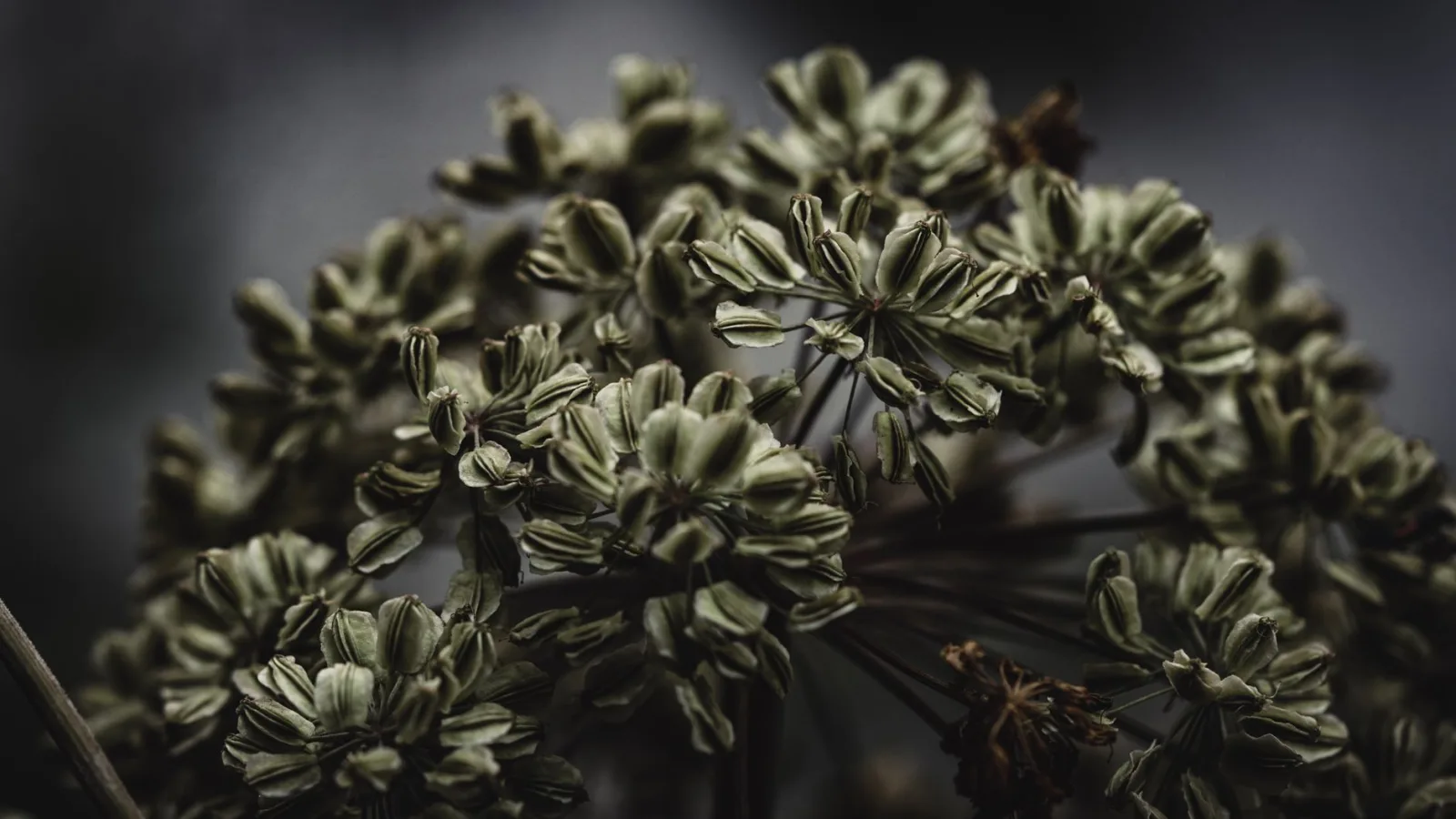
Korean Angelica: The Root the Old Medical Texts Describe, and the Wrap Leaves We Pick Today
August is the last month to pick Korean angelica leaves, but the root's season is only beginning. A 17th-century Korean medical text and a modern lab report describe the same plant — and the places where they diverge matter more than the places where they agree.