- Type
- Herbs & Aromatics
- Difficulty
- Moderate
- Season
- Spring·Fall
- Sowing
- From seed
Ox knee
Achyranthes japonica
Ecdysteroids · a field plant with joints swollen like an ox knee
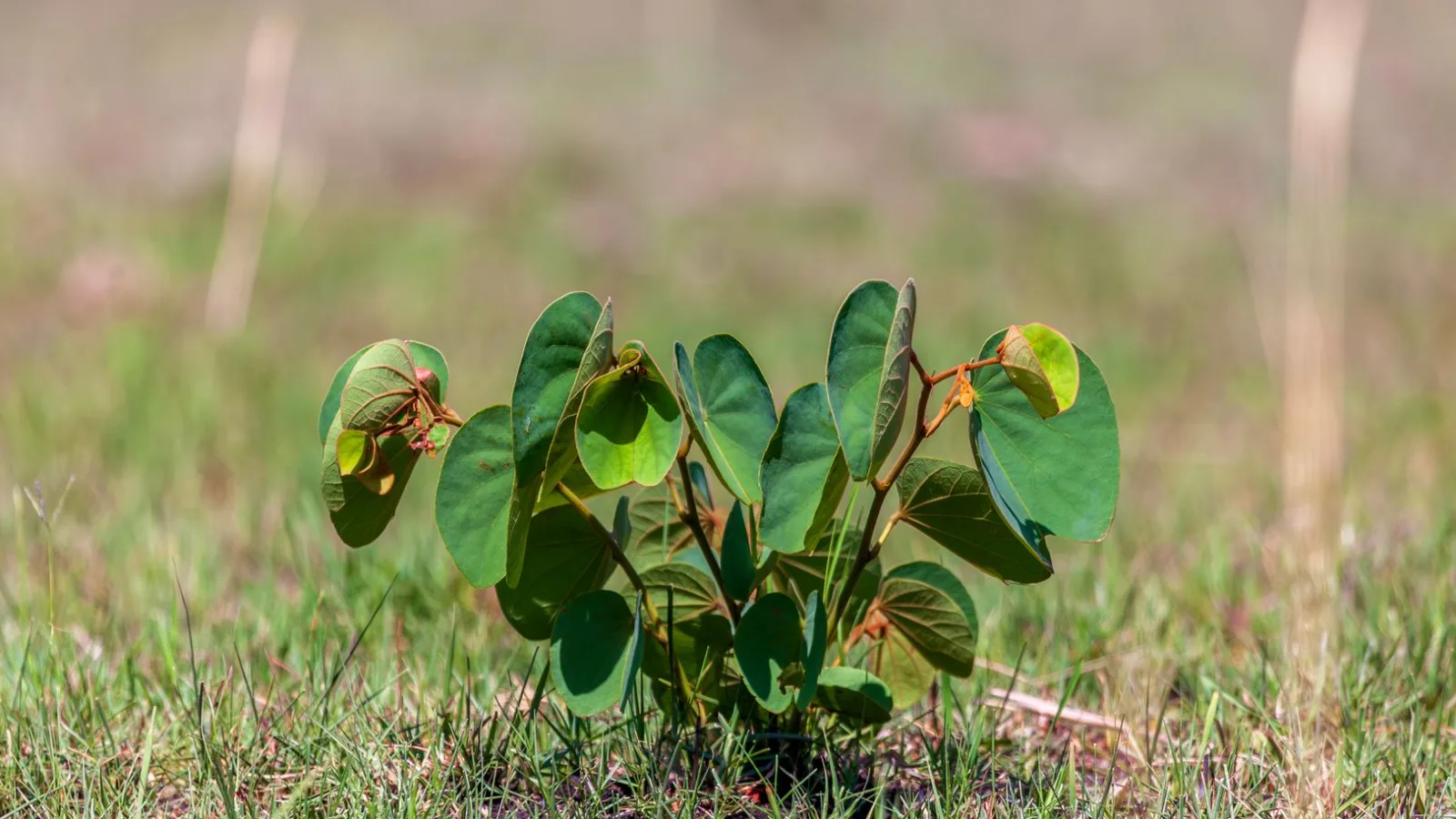
Ox knee is a common perennial of fields, plot banks and shaded roadsides. The name comes from the thickened stem joints, which look like the knee of an ox, and the Donguibogam says as much: the joints resemble a crane's knee, or an ox's knee, and that is what it is called for. The young spring shoot is blanched and dressed as a green, while the thick root is dug in autumn, dried, and simmered as useul tea. The entry sits in the Herb section under 牛膝, gives 百倍 as another name, and rates a long, thick, soft and glossy root as the good kind. When the fruit ripens in autumn its hooked bracts catch on trousers and socks, so this is also the plant that comes home stuck all over your shins after a hill walk. Seed travels that way, so one corner of a plot turns into shoots all over the place the following year. The young shoot eaten as a green and the root simmered as tea are used in entirely different ways, so read the safety notes below first.
Year-Round Calendar
- 1
- 2
- 3
- 4
- 5
- 6
- 7
- 8
- 9
- 10
- 11
- 12
- 3
- 4
- 4
- 5
- 10
- 11
Where It Grows
- Wild population Common in fields, on field banks and in the partial shade of roadsides. It is also planted out in fields and grown for its roots.
- Main producer Huai niuxi, the form that leads the medicinal-herb market, is grown around Jiaozuo (Wen County) in Henan Province, and is a different species, Achyranthes bidentata.
- Wild population It grows in fields and along forest edges from Honshu southward.
It grows wild across temperate East Asia, spanning Korea, China, Japan and Taiwan. The plant found in Korea is Achyranthes japonica, while the Huai niuxi grown on a large scale in Henan, China, is Achyranthes bidentata — two different species. Shading both countries on a single map requires telling the species apart.
- Optimum
- 18~25℃
- Range
- 5~30℃
- Hardiness
- Hardy
A perennial of temperate fields and hill slopes, growing in the partial shade of roadsides. It withstands both summer heat and shade, and in winter the top growth dies back and the plant comes up again from the root. Where water collects or the ground is full of stones, the root cannot run straight down.
Harvested 1–2 years after planting. Seed sown in spring gives roots that can be dug in October–November of the same year, and leaving them one more year makes them thicker. If some plants are left in the ground, young shoots come up again the following spring.
In Korea Nationwide
It comes up on its own at the foot of hills, on field banks and along roadsides. For thick roots, it is planted separately in a field cleared of stones.
How to grow
- Light
- Half a day of sun is plenty. It also grows in the part shade under trees
- Soil and depth
- Free-draining soil at least 30cm deep. If the root is the point, pick the stones out so it runs straight
- Spacing
- 30cm between plants. Crowded, the stems come up thin and the root stays slender
- Watering
- Keep it from drying out through the first year only. Once rooted it carries itself on rainfall
- Feeding
- A handful of compost around the base in early spring. Heavy nitrogen gives leaf at the expense of root
- Harvest
- Cut young shoots at the base in April and May, before they reach a hand-span. Dig the root in October or November after leaf fall, then wash, slice and dry it in the shade
What makes the difference. Blanch the shoots in boiling water, rinse in cold and dress. Brush the soil off the root and trim the fine roots before drying, or the earthy note stays
Why this one is harder. When the autumn fruit ripens the hooks stick to clothing and are a nuisance to pull off. If you would rather it did not seed around, cut the flower stalks before the fruit sets
Common problems
- Aphids You will see They mass on new shoots and flower stalks What to do Wash them off with a jet of water; if they return, use a soap or oil spray. Use nothing on plants whose shoots you will pick
- Leaf beetles You will see Small holes punched densely through the leaves What to do Pick them off as you see them and strip lower leaves for airflow
- Root rot You will see A plant wilts suddenly after the rainy season What to do Avoid spots where water stands and raise the bed. Dig out rotted plants and do not replant in the same place
This page describes how a crop is grown and used. It does not claim health effects for any food, nor is it intended to prevent or treat disease. Component and study notes are references only and do not mean the same result occurs in people. Consult a medical professional about health concerns.
Health Benefits
The old record — useul (牛膝). The Donguibogam lists the plant in its Herb section as 牛膝 and gives the old Korean name as soe-mureupdigi. It records a neutral nature, a bitter and sour taste, and no toxicity. It is found everywhere, the entry says, and the joints resemble a crane's knee or an ox's knee, which is where the name comes from; another name given is 百倍. A long, thick, soft and glossy root is rated the good kind, and the root is dug in the second, eighth and tenth lunar months and dried in the shade. What an old medical text wrote differs from how it is judged today.
Ecdysteroids of the genus Achyranthes. Repeated analyses report ecdysteroids such as 20-hydroxyecdysone isolated from Achyranthes roots, alongside oleanolic acid type triterpene saponins. These are compositional analyses.
The hooked fruit. The bracts enclosing the fruit curve into hooks that catch on clothing and animal hair. Botany treats this way of moving seed as epizoochory. This is a record of form.
Nutrition
- Ecdysteroids (20-hydroxyecdysone) (distributed in the root) — steroids isolated from the genus Achyranthes
- Triterpene saponins (distributed in the root) — saponins reported as oleanolic acid derivatives
- Dietary fibre (present in the young shoots) — the fibre behind the bite of the blanched green
- Potassium (present in the young shoots) — a mineral common in vegetables
Shoot and root are two different things What is dressed as a green is the young spring shoot; what is simmered as useul tea is the autumn root. Same plant, different part and different quantity, so the two should not be run together.
Ecdysteroids of the genus Achyranthes Analyses report ecdysteroids such as 20-hydroxyecdysone isolated from Achyranthes roots. The class was first described in connection with insect moulting and is widespread in plants as well. This entry stays with the compositional record.
Saponins Oleanolic acid type triterpene saponins are reported in the root. The foam that rises on a decoction is discussed in connection with that class of compound. This is a compositional record.
Preparing it as a green Blanch the young shoots in boiling water, rinse in cold and dress. Blanching takes the harshness out and brightens the colour. Once the stem thickens and the joints swell it is too tough to use as a green.
Pairings
○ Doenjang and perilla oil — Dress the blanched shoots with doenjang and perilla oil. The shoot has a mild flavour, so keep the salt light or it disappears.
○ Simmered with jujube and ginger — A few jujubes or slices of ginger in the pot soften the earthy note of the dried root. Use plenty of water and a low, long simmer. Jujube
○ Toasted before simmering — Wash, slice and dry the dug root, then toast it briefly in a dry pan for a nutty note. The Donguibogam also records drying the root in the shade.
△ Useul tea during pregnancy — An old medical text has a passage on this root in connection with pregnancy. Do not drink useul tea or any decoction of the root while pregnant. That is a separate matter from eating a plate of dressed spring shoots.
△ Drinking it instead of water — Useul tea is not a drink to keep going all day in place of water. Avoid brewing it strong and drinking it for long stretches, and stop at once if anything feels wrong. If you are on medication, speak to a clinician before adding it.
△ Where you dig, and shoot confusion — Do not dig on roadsides, plot banks or paddy edges, where herbicide may have been sprayed. When digging the root, confirm the spot by last year's stem with its swollen joints still standing. The young shoot alone is easy to confuse with other plants, so if you are not certain, do not pick.
Varieties
- Ox knee (Achyranthes japonica) (seed) — The commonest species in Korean fields. Its root is the one used as useul
- Hairy ox knee (seed) — The hairy-leaved and hairy-stemmed form, found in the south and on the islands
- Chinese ox knee (Achyranthes bidentata) (seed) — A different species farmed in China and imported. The root is straighter and thicker
Source: Donguibogam, Herb Section 牛膝 · Korea National Arboretum, Korean Plant Names Index