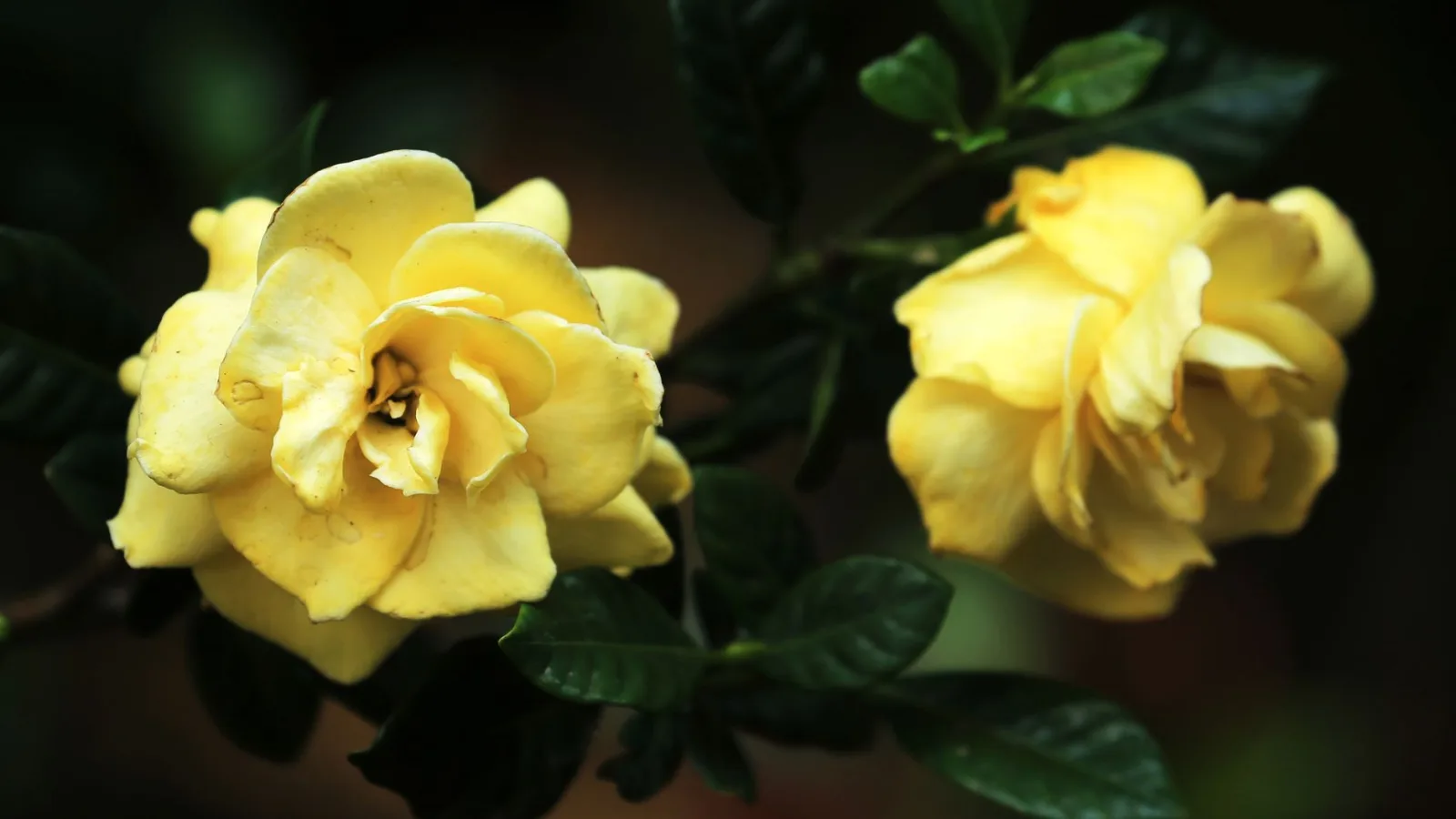
It's October, and the gardenia in a pot on the balcony is now hung with orange fruit. This is the same shrub that opened six-lobed white flowers in June and July, with a fragrance that carried a long way. In the Northern Hemisphere, the fruit ripens in October and November. Pick it once the green skin has turned orange.
Gardenia (Gardenia jasminoides) is an evergreen shrub in the coffee family, Rubiaceae. It grows in the warm-temperate parts of East Asia where winters are mild. China is the main producer, and it's also widely grown in Japan and Korea. In Taiwan it grows wild. It does best between 16 and 28°C. It can take temperatures down to about -10°C, but any colder and the branches freeze and die. In Korea, the southern coast is as far north as it can spend the winter outdoors. If you live somewhere colder than that, grow it in a pot and bring it indoors before the cold sets in. Its leaves turn yellow when the soil becomes neutral, so choose a slightly acidic mix.
Splitting the Fruit to Make Golden Water
Gardenia fruit is rarely eaten on its own. It usually goes into food as a steeped liquid. Its yellow comes from carotenoid pigments such as crocin and crocetin. These pigments dissolve easily in water, so they've been used for centuries to dye both cloth and food. That same quality makes the liquid easy to stir into rice-cooking water or batter. The fruit also contains geniposide, which contributes to its bitterness, so the infusion is used to color food rather than as something to drink. Another compound, genipin, turns blue when it meets amino acids, which is how the same fruit also yields a blue pigment.
Start by splitting the fruit in half and soaking it in lukewarm water. Begin with 1 to 2 fruits per 200ml of water. Once the water has turned a deep yellow, pour it through a sieve to catch the seeds and bits of skin. If the color is too pale, add another fruit.
Rice and Tteok: Swap the Cooking Water and the Dough Water
Rice is the easiest place to start. When you cook it, use the gardenia water in place of plain water. The yellow spreads evenly through every grain. The fruit does contain aromatic compounds such as linalool, but almost none of that scent survives in the cooked rice, so it goes with any side dish. If the color comes out too strong, dilute the infusion by about half with plain water.
Yellow rice is also lovely for ssam, where rice and side dishes are bundled up in leafy greens. Wrap it in lettuce or perilla leaves picked from the garden, and you get yellow rice tucked inside a green leaf. Tteok (Korean rice cakes, usually made from steamed rice flour) works the same way. When you moisten the rice flour, use the gardenia water instead of plain water, and the rice cakes come out yellow.
Danmuji and Jeon: The Pickling Brine and the Pancake Batter
If your fall garden gave you a crop of Korean radish, try making danmuji, the bright yellow pickled radish served as a side dish. Mix some gardenia water into the brine when you pickle the radish, and it will turn yellow. Commercial danmuji makers have used gardenia for a long time, too. The color works its way into the radish slowly in the brine, so leave it for at least a day before taking it out.
Gardenia water also suits jeon, savory pancakes made by coating ingredients in batter and pan-frying them in oil. Stir the gardenia water in as you mix the batter, and the pancakes come out yellow. The color holds up well in hot oil, and salting the batter makes it look even brighter. Add some sliced Korean zucchini or garlic chives, and you get flecks of green against the yellow.
How Much Goes In, and What the Old Records Say
When you add gardenia water to rice-cooking water or batter, keep it pale, using just enough to tint the food. Studies of the pigment crocin only tell us where the yellow comes from. They have nothing to do with preventing or treating disease.
The Dongui Bogam, a 17th-century Korean medical classic, lists gardenia (梔子, chija) in its section on trees (木部) and describes it as cold in nature, bitter in taste, and nontoxic. For medicine, it calls for sanchija (山梔子), a small, round fruit with a thin skin, and says the best ones have seven to nine ridges. This is what an old medical text recorded, and it is not the view of modern medicine.
That said, animal studies using high doses of geniposide have reported liver problems. For that reason, we don't recommend boiling the fruit into a strong brew and taking it over a long period. The pale infusion that colors your food and a strong brew made like medicine are two different things, so keep them separate in your mind.
Today, split one fruit in half and leave it soaking in 200ml of lukewarm water. Tonight, pour it in as the water for your rice.
Sources: Dongui Bogam, 木部 (Trees), 梔子 (Gardenia) · Korea National Arboretum, Korean Plant Names Index