Flip over the bag of gummy bears your kid just grabbed and you'll find Red 40 and Yellow 5 on the label. Both are synthetic dyes made from petroleum. Researchers at the University of Missouri are refining a process that gets the same red from an ear of corn. If you grow waxy corn in your garden, this story is closer to home than you might think.
Synthetic dyes now have an expiration date
In January 2025, the U.S. Food and Drug Administration (FDA) revoked its approval of Red 3 for use in food. That April, it announced plans to phase six petroleum-based dyes, including Red 40 and Yellow 5, out of the food supply by the end of 2026. Since 2010, the European Union has required foods containing dyes in this family to carry a warning that they "may have an adverse effect on activity and attention in children." In Korea, tar dyes such as Yellow 4 are still permitted under Ministry of Food and Drug Safety standards. The pressure to remove them has grown, but one problem lingered: candy colored with beet juice fades when it's boiled or baked.
Why the Missouri team chose the kernel's outer skin
A team led by University of Missouri food scientist Pavel Somavat has been studying how to extract pigment from the pericarp, the thin outer skin of the kernel, of purple corn (maíz morado), a variety long grown in the Peruvian Andes. The purple comes from anthocyanins, and more than half of it is a single compound, cyanidin-3-glucoside. It belongs to the same family of pigments that colors blueberries and the skins of black beans, and nearly all of it is concentrated in the pericarp, which makes up just 5 to 6 percent of the kernel's weight.
One reason for choosing the pericarp is cost. In dry-milling plants that grind corn into flour, the pericarp is stripped off and sent out as animal feed, so the raw material costs next to nothing. The other reason is stability. Many of the anthocyanins in purple corn carry a malonic acid group, which helps them hold up under heat and light better than betanin, the pigment in beets. While beet-dyed dough turns brown in the oven, purple corn keeps its color. That said, the research is still at the stage of refining the process and yields. It doesn't mean candy made with this dye is already on store shelves.
Growing your own purple with black waxy corn
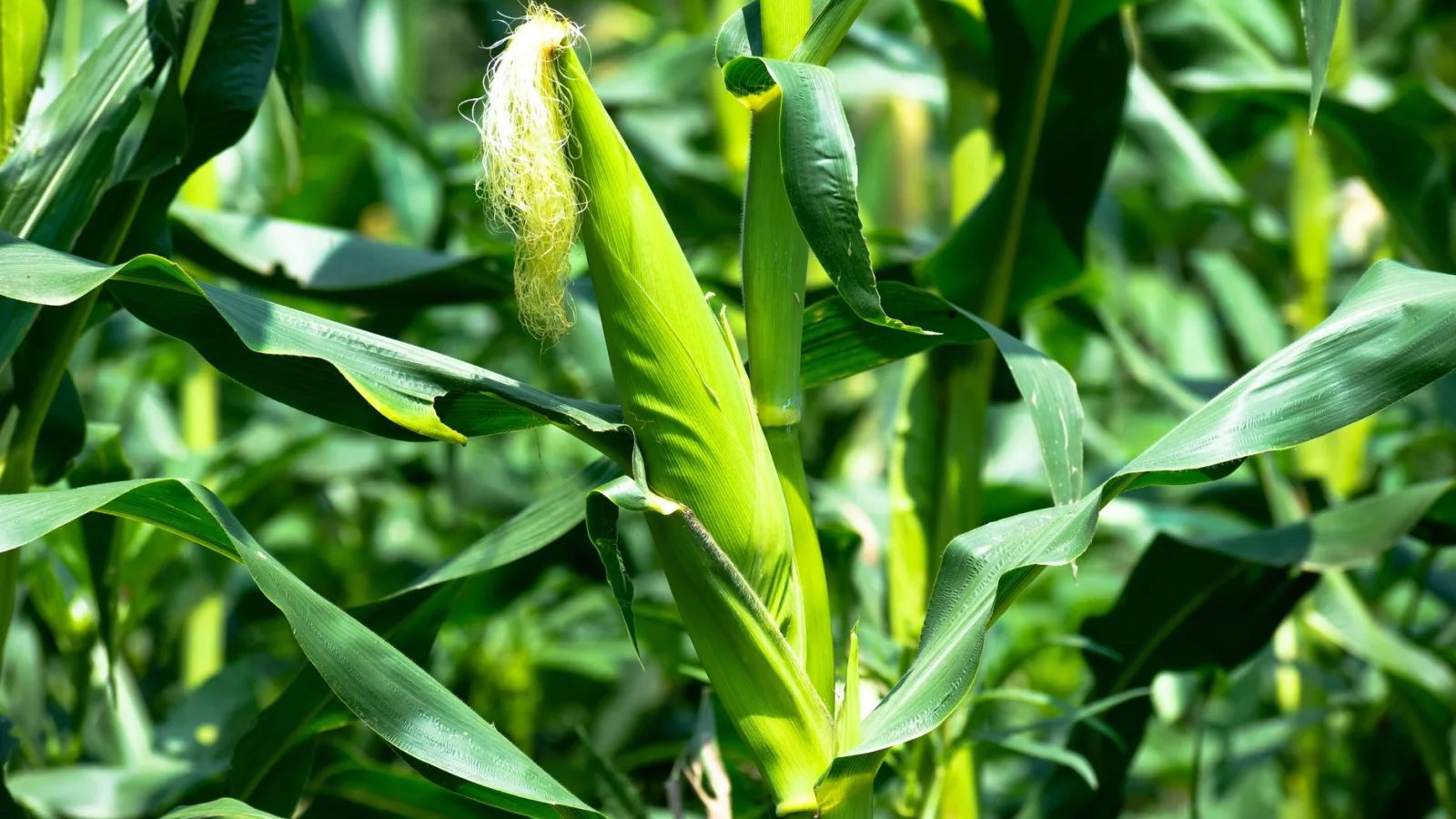
You don't need to track down Peruvian seed. Black waxy corn (heukchal oksusu, a sticky corn widely grown in Korea) gets its color from the same family of anthocyanins in its kernel skins. Corn seed won't germinate until the soil warms past 10°C (50°F), so sow between late April and mid-May. Space plants 25 to 30 cm (10 to 12 inches) apart, with 60 to 70 cm (24 to 28 inches) between rows. Instead of a single long row, plant at least four rows in a block so the pollen can reach neighboring plants and fill out every ear.
What you really need to watch is the neighboring plot. If sweet corn is growing within 100 meters (about 330 feet), the pollen will cross, the kernels lose their sticky chew, and if you save seed and plant it the next year, yellow kernels will show up in the mix. If you can't keep your distance, stagger your planting by at least two weeks. For pigment, let the ears mature well past the snacking stage, until the kernels are hard. Then strip off the husks and dry the whole ears in a shady, well-ventilated spot for about two weeks. The pigment is most concentrated in the kernel skins and the cob, so it's best to use the dried ears whole.
Steeping it in the kitchen, and what not to expect
In Peru, dried purple corn is boiled to make chicha morada, a sweet corn drink. Put 2 dried ears (about 300 g) in 2 liters of water with the peel of one pineapple, a stick of cinnamon, and 3 whole cloves. Simmer over medium heat for 30 to 40 minutes, let it cool, then adjust with sugar and lemon juice. If all you want is the color, boil 100 g of kernels in 500 ml of water for 20 minutes and use that water to cook rice or to mix into dough for tteok (Korean rice cakes). Add a few drops of lemon juice and it turns red; a pinch of baking soda turns it blue. Anthocyanins are red in acid, purple at neutral, and blue in alkaline conditions, which makes this a great experiment to try with kids.
A few things not to expect. There are plenty of reports on the antioxidant activity of anthocyanins, but the dye in a single piece of candy is measured in milligrams, so don't count on anything like the nutrition in a handful of blueberries. Natural dyes take more material than synthetic ones to produce the same color, and they cost more, so the difference ends up in the price of the candy. Even when the label changes from "Red 40" to "purple corn extract," a gummy bear is still a lump of sugar. Swapping one color doesn't turn a snack into a vegetable.
Sources: University of Missouri research led by Pavel Somavat on anthocyanin extraction from purple corn pericarp; the U.S. Food and Drug Administration's 2025 announcement on phasing out synthetic food dyes; European Union Regulation (EC) No 1333/2008 on food additives.