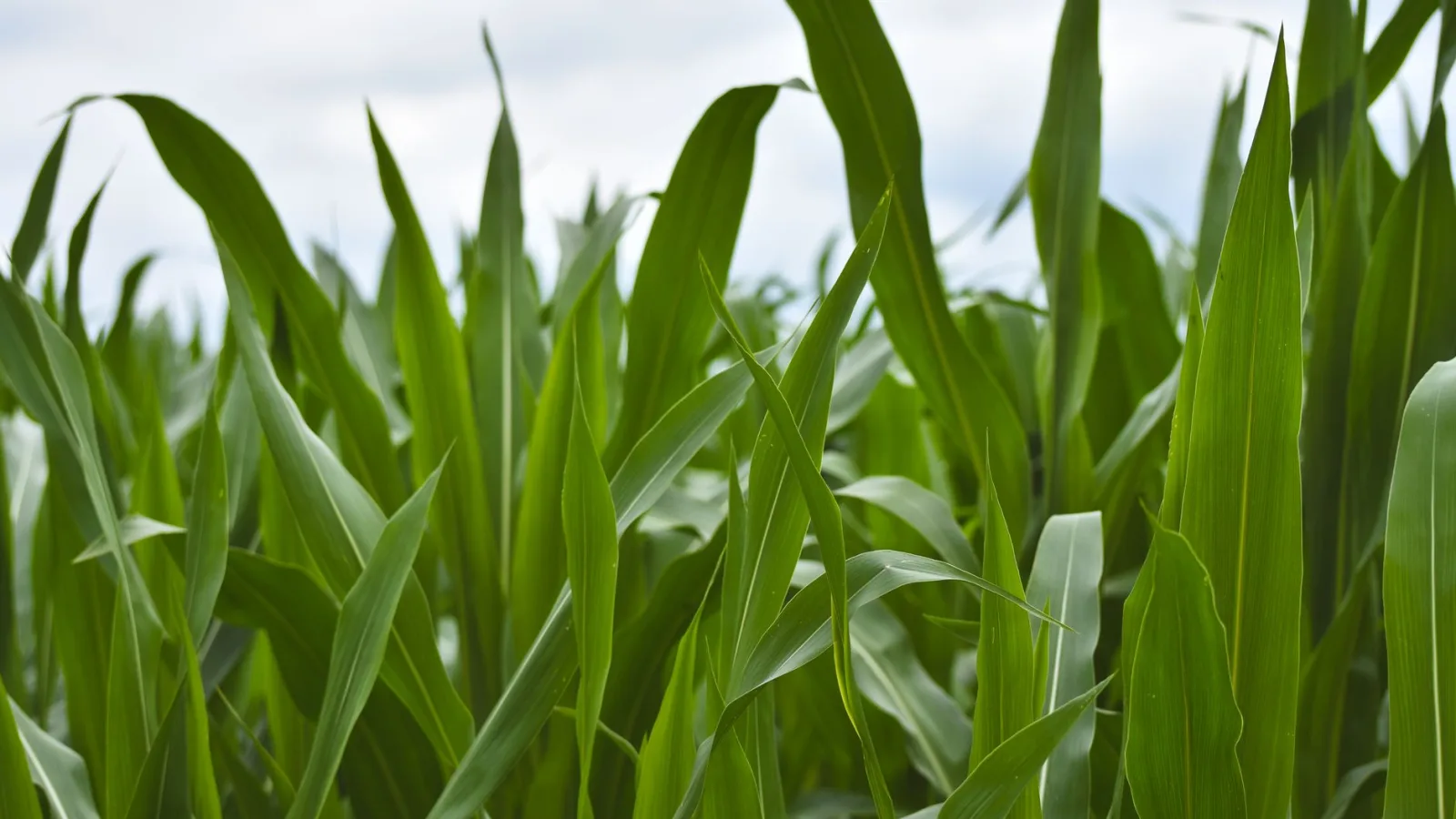
In July, you pick corn from the garden. Once you've shaved the kernels off and scattered them over rice, a heap of cobs, husks, and silk is left behind. Most of it goes to the compost pile. But those hard cobs hold a sugar that people cannot digest. The bacteria living in our gut differ widely in their ability to eat it.
A Sugar That Passes Through Us Unused
The cell walls of tough plant tissue, such as corn cobs, wheat bran, rice bran, and bamboo shoots, are rich in a substance called xylan. Chop xylan into small pieces and you get xylooligosaccharides (XOS): short chains of a few linked units of a sugar called xylose, sometimes with another sugar, arabinose, attached as side branches.
Human digestive enzymes cannot cut these chains. So they pass through the small intestine unabsorbed and arrive in the large intestine intact. There, only the bacteria able to eat this sugar get a boost. That, broadly speaking, is what defines the substances we call prebiotics.
Not All Bifidobacteria Are Alike
In 2026, a journal in the gut microbiome field published a study on how Bifidobacterium longum metabolizes xylooligosaccharides. This species is one of the best-known bifidobacteria, found in people of every age, from newborns to the elderly.
When the researchers grew several strains side by side, some thrived on xylooligosaccharides alone while others barely grew at all. Same species, different strain, different result.
A closer look at one strong grower, strain NCIMB 8809, showed that the moment xylooligosaccharides were added, three enzyme genes switched on together. Two of them make enzymes that snip xylose units one at a time from the end of the chain. The third makes an enzyme that removes the arabinose side branches. Sitting right beside them was a gene for a transport protein that carries the sugar into the cell. When the researchers knocked out either the transporter gene or the enzyme genes, the bacteria could no longer grow on xylooligosaccharides. Put the genes back, and growth resumed.
Up to this point, the evidence is solid, because it comes from directly manipulating genes and enzymes. What happens when a person actually eats xylooligosaccharides is another matter. How much their gut bifidobacteria multiply, and what health benefit follows, depends on their individual microbial makeup and diet. There is no single answer yet.
Bringing It to the Garden Table
Commercial xylooligosaccharides are extracted from processed corn cobs or bamboo. You can't do that to a cob in your kitchen, so the realistic approach is to put xylan-rich foods on the table as they are.
- Stir a spoonful or two of whole barley or oats into your white rice before cooking
- Swap your breakfast bread for a whole-wheat loaf that includes the bran
- With freshly picked corn, don't stop at the kernels. Simmer the cobs too, for a flavorful stock
- Serve foods with live cultures, such as yogurt or kimchi, at the same meal
One caution. If you rarely eat whole grains and suddenly pile them on, expect gas and bloating. Your gut bacteria need time to adjust to a new food supply. Start with a single spoonful and build up slowly over 2 weeks.
Tonight, when you put the rice on, add a spoonful of whole barley. And if you're boiling corn, don't toss the cobs. Drop them in the pot too.
Reference — Published in 2026 in the journal Gut Microbes: a genetic and enzymatic study of xylooligosaccharide metabolism in Bifidobacterium longum