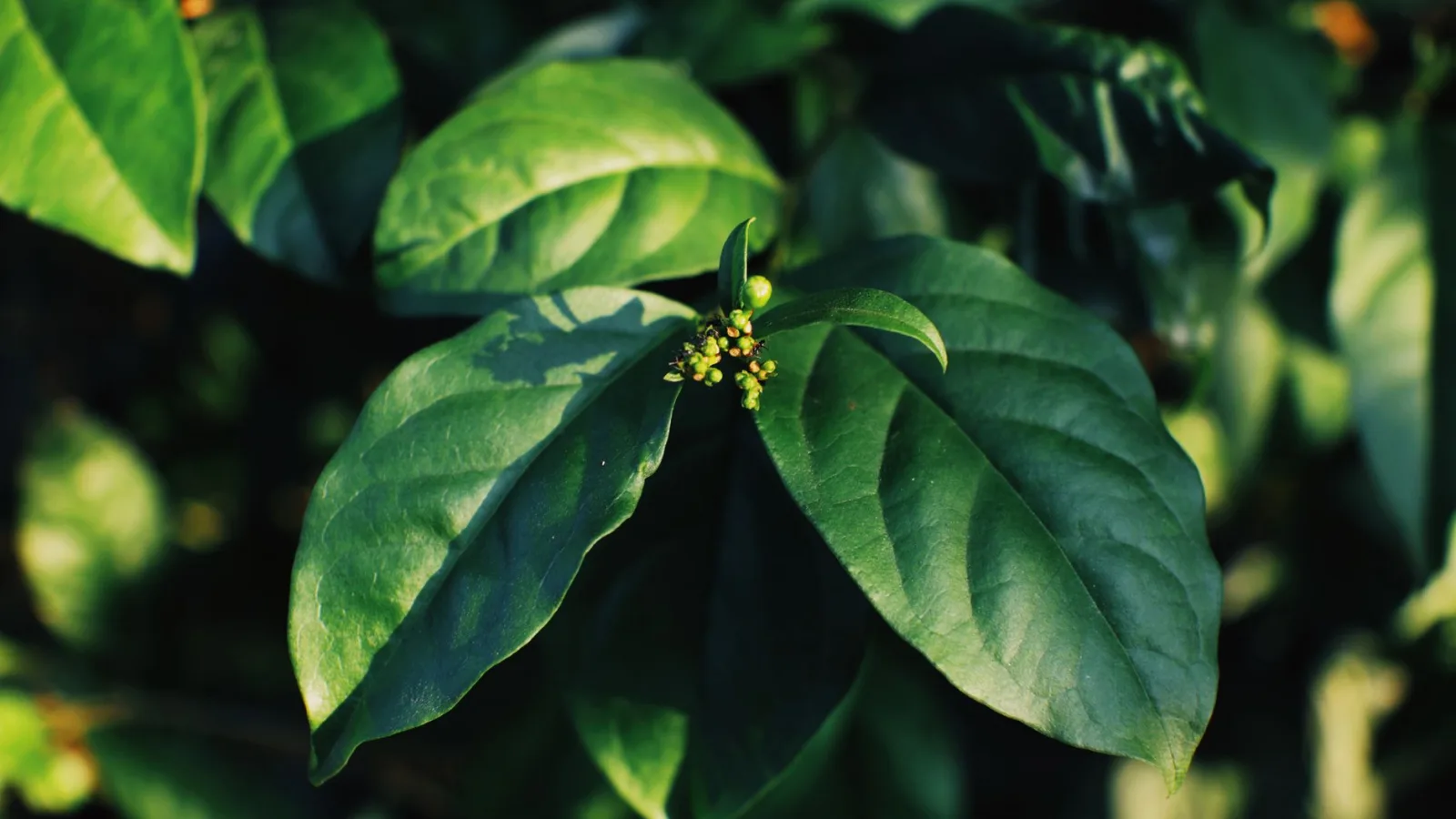
In September the schisandra clusters ripen red across the trellis. Slip a hand in between the leaves and you'll find berries the size of peas, crowded together at the tips of the stems. It's a sight reserved for whoever planted a single seedling in spring and then waited three years.
Plant in spring — but stand the trellis first
Schisandra, or omija, is a deciduous woody vine. In the Northern Hemisphere, plant it in March or April. You start from nursery seedlings rather than seed, so look for young plants offered in spring. With nowhere to climb, the vine snarls into its own leaves in the very first season, which is why it's better to build the trellis before the seedling goes in. Sink posts about the height of an adult, run wire between them, and from the second year the vine climbs on its own. This bit of preparation is the main reason schisandra has a reputation for being a fussy crop.
Keep the shallow roots covered all summer
This is a plant that shrugs off winters around -30°C (-22°F). Summer is its weak season. The roots spread shallow, so midday sun and drought dry them out first. It grows best between 15 and 25°C (59–77°F). String together a run of days above 30°C (86°F) and the leaves go limp and the berries stop sizing up. So before the summer rains taper off, lay a thick blanket of straw or cut grass over the soil. Water deeply in one go rather than a little at a time. Schisandra is widely cultivated in China and Korea and grows wild in the Russian Far East and the mountains of Japan — all of them highlands with cool summers.
August and September: cut the whole cluster with shears
The first harvest usually comes in the third year after planting. The berries start out green and deepen from red toward purple as they ripen. Don't pull them off one by one — cut the stem just below the cluster with shears. Tug by hand and you'll bring away the short spur along with it, the one meant to carry next year's fruit. Anything you plan to dry, spread out in the sun. The Donguibogam, Korea's classic seventeenth-century medical compendium, likewise records picking the fruit in the eighth lunar month and drying it in the sun, and leaving the seeds in when it's destined for medicine.
Where the name "five flavors" comes from
The skin and flesh are sweet and sour, the seeds inside are pungent and bitter, and there is a saltiness on top of all that. Because it holds all five flavors it is called omija, the five-flavor berry — so says the Donguibogam in its entry for 五味子 in the herbs section. The same entry describes it as warm in nature, sour and slightly bitter in taste, and free of toxicity. It notes as well that in Korea the berries from Hamgyeong and Pyeongan provinces were held in the highest regard. These are the records of an old medical text, and they are not the same thing as a modern medical judgment.
The sourness comes from organic acids — malic, citric, and tartaric. The red of the skin is anthocyanin pigment. Lignans in the schisandrin and gomisin families have been identified in the fruit and the seeds, and analyses show they are concentrated more in the seeds than in the skin and flesh. That is as far as compositional analysis takes us.
Try it cold-steeped
Steep dried berries in cold water for 8 to 12 hours. Boiling draws bitterness and astringency out of the seeds, so strain the solids from the infusion and keep it in the refrigerator. If you have fresh berries, layer them with an equal weight of sugar and let them give up their juice. The high acidity means it keeps reasonably well. Even so, sterilize your glass jars in boiling water, and refrigerate the syrup once it's put up. Don't hang onto the strained solids for long. Chilled omija water with thin slices of pear and a few pine nuts floating on top — a hwachae, or fruit punch — is a long-standing fixture of the Korean summer table. The sweetness of the pear takes the edge off the sourness. Add the ice just before serving.
Right now is harvest season. If there's nothing on your trellis yet, put 20 g of dried berries into 1 L of water today and set it in the refrigerator — then go measure out the spot where next March's trellis will stand. The trellis comes before the planting.
- Planting: March–April in the Northern Hemisphere · set out nursery seedlings · trellis essential
- Harvest: August–September · from the third year after planting
- Temperature: grows best at 15–25°C (59–77°F) · tough in winter cold, weak against summer drought
Sources: Donguibogam, herbs section, 五味子 · Nongsaro crop information (Rural Development Administration) · Korea National Arboretum, Korea Biodiversity Information System