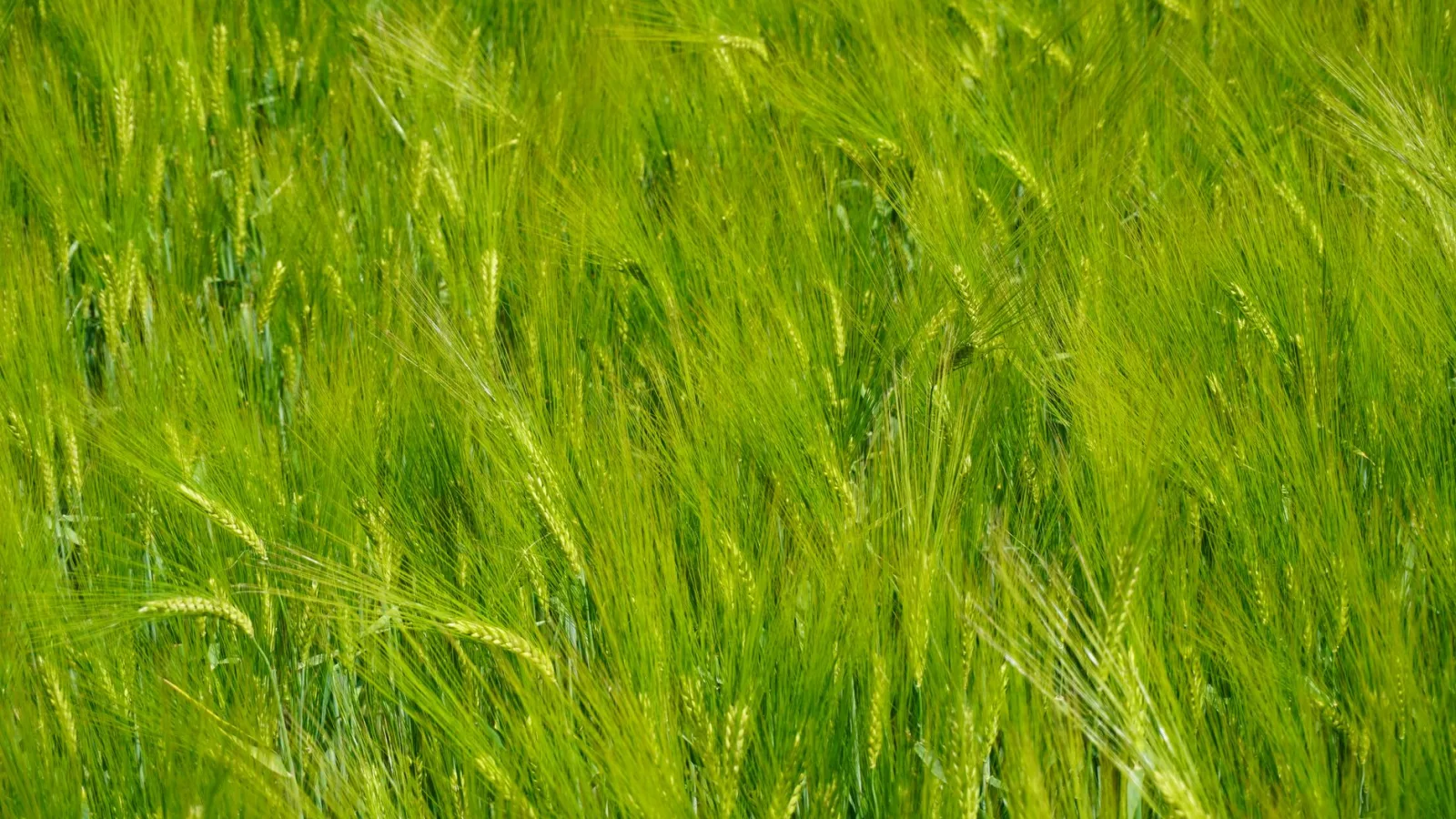
Lift the lid on a pot of barley rice and two things rise together: loose, separate grains and a warm, toasted smell. Among the barleys there's a variety whose hull simply falls away during threshing. It goes by naked barley, or in Korean ssalbori — literally "rice barley" (Hordeum vulgare var. nudum). Grown on the Tibetan Plateau for more than 3,500 years, it differs from hulled barley in one practical way: it needs no milling, so it's edible straight off the harvest. There are good reasons it's finding its way back onto the tables of people watching their blood sugar and cholesterol.
What's Inside the Grain
Naked barley contains dietary fiber, protein, starch, polyphenols, and GABA (gamma-aminobutyric acid). Of these, the two that bear most directly on blood sugar and blood lipids are beta-glucan (β-glucan) and polyphenols.
Beta-glucan is a soluble fiber found in barley's cell walls. In the digestive tract it thickens into a viscous gel, which slows the rate at which glucose is absorbed; it also binds bile acids, reducing how much cholesterol gets reabsorbed. Ounce for ounce, naked barley carries more beta-glucan than wheat — one reason it comes up so often in conversations about whole grains.
Its polyphenols are mostly phenolic acids and flavonoids. Beyond their antioxidant role in limiting oxidative damage to cells, researchers believe they also inhibit the activity of digestive enzymes tied to blood sugar absorption. That said, how much polyphenol your body actually absorbs varies a great deal depending on how you cook the grain and on your own gut environment.
GABA is an amino acid that dampens nerve excitation. Its levels rise as the grain sprouts, and researchers are studying whether it may help regulate blood pressure. For now, there simply isn't enough data to draw a conclusion.
What Changes in Blood Sugar, Lipids, and Antioxidant Status
Across a number of clinical studies, participants who ate barley-based diets — naked barley among them — for 8 to 12 weeks tended to show lower fasting blood glucose and lower blood triglycerides. In many cases LDL cholesterol came down as well. Positive changes have also been reported in markers of immune function, though the research there is still thin.
The antioxidant effect tracks with polyphenol content. Sprouting or fermenting naked barley is known to raise polyphenol levels somewhat. At home, you can soak the grain for a day or two, let it just barely sprout, dry it, and stir it into your rice — the result is a grain with more polyphenols than plain naked barley.
Naked barley is not a substitute for a glucose-lowering medication or a treatment for dyslipidemia. Think of it instead as one ingredient in a broader dietary shift: swapping some of your refined carbohydrates for whole grains. The intake used most often in studies works out to roughly 40 to 50 grams a day, eaten steadily — mixed into rice, porridge, or soup.
Growing It in the Garden
Naked barley is a fall-sown crop. Sow between mid-October and early November and you'll harvest the following June. It prefers well-drained soil and holds up well in dry conditions. Work plenty of compost in before sowing and it will grow without any additional feeding.
By May, when the heads emerge, you can tell it from wheat by the way the grains sit densely packed along the spike. Thresh after harvest and the hulls come away on their own, so you can use the grain as it is, unmilled. That's the part that sets it apart from hulled barley.
If your plot is small, try sowing it in rows across 40 to 80 square feet. The yield won't be large, but cooking a pot of rice with barley you grew yourself is a fine way to come to understand the crop.
Tonight, try adding a handful of naked barley to the rice pot.