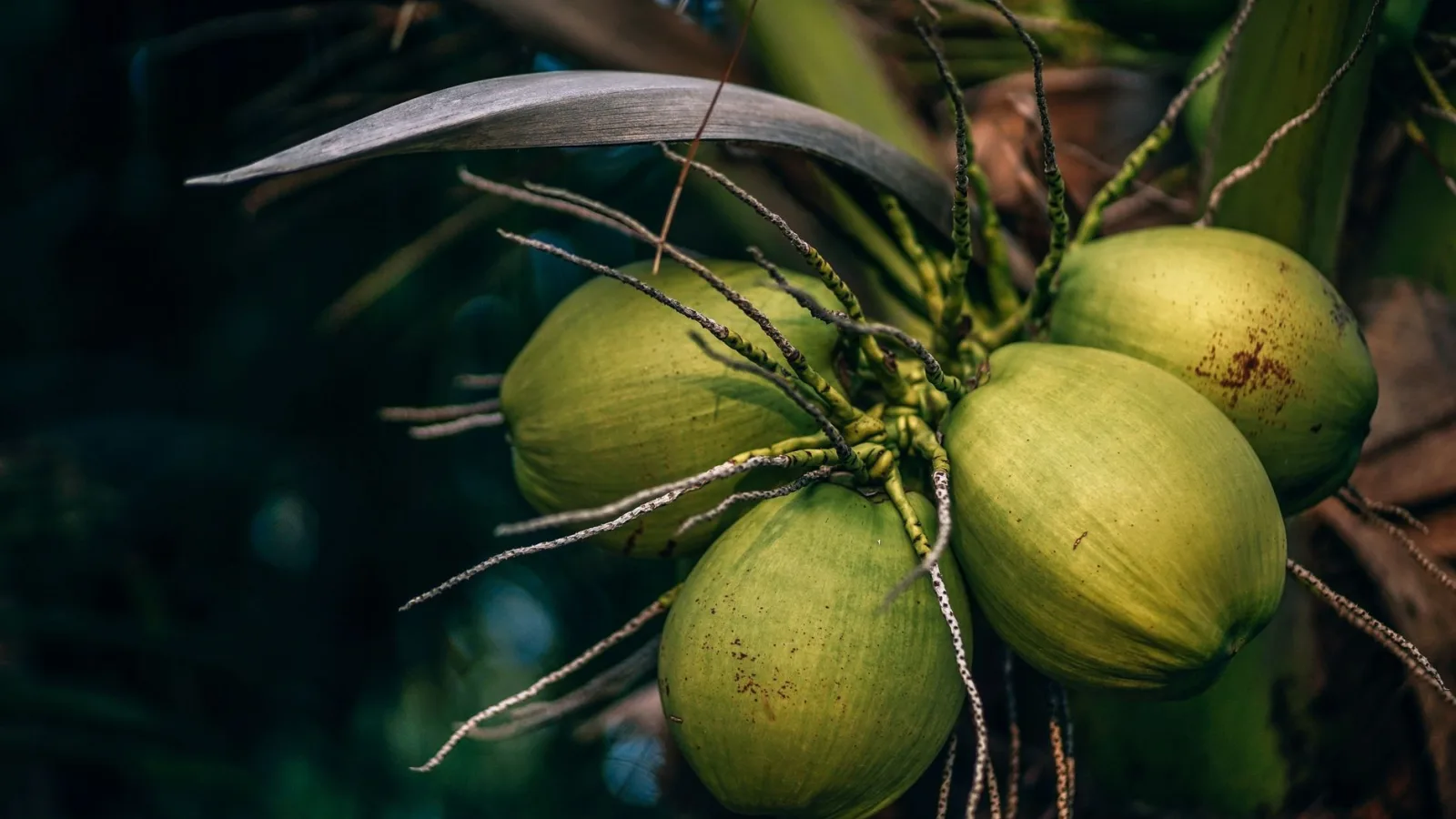
In the Northern Hemisphere, torreya nuts are harvested from September through November. When people get their first bag around this time, they usually want to know how many to eat before they ask about health benefits. How many can you have at once? Can you give them to kids? Is it okay to peel the outer husk with bare hands? Torreya nuts (bija in Korean) are the seeds of the Japanese torreya (Torreya nucifera), a member of the yew family that is grown mainly in Japan, Korea, and China. They aren't an everyday snack, so few people know from experience how much is a sensible amount. You'll find planting months and nutrient data in the torreya entry in the Homiclub Crop Guide.
Half the Kernel Is Oil
Peel the fleshy outer layer off the fruit and you'll find the seed. Crack the seed's shell, and the kernel inside is the part you eat. Half of that kernel is fatty oil. The oil is what makes roasted torreya taste rich, nutty, and a little oily. Because there's so much fat, though, eating several at once can easily give you a stomachache or diarrhea.
The oil is also made up a little differently from the oil in common nuts. Research on torreya seed oil has found fatty acids such as sciadonic acid, which show up mainly in conifer seeds. That research only analyzed the oil's makeup, however. It didn't show that these fatty acids are good for you. Your body will cope better if you treat torreya as a seed you're tasting for the first time, not as a familiar nut to eat by the handful.
Start With a Few on Day One
People in earlier centuries paid attention to quantity too. The Dongui Bogam, Korea's classic medical encyclopedia from the early 1600s, lists torreya as 榧子 in its section on fruits. It notes that the seed is also called okbi (玉榧) and that people in the region where it grows call it jeokgwa (赤果, "red fruit"). The book describes it as neutral in nature (neither warming nor cooling), sweet in taste, and nontoxic, and adds that you peel off the shell and eat the kernel inside. Old prescription records also set a fixed number of seeds to take each day. Calling it nontoxic never meant you could eat as many as you liked. Keep in mind that these descriptions come from a classical medical text and are not the same as modern nutritional judgments.
On your first day, it's best to start with just a few and see how your body responds. Put a few roasted torreya nuts on a plate and chew them slowly. Notice how your stomach feels that evening and the next morning. If all is well, add a few more each time. Even then, don't eat a lot in one sitting. Give children fewer than you'd give an adult.
If you've ever reacted to nuts, be even more careful. Torreya isn't a common nut, so many people try it without knowing whether they're allergic. If that's you, eat just one or two and watch for an itchy mouth or swollen lips. If anything feels off, stop eating and talk to your doctor.
Wear Gloves to Peel, and Roast in a Dry Pan
If you have fresh torreya, prep it first. The fleshy layer around the seed, called the aril, contains resin, so handling it bare-handed for long can leave your hands sticky and stinging. Wear rubber gloves to peel it, then rinse the seeds and let them dry.
When you're ready to eat them, toast them lightly in a dry pan over low heat, with no oil. Heat brings out the aroma and takes away some of the bitterness of the thin inner skin. Roasted kernels smell different from nuts; the scent is particular to conifer seeds. Toss roasted torreya with honey or jocheong (a thin Korean syrup made by slowly cooking down grains) to add sweetness to the nutty flavor. People on Korea's Jeju Island made them in much the same way. Sweetened nuts are easy to overeat, so set aside the amount you plan to eat before you toss them.
All That Oil Means They Spoil Fast
Seeds this rich in oil need careful storage. Oil left in contact with air and heat goes rancid (it reacts with oxygen and spoils) and starts to smell stale, and torreya oil turns rancid fairly quickly. Instead of roasting a big batch at once, roast only enough for a few days and keep the rest in an airtight container in a cool spot or in the fridge. Throw out any kernels that smell rancid or taste bitter.
If you're trying torreya for the first time today, eat just a few, and tomorrow morning check that your stomach feels fine.
Source: Heo Jun, Dongui Bogam, Tangaek-pyeon (the volume on medicinal ingredients), Fruits section, entry on 榧子 (bija).