August leaves gaps in the garden. The row where the potatoes came out, the bare strip where the corn was cut. In the Northern Hemisphere, buckwheat sown now comes in somewhere between September and October. Sixty to eighty days from seed to harvest — short enough to squeeze one more crop out of the season.
Two Months, and It Isn't Fussy
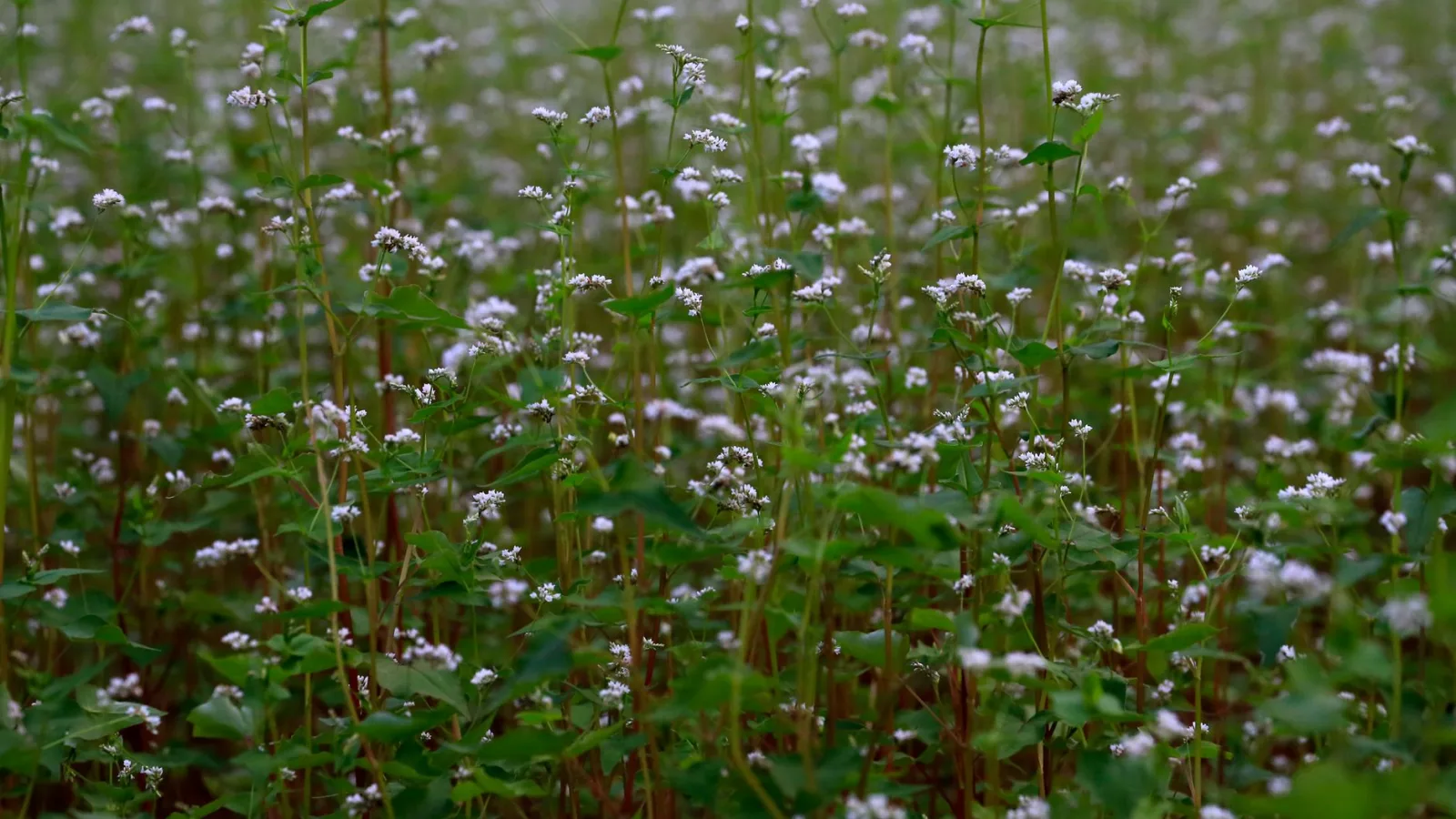
Buckwheat grows in soil with no richness left in it. It was the grain you sowed late, in the spot where everything else had failed, to get through a bad year. These days people also plant it just for the white flowers that open at the end of summer. It originated in China and is grown widely in Russia, China, Ukraine, Kazakhstan, and France.
It fills out best somewhere cool and sunny. It's a short-day crop: as the days shorten, flowering comes on earlier. Fall-type varieties respond sharply to day length; summer types barely react.
- Ideal growing temperature 17–23°C, with a working range of 10–30°C
- If it climbs past 30°C at flowering, or the soil goes dry, the seed won't fill
- It has no tolerance for frost. Cut it before the first light frost arrives
Pick an empty bed that gets good sun and sow it today. Broadcast it or put it in rows — either works.
Rutin and Lysine
So what does two months of buckwheat give the person eating it?
Analyses have repeatedly detected rutin and other flavonoids in buckwheat groats and in the young sprouts. Comparative work has found rutin levels in bitter buckwheat — Tartary buckwheat — running dozens of times higher than in common buckwheat. These are compositional findings; they don't mean the plant treats or prevents disease.
On the protein side, the amino acid profile is the interesting part. Analyses show buckwheat protein carrying a higher proportion of lysine than other grains. That's the amino acid rice and wheat are relatively short on, which is why buckwheat keeps coming up in conversations about mixing grains. As for fiber: grind it with the hull on and you get correspondingly more.
Dough, and What Goes Alongside
Buckwheat has no gluten, so a pure buckwheat dough tears easily. Work in 20–30% potato starch or wheat flour and the dough holds together and rolls out without a fight. If you want to roll it out pure, try mixing the dough with hot water to gelatinize the starch first.
Serve it with daikon radish. Topping buckwheat noodles with grated radish became standard practice in both Japan and Korea's Gangwon region. The radish's bite and moisture cut the heavy, slightly chalky quality buckwheat can have. Grated radish loses its heat fast, so grate it right before you eat.
Don't pour out the cooking water, either. There's a custom of drinking it — myeonsu, the starchy water the noodles were boiled in. It holds the starch and whatever leached out during cooking, which makes it a fine thing to sip in place of broth. Stir in a little of the leftover dipping sauce and it finishes the meal nicely.
What the Old Medical Texts Wrote Down
In the Dongui Bogam, Korea's seventeenth-century medical compendium, buckwheat appears in the Grains section as 蕎麥, with the Korean name given as momil. The text calls it neutral tending toward cold in nature, sweet in taste, and free of toxicity. Alongside that it records a prohibition — don't eat it with pork or mutton — and a caution that eating it over a long stretch brings on dizziness. This is what an old medical text recorded, and it differs from what modern medicine concludes.
If you sowed buckwheat in that empty bed today, then when you harvest in the fall, try grinding it without hulling it first. Higher-fiber flour, and a first batch of dough to make with it.
Source: Dongui Bogam, Grains section, 蕎麥 · Rural Development Administration, Nongsaro