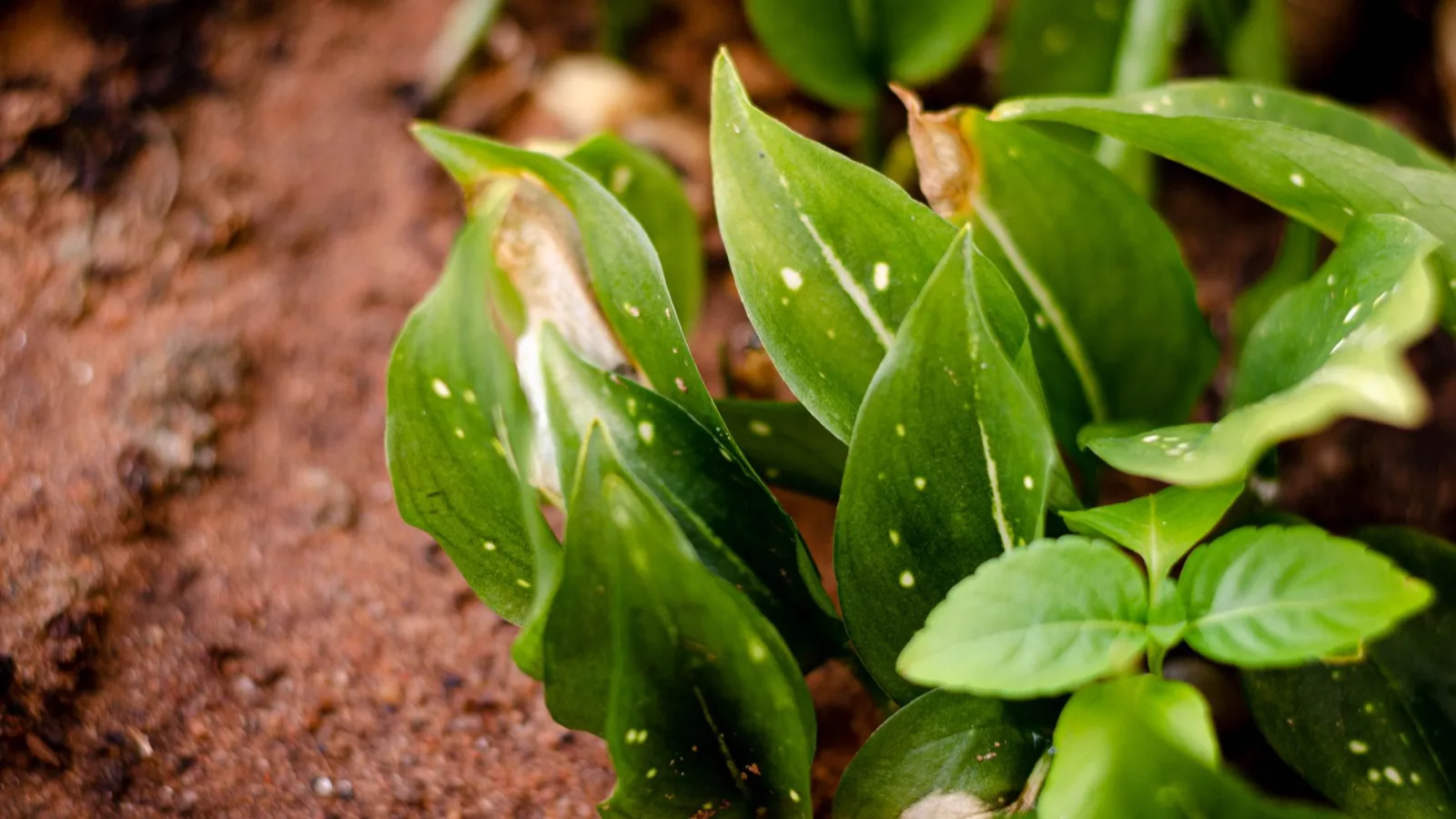
It's late October in the Northern Hemisphere. As nights turn chilly, gardeners with backyard plots and balcony pots start deciding when to bring their warm-climate plants indoors. Lesser galangal (Alpinia officinarum) is one of those plants. It's a perennial in the ginger family, and underground it forms a firm, intensely aromatic rhizome. English speakers simply call it galangal. It belongs to the same group as the spicy root used in Thai and Vietnamese cooking.
What the Dongui Bogam Recorded
The Dongui Bogam, the 17th-century Korean medical classic compiled by Heo Jun, lists galangal (高良薑, goryanggang) in its section on herbs (草部, chobu). It describes the root as hot in nature, pungent and bitter in taste, and non-toxic (無毒). The name comes from Gaoliang Commandery (高良郡), the region of China where it grew, and the text says it looks like shanjiang (山薑, "mountain ginger"). The entry heading carries the 【唐】 mark, which was used for medicinal ingredients imported from China.
The text also gives a single line on preparation: slice it and fry it in oil before use. Keep in mind that this comes from an old medical text and is not modern medical advice. "Hot" and "cold" were the categories used to sort medicinal ingredients at the time. They aren't thermometer readings. You can read the original text and its interpretation in Homiclub's Dongui Bogam entry on galangal.
How It Compares With Modern Analysis
Modern analysis looks at galangal in terms of the compounds it contains. Galangin is a flavonol named after galangal itself, and it has been reported as isolated from the rhizome. The root's distinctive smell comes from its essential oil compounds, including 1,8-cineole, which gives off a sharp, piney scent.
So where do the old record and the modern analysis agree? The first point is preparation. Essential oils dissolve readily in fat, so the old instruction to slice the root and fry it in oil is the same order of steps that draws out the most aroma. The description of the taste as pungent and bitter also isn't far from what we taste today.
There are differences, too. The Dongui Bogam described ingredients by their nature and taste, while chemical analysis shows what is actually inside. The reports on galangin and the essential oils cover composition and aroma, so they don't tell us what these compounds do in the body. The same reports also found that essential oils are volatile, so their makeup changes as the root is dried and stored. Freshly dug galangal will likely smell different from galangal that has been dried for a long time.
Planting in a Pot and Overwintering
Galangal is frost-tender. If your winters bring frost, grow it in a pot and bring it indoors before the cold arrives.
- Planting: Pick a piece of fresh galangal rhizome with plump buds on it. Plant it shallowly with the buds facing up.
- Care: Use a well-draining soil mix and water when the top of the soil dries out. Indoors in winter, keep the pot by a bright window. Growth slows down, so water less.
- Harvesting: Once the clump has filled out, dig gently at the edge of the pot and cut off only what you need. If you leave the rest of the clump in place, you can harvest again the following year.
Time your planting and harvesting to your local climate. Companion plants and compound details are collected in Homiclub's crop guide entry on galangal.
Frying in Oil and Steeping in Broth
The first things you notice when you taste galangal are its pungent, bitter flavor and its piney aroma. The rhizome is very fibrous, though, and hard to chew and swallow. That's why galangal is mostly used as an aromatic: you cook with it for flavor and take it out before eating.
- Frying in oil: When making a paste, fry thinly sliced galangal first so its essential oils dissolve into the oil. It turns bitter if it burns, so add the next ingredient before it starts to brown.
- Lemongrass and lime leaves: The aroma of tom yum (a hot-and-sour Thai soup) comes from galangal, lemongrass, and lime leaves together. Add them just as the broth starts to boil, and don't leave them in for long. All three are tough and fibrous, so remove them before eating.
- Coconut milk: Fry the galangal first to release its aroma, then pour in coconut milk. The essential oils dissolve into the fat in the milk and spread through the whole pot. Boiling it hard for a long time can make the milk separate, so keep the heat low.
The essential oils evaporate, so it's best to slice galangal right before you use it.
Today, try this: thinly slice a piece of galangal, fry it in oil just until it's about to brown, and take in the aroma.
Sources: Heo Jun, Dongui Bogam, Herbs section (草部), entry for "Goryanggang (高良薑)" · Composition and aroma summarized from the analysis in Homiclub's crop guide