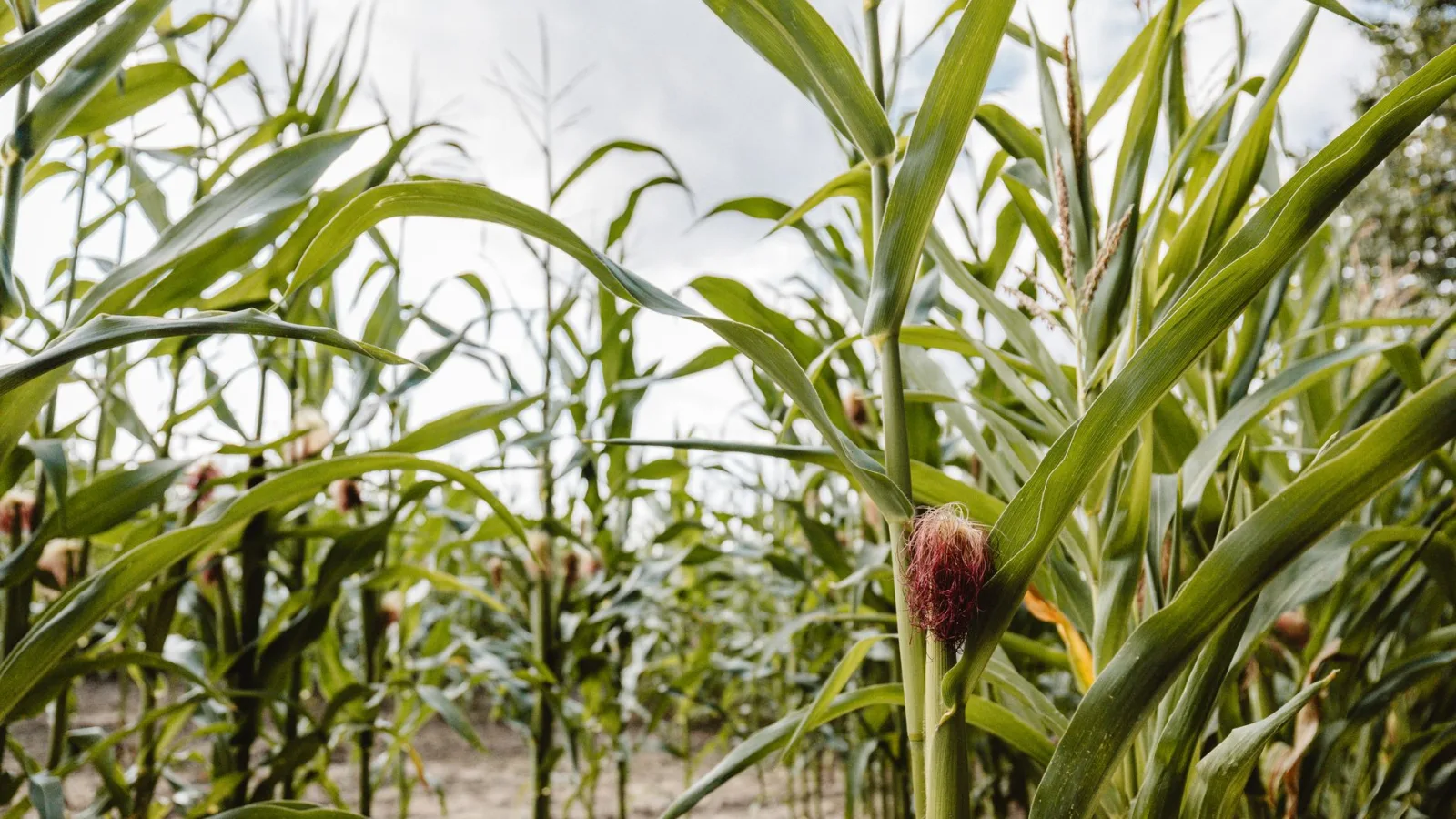
If you've grown corn in midsummer, you've probably seen the leaves curl up tight in the afternoon heat. Even after a good watering, the tips turn crisp, and a few days without rain can make the plants look as if they've stopped growing altogether. Corn is a thirsty crop, which makes it especially vulnerable in dry weather. Yet plant it side by side in the same bed, and some stalks will ride out a drought while others wilt almost right away. Where does that difference come from? A recent study looked inside the corn plant to find out.
The Vessels That Carry Water Up
Water drawn up by the roots travels to the leaves through slender channels called xylem vessels. Researchers at Penn State University compared these vessels across a range of corn varieties. They found that some varieties are naturally equipped with longer, wider vessels, so water flows through freely without getting blocked. In narrow vessels, the flow of water can easily break on a dry day. Wide, uniform vessels, on the other hand, keep a steady supply moving up to the leaves even when rain is scarce.
Roots That Reach Deeper
The same study found that corn with these vessels also tended to send its roots deeper. Deep roots can tap the moisture left in lower layers of soil after the surface dries out, which makes the plant far more resilient in a drought. What stands out is that both traits are inherited, part of the plant's genetic makeup. That means drought-hardy corn can be picked out at the seed stage, rather than coaxed along with extra water or a different fertilizer. The researchers see these traits as a promising tool for breeding drought-tolerant varieties.
What You Can Try in Your Own Garden
This research was aimed at farmers and plant breeders, but it holds lessons for a small backyard plot, too. First, instead of giving frequent little sips, try watering deeply all at once, then letting the top layer of soil dry out before the next round. When the surface dries, roots grow deeper in search of water. At planting time, loosen the soil deeply and build your rows into slightly raised ridges so the roots have plenty of room to spread. When choosing seed, look for varieties labeled "drought tolerant" or something similar. And after planting, spread straw or dried grass over the soil as mulch; it slows evaporation and helps the plants through dry spells.
If you're planting corn this summer, try stretching out the time between waterings a little, so the roots learn to go looking for water on their own. That alone can help your corn grow tougher against dry weather.