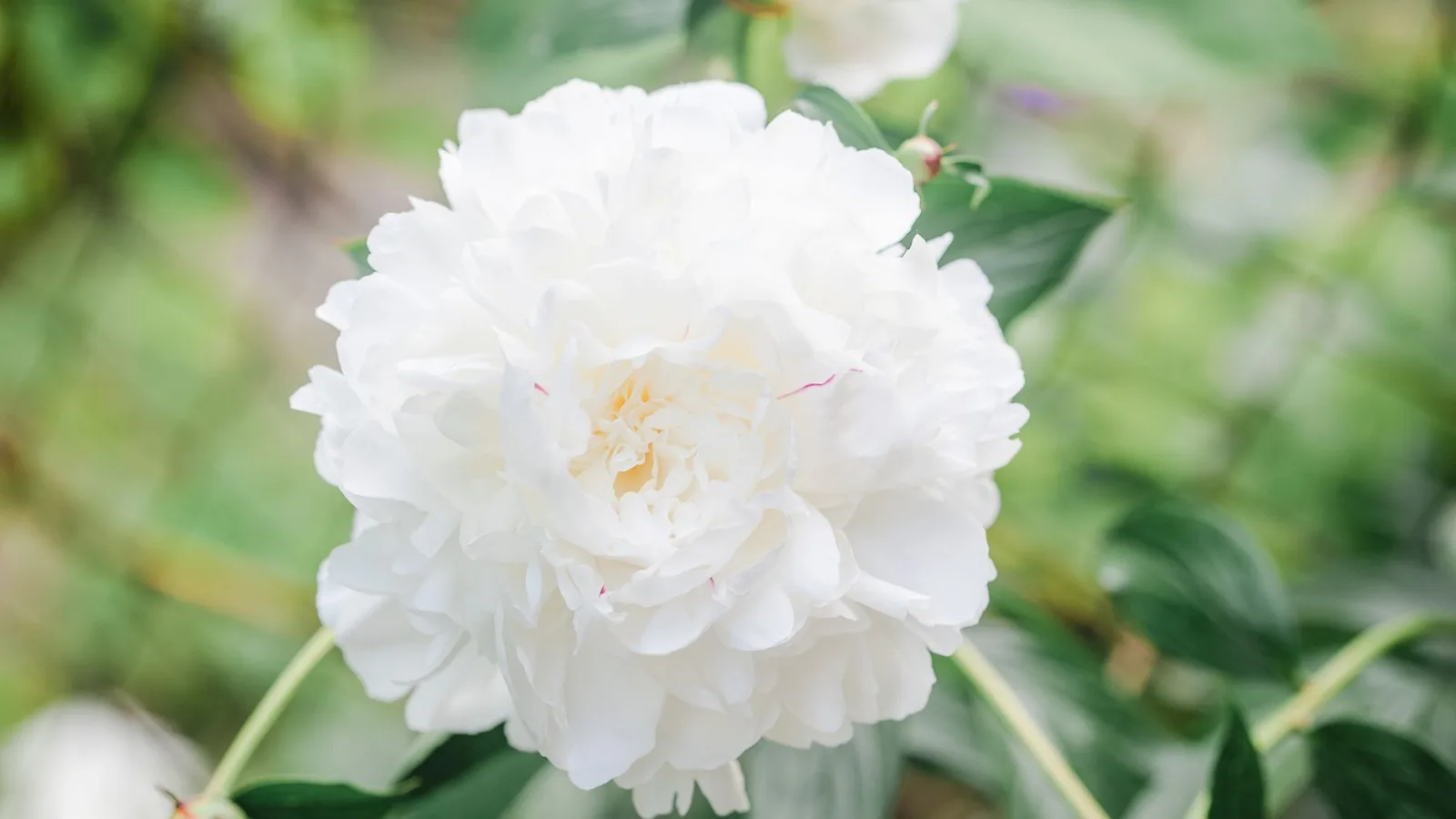
In the first week of September, the peony at the edge of the bed has thickened its leaves and started to fade from the margins inward. The flowers finished back in May; what's left now is the crown and the roots underground. In the Northern Hemisphere, September and October are the season for planting new peonies and lifting old clumps — and the season for digging the roots used in medicine. The flower Korean gardeners still call hambak-kkot and the root sold as a medicinal ingredient come from the same plant.
What the Donguibogam Wrote Down
Published in 1613, the Donguibogam (Treasured Mirror of Eastern Medicine) lists peony in the herb section under a second name, haechang. Its nature is neutral tending slightly cold, the text says; its taste bitter and sour; it carries a little toxicity. It grows in mountains and open country, and the root is dug in the second and eighth lunar months and dried in the sun. The entry cites the Bencao, the classical materia medica.
The text was particular about where the plant had been growing, too. Don't use what was raised on a manured plot beside the house, it says; use what came up on its own in the hills. It rated the mountain plants — single-petaled, red-flowered — above the rest, and recorded red and white as separate things. This is a record from an old medical text, and it is not what medicine concludes today. You can read the original entry in the Donguibogam peony entry.
What Today's Analysis Finds
A monoterpene glycoside called paeoniflorin was isolated from peony root, and current standards for the dried herb use that compound as their marker. This is a matter of chemical composition and has nothing to do with preventing or treating disease.
There is a place where the two overlap. The old record and the modern standard both look past the flowers and the leaves to the root. And the eighth lunar month falls, in most years, somewhere between September and October — so the digging season overlaps as well.
What differs is how each one sorts. The classical text sorted medicinal material by nature and taste; the modern standard measures the content of a compound as a number. Even the original's split between red and white came down to flower color. That red is anthocyanin in the petals. The root holds tannins and gallotannins, which account for its astringency, and the part that thickens year after year fills with starch.
September and October: Choosing the Spot
Planting season and digging season are the same, which is convenient. If you have old clumps to divide or move, do it all in one pass now. A peony that settles in will hold the same ground for years, and its roots get heavier every season — which is exactly why it's worth giving one more room than it seems to need on planting day. For planting depth and spacing between crowns, see the peony grow guide.
The flowers arrive in May, and until then the spot reads as empty. Set early spring bulbs in front of the peony and the bloom will hand off from one to the next. Just don't plant directly over the crown.
Before the Flowers Go Down
Peony blooms are big and heavy, and one hard rain will lay whole stems flat. It's spring work, but write it down now while the plant is on your mind.
- Set a ring support over the clump before the buds start to swell.
- After the flowers fade, cut off the flower stalk only.
- Leave the foliage where it is.
So can you use a root out of your own bed as medicine? Dried peony root goes into ssanghwa-cha, a traditional herbal tea, and into a long list of other formulas. Which formula and how much of it is a licensed practitioner's call, and a root dug from the garden is not used as it comes out of the ground. This weekend, settle on where the peony goes — and leave enough open ground in front of the crown for spring bulbs.