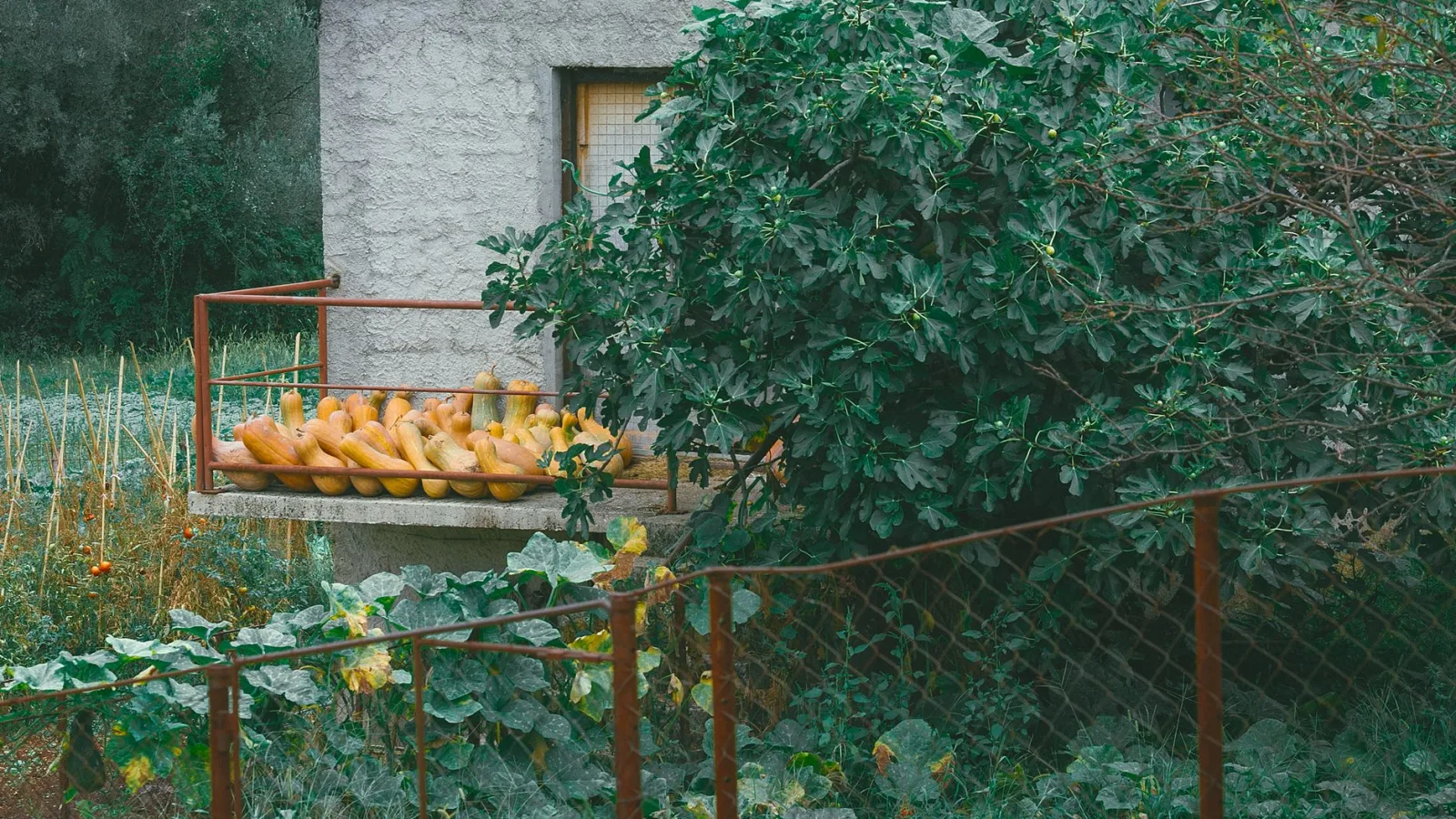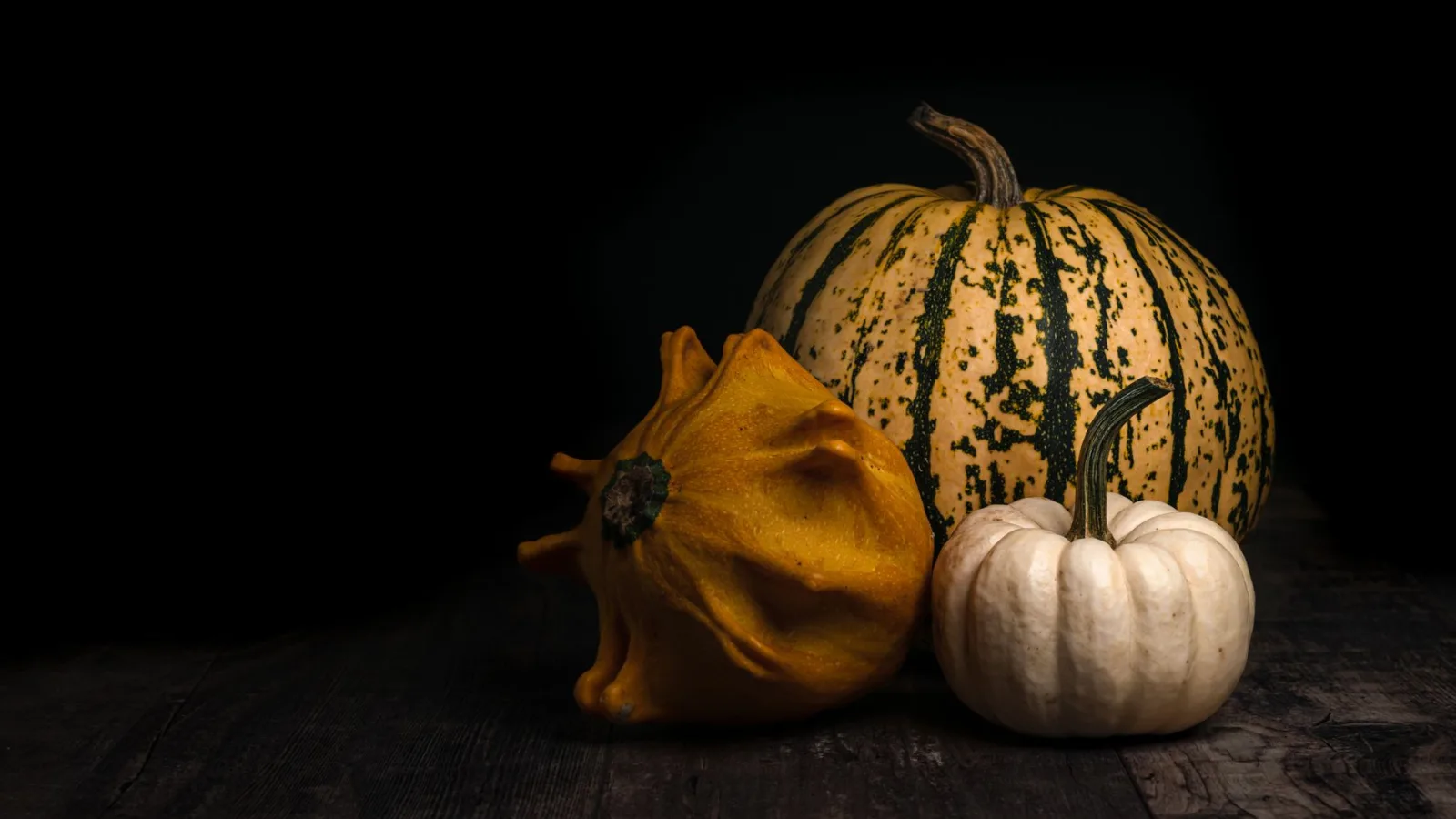
Cut open a mature pumpkin — the kind you harvest before the first frost and stash under the eaves — and the flesh glows a deep orange. What creates that color, and whether it survives the pot, is the sort of question that eventually occurs to anyone who grows their own.
Loche: an ancient squash from northern Peru
Loche squash is a landrace that has been grown for centuries in the Lambayeque region of northern Peru. It sets almost no seed, so growers have carried it forward for generations by rooting cuttings from the stems. Its name even appears in the food traditions of the ancient Moche civilization. Botanically it is Cucurbita moschata — the same species as the mature pumpkins and kabocha squash in our own gardens. Different variety, same yardstick for measuring what's inside.
Researchers ran a detailed analysis of the raw flesh and identified sixteen compounds: phenolic acids, hydroxycinnamic acids, coumarins, and sugar-bound derivatives of the same. Among the carotenoids responsible for the color, lutein was the most abundant; among the vitamin E compounds, alpha-tocopherol led the way.
- Lutein and zeaxanthin — pigments that accumulate in the macula at the back of the retina, where they're thought to help slow age-related vision decline.
- Alpha-tocopherol — the signature form of vitamin E, which keeps the lipids in cell membranes from oxidizing.
- Phenolic acids — antioxidants, though how much actually makes it into the body varies enormously from one compound to the next.
What's left after boiling
When the same flesh was boiled and measured again, the numbers dropped across the board. Tocopherols took the hardest hit, with only 10–20% of the original amount remaining. Phenolic acids didn't hold up under sustained heat either, falling to roughly a tenth of their starting level. The carotenoids behind that orange color, however, proved comparatively durable — which is exactly why a long-simmered pot of pumpkin porridge never loses its color.
What's in the food and what your body takes in are two different things
A compound being present is not the same as your body absorbing it. The researchers recreated human digestion in the lab, measuring how much of each compound made it through a simulated stomach and small intestine in a form the body could actually take up. Zeaxanthin came out on top at just over 70%, and tocopherols landed at moderate levels or better. Phenolic acids, by contrast, managed only about 3%. When a compound is both largely destroyed by cooking and poorly absorbed afterward, it's hard to hold it up as a reason to eat pumpkin.
The team then applied that digested material to a cultured model of human intestinal cells. It caused the cells no harm — but it also produced no clear change in glutathione, the cells' own antioxidant. What pumpkin's antioxidants actually do once they're inside us remains an open question.
Putting it on tonight's table
How much survives comes down to how you cook it. Try changing a few things the next time you prep a pumpkin.
- Steam it skin and all instead of boiling. The less time it spends submerged, the more stays in the flesh.
- Add a spoonful of perilla oil, or serve it with nuts. Lutein, zeaxanthin, and tocopherols all need fat alongside them to be absorbed.
- Don't pour off the cooking water — use it as the base for a porridge or soup. Whatever leached out comes right back.
- Rinse and dry the seeds, then toast them lightly. Pumpkin seeds carry more vitamin E and zinc than the flesh does.
The deeper the orange, the more carotenoids are in there. So when you're trimming a pumpkin today, resist the urge to peel deeply — leave that dark layer just under the skin right where it is.
Reference — an analysis of loche squash composition and bioaccessibility published in the international journal Plant Foods for Human Nutrition