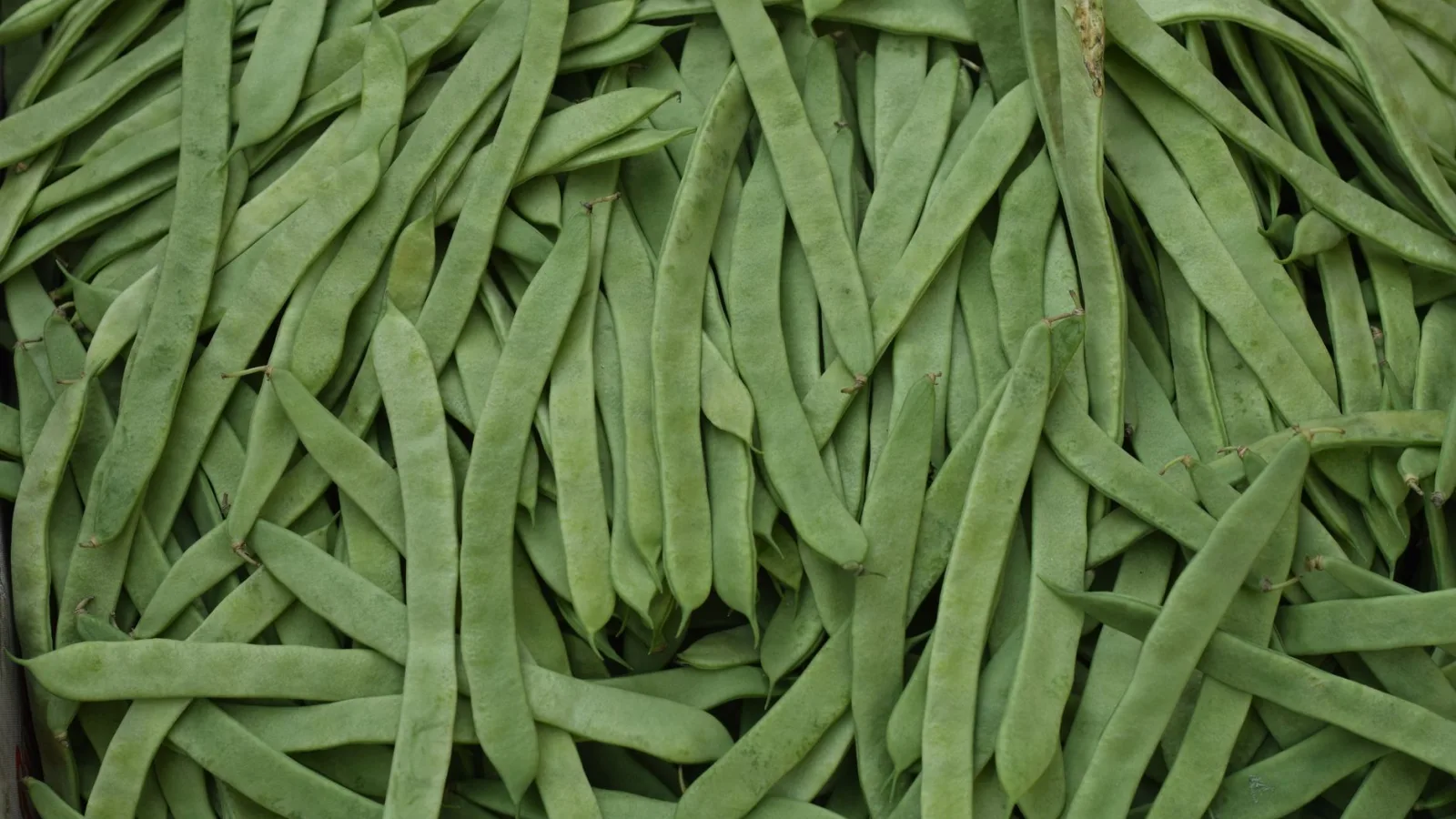
In the Northern Hemisphere, by July every vine that has climbed its trellis is hung with pale green pods. Carry a handful back to the kitchen and you'll probably want to bite into one on the way. That's where one of the most common questions from first-time pole bean growers comes from: can you eat them raw, and if not, how long do they need to cook? The short answer: don't eat pole beans raw, whether it's the pods or the beans inside.
Why Not Raw: Lectins
Pole beans are a climbing form of the common bean (Phaseolus vulgaris), the same species as kidney beans. Kidney beans are grown for their mature seeds. Pole beans are picked young and eaten whole as green beans. In Korea they're also called kkakji-kong, or "pod beans." Because they're the same species, we use kidney bean data for nutrients like protein and dietary fiber. Pole beans are grown widely in China, Indonesia, India, Türkiye, and France.
They also share the same compound to watch out for. Kidney beans and their relatives contain phytohaemagglutinin, a type of lectin. Eating raw or undercooked pods or beans can cause stomach pain, vomiting, or diarrhea. That's true even for pods fresh from your own garden, because the lectin is part of the bean itself. Freshness doesn't matter.
Lectins are proteins that break down with heat, and thorough cooking in boiling water is known to reduce them. That leaves one rule for eating pole beans: cook them at a full boil until they're done all the way through. Cooked that way, they're fine in stir-fries, Korean dressed side dishes (muchim), or salads.
How Long Should You Cook the Pods?
To blanch, drop the pods into a pot of water at a rolling boil. Once the water returns to a boil, give them a little longer. They'll turn bright green first, but at that point they're often cooked only on the outside. Fish one out and snap it in half. If the young beans in the center are hot and cooked through, you can drain the whole batch.
To stir-fry, start by cooking some garlic in oil until fragrant, then add the pods. Charring them over high heat often leaves the insides undercooked. Instead, add a splash of water, cover, and let them steam for a bit. Then take off the lid and let the remaining liquid cook off.
The pairing list in our Crop Guide suggests lightly blanching pole beans for salads. Here, "lightly" means cooked through but not boiled until soft. Plunging the cooked pods straight into cold water helps them keep their green color and crunch. For a sesame side dish, blanch them the same way, then toss with sesame seeds and sesame oil and serve as namul, a seasoned vegetable side dish.
Is Low and Slow Cooking Safe?
It's easy to assume that cooking beans long enough will take care of the lectins. Our Crop Guide notes the opposite: long cooking at low temperatures can leave lectins behind. That includes the low setting on a slow cooker, which never reaches a boil, and sous vide (vacuum-sealed cooking in a low-temperature water bath), where the water is kept below boiling.
If you want to make a bean stew in a slow cooker, first boil the pole beans or soaked dried beans hard in a pot, then move them to the cooker. The U.S. Food and Drug Administration (FDA) gives the same advice. The phytohaemagglutinin entry in its Bad Bug Book recommends boiling soaked beans, and it describes cases of people who got sick after eating beans cooked only in a slow cooker.
Missed the Picking Window and the Beans Have Matured?
In the Northern Hemisphere, seeds sown in April–May produce pods from July–September. Because the vines grow up instead of out, even a small plot can give you a generous harvest. But leave them unpicked for just a few days and the pods fatten as the beans inside mature. As the beans mature, more of the protein ends up in the beans and the pods tend to get tough. At that point, it's better to shell the beans than to eat the pods whole.
The shelled beans take one more step than the pods. Soak dried beans in water, pour off the soaking water, then add fresh water and boil until completely tender. If you shell beans that haven't fully dried, they also need thorough boiling. We cover the protein makeup of mature beans, and the research behind it, in a separate article on kidney beans.
What You Get When You Cook Them
Well-cooked pods provide plant protein, dietary fiber, and vitamin K. Their crisp snap comes mostly from insoluble fiber. Vitamin K is fat-soluble, so it should go well with cooking that uses fat, like stir-frying with garlic in oil or tossing with sesame oil. This describes what nutrients pole beans contain. It isn't a claim that they prevent or cure any disease.
You can find planting months, harvest months, and good ingredient pairings all in one place on the pole bean page in Homiclub's Crop Guide.
If you picked pods today, start by bringing a pot of water to a rolling boil and blanching them. Snap one in half to make sure it's cooked to the center, then turn them into a stir-fry or a seasoned side dish.