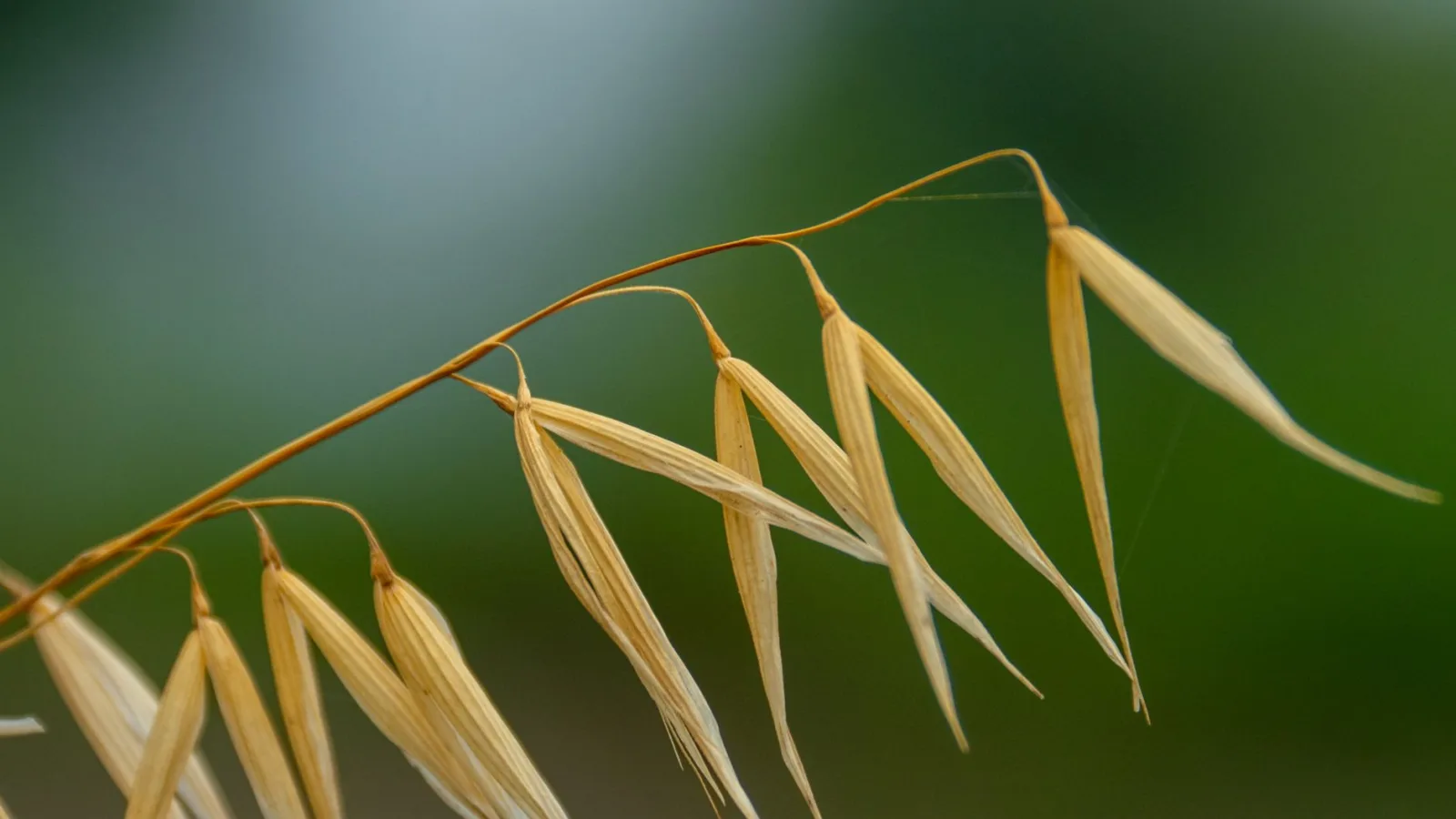
The peppers and eggplants have been pulled, and the fall beds are empty. In the Northern Hemisphere, October is the month to sow oats (Avena sativa), and oats sown then are cut the following June or July. The Dongui Bogam, Korea's 17th-century classic of traditional medicine, records a grass from the same family as our breakfast oatmeal under the name "gwibori."
Gwibori in the Dongui Bogam
The Dongui Bogam lists this grass in its chapter on herbs (Chobu, 草部) as jakmaek (雀麥, literally "sparrow wheat"). It notes that Koreans once called it gwibori and gives another name for it, yeonmaek (燕麥). It describes the plant as neutral (平) in nature, sweet (甘) in taste, and nontoxic. In traditional Korean medicine, "neutral" means neither cooling nor warming.
The text also describes the plant's appearance closely. The sprouts look like wheat but are more delicate, the grains look like hulled barley but are slimmer, and the ears are thin, long, and loosely set.
Some scholars, however, identify this jakmaek as wild oat, a different species from the oats we grow in the garden. The Homiclub encyclopedia likewise describes jakmaek as an oat-family grass that grows in open fields. This information comes from a historical medical text and does not reflect the judgment of modern medicine. For a commentary on the original text, see the Dongui Bogam entry for gwibori.
Source: Dongui Bogam, Herbs chapter (Chobu, 草部), "Jakmaek (雀麥)"
What Modern Analysis Measures in Oats
Where the old texts described nature and taste, modern analysis measures components. Our encyclopedia lists the following for oats:
- Beta-glucan: a soluble fiber that turns thick and viscous when it dissolves in water.
- Protein: relatively high for a grain, including a protein called avenin.
- Avenanthramides: a group of polyphenols found mainly in oats.
- Fat: fairly high for a grain, with a large share of linoleic acid.
One study of beta-glucan's physical properties measured its molecular weight and the viscosity of its solutions. The researchers reported that viscosity changes with how much the oats are processed and how long they're cooked. Anyone who has left oatmeal to cool has seen it thicken. The study helps explain that effect. It does not deal with disease.
Analyses have found that avenanthramides are barely detectable in other grains and are relatively concentrated in the oat's bran layer and young sprouts. The same analysis also reported that levels vary widely with variety and growing conditions.
Where Do the Old Record and Modern Analysis Agree?
Both treat oats as a grain that's safe to eat. The Dongui Bogam called the plant sweet and nontoxic, and today oats are an everyday food, eaten as oatmeal or cooked into multigrain rice.
There are differences, too. If the Dongui Bogam's jakmaek is wild oat, it's hard to call it the same plant as the rolled oats we buy today. Keep that in mind before applying the old text's descriptions of nature and taste directly to modern oats. The two records also measure different things: the Dongui Bogam recorded nature, taste, and appearance, while modern analysis measures viscosity and where compounds are found in the plant. Because they measure different things, neither record can be used to prove the other.
Both records did look at one part of the plant: the sprout. The old text described its shape, and modern analysis finds avenanthramides concentrated in young sprouts. Levels vary so much with variety and growing conditions, though, that there's no telling how much is in the shoots you grow at home.
Sow in Fall, Harvest in Early Summer
In the Northern Hemisphere, oats can be sown in October for a fall crop or in March for a spring crop. Either way, harvest comes in June or July. If your winters are harsh, a March sowing is the safer choice. In the Southern Hemisphere, add six months to these dates. You'll find the sowing calendar in the oat entry of our crop encyclopedia.
If you'd rather not wait for the grain heads, start with young shoots. Scatter seed thickly in a shallow pot and keep it indoors, and in 7 to 10 days the shoots will reach 10 cm (about 4 inches). It's often grown as cat grass for cats to nibble, but you can also snip it as sprouts for yourself. Shoots that regrow after the first cut tend to be weak, so it's better to sow a fresh pot every ten days.
Bringing Oats to the Table
- Soaked in cold milk or soy milk: Instead of cooking rolled oats, soak them overnight in cold milk or soy milk and they'll soften. The beta-glucan dissolves slowly, so by morning the oats are thick and creamy. Refrigerated, they'll taste fresh for up to two days.
- Mixed into rice: Naked (hull-less) oats shed their husks easily, so you can mix them into rice without soaking them first. About 4 parts rice to 1 part oats by volume works well; add a little more water than usual. Hulled oats aren't meant for cooking with rice, so check the variety on the bag first.
This week, scatter oat seed thickly in one empty pot. In ten days, snip the shoots and toss them on a salad. You can pick the seed for your October beds after that.