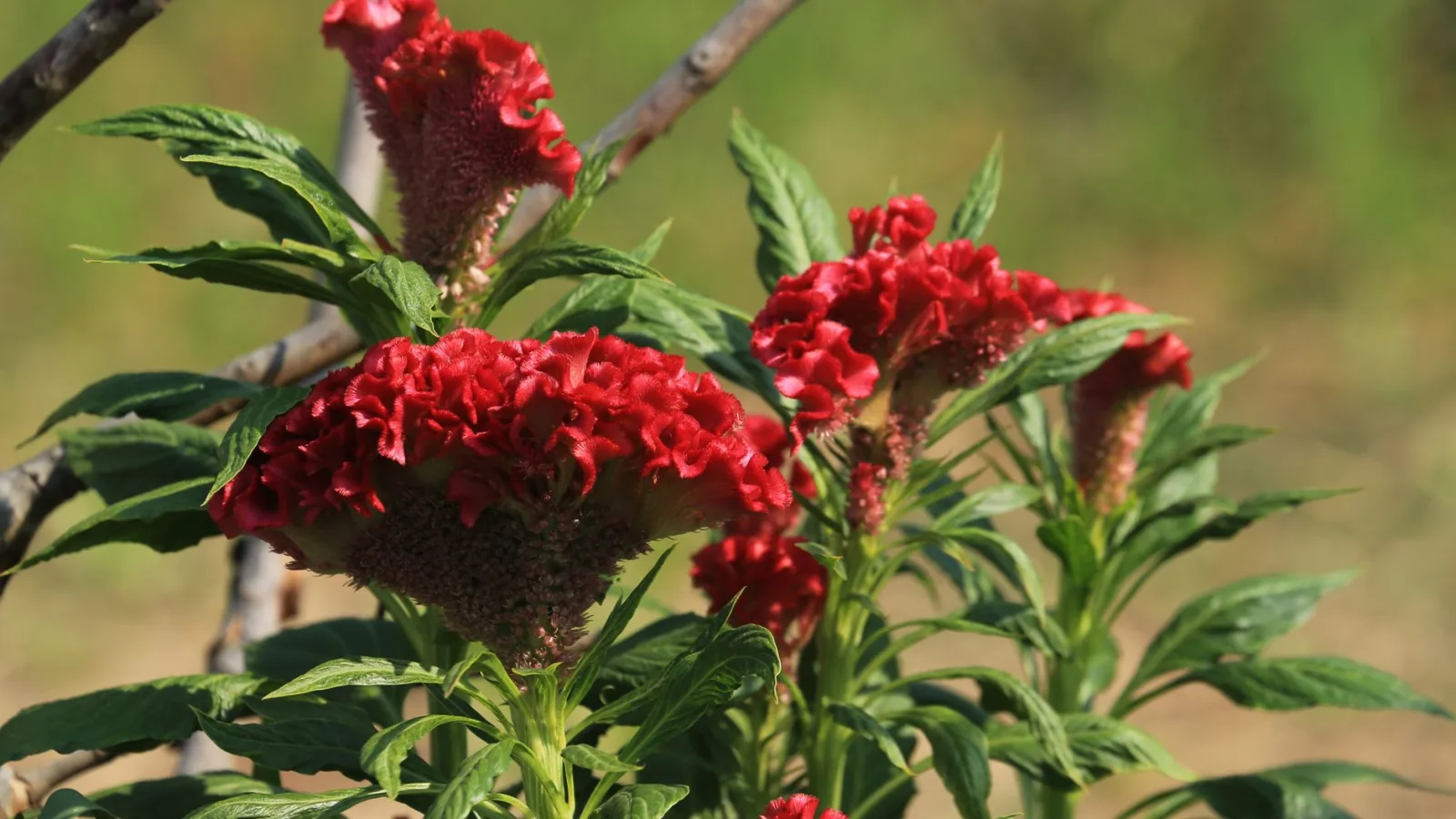
In August, thick red plumes stand along the edge of the garden. Run your fingers across one and you feel fold upon fold of ruffles, and the longer the sun sits on a spot, the deeper the color. Cockscomb is an annual you cut from July into October, which makes right now its peak.
Sowing — After the Last Frost Has Passed
Cockscomb is grown from seed, and only from seed. Sow in April or May in the Northern Hemisphere; south of the equator, shift the timing to whichever months are your spring. It is a frost-tender crop that dies outright at the first touch of frost, so wait until the danger of late frost is completely behind you.
It grows best at 20–30°C (68–86°F), and gets by anywhere from 15 to 35°C (59–95°F). While soil temperatures sit below 15°C (59°F), germination drags, so don't rush it — just give it time. The seed is tiny, so cover it with only a thin layer of soil and keep the surface from drying out until the seedlings push through.
China is the main production region, and the plant grows wild in India and Nigeria. All three have long, hot seasons, and that is exactly where cockscomb throws up its heaviest plumes. It's easy to grow, so put in a row your first year with a kitchen garden.
Sun and Water — It Asks Almost Nothing of You
If the flower heads are small and the color looks washed out, check the light first. Too little sun and the plumes stay small and the red goes pale. Give it the spot that holds sunlight longest through the day.
Treat it as a short-day plant: it sets its flower heads as the days grow shorter. A bed that catches a streetlight or outdoor lighting long into the night will be slow to send up flower stalks.
Heat is no problem for it. Get it through standing water in the rainy season and it asks almost nothing of you after that. In ground that drains poorly, plant on a slight mound, and during long stretches of rain, widen the spacing between plants so air can move through.
Harvesting — At Peak Color
You'll be cutting from July into October. Take the heads when their color is deepest, dry them thoroughly in the shade, then store them in an airtight container. Spread out in direct sun, the red fades, so pick a shaded spot with good air movement.
Because it's an annual, frost ends that year's plant, full stop. When the first frost turns up in the forecast, cut every remaining head, then shake out the well-ripened seed and set it aside for next year.
The Red, and How to Eat It
Cockscomb's red comes from betacyanin pigments, the class found throughout the amaranth family. They are nitrogen-bearing pigments, relatively stable in acid, and they break down under long heating.
Pour boiling water over the dried heads and let them steep 3 to 5 minutes; the water takes on a clear red. Boil it any longer and it clouds toward brown. Try a few drops of lemon juice in the finished infusion — because the pigment holds up in acid, the color sharpens.
To use the flowers on rice cakes or pan-fried dishes, shave thin slices from the outer edges of the thick, ruffled head. Laid over hwajeon (rice cakes pan-fried with flowers pressed onto the surface) or baekseolgi (a plain white cake of steamed rice flour), the red stays exactly as it was.
The Donguibogam (Treasured Mirror of Eastern Medicine) lists this flower in its herb section as gyegwanhwa (雞冠花), literally "rooster's comb flower" — named, the text says, because the bloom looks like a rooster's comb. The old Korean name is recorded there as "만ᄃᆞ라밋 곳," an archaic form of today's mandeurami. The entry calls the plant cooling in nature and free of toxicity, and it even notes the preparation: when the flower goes into medicine, roast it first. This is the language of a historical medical text, and it does not reflect how the plant would be assessed today.
A relative in the same genus, silver cockscomb (Celosia argentea), is grown in West Africa as a leafy green, where it's known as Lagos spinach. A plant we put in for its flowers has settled into another part of the world as a vegetable grown for its leaves. The seeds carry the fatty oil and protein common to amaranth-family seeds, and flavonoids in glycoside form have been identified in the genus Celosia.
Head out to the garden today and cut two or three of the deepest-colored heads, then spread them in the shade. You'll get several more harvests before frost, and the dried flowers will steep into a red tea all through the winter.
Sources: Donguibogam, Herb Section, Gyegwanhwa (雞冠花) · Nongsaro crop information