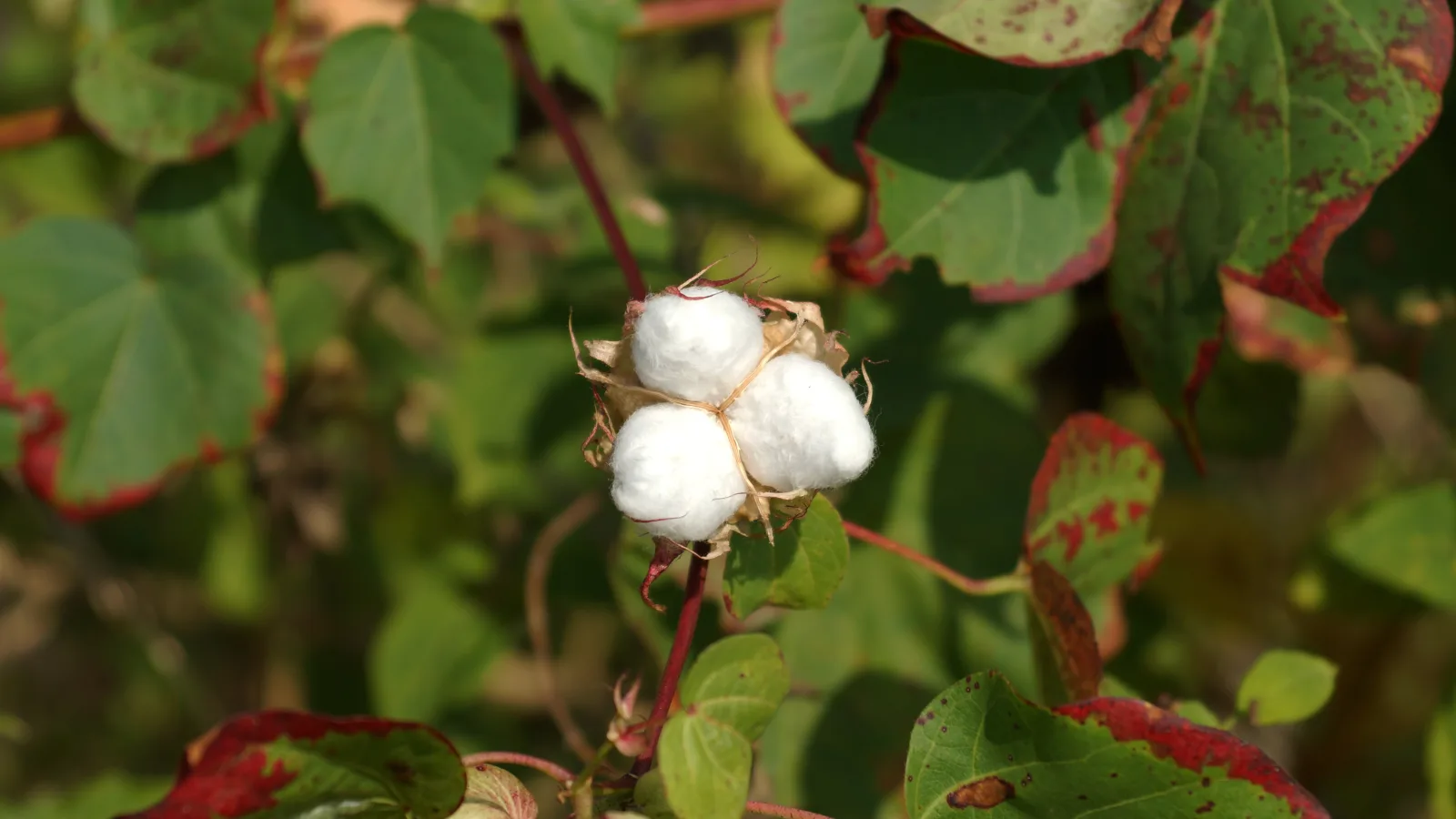
Once May passes and the sun turns warm, some gardeners tuck a cotton seed into a pot on their patio or balcony, hoping to watch white bolls burst open come October. But as summer deepens, those same leaves often develop unsettling spots—patches that look water-soaked at first, then harden into brown lesions over a few days. That's bacterial blight doing its work.
Bacterial Blight: What's Leaving Those Spots on Your Cotton Leaves
Bacterial blight is caused by Xanthomonas citri pv. malvacearum. The infection starts in the leaves, then travels down the stem to the bolls, and in severe cases it can sharply cut yields. The disease spreads fastest during the rainy season: a single raindrop hitting an infected leaf can scatter bacteria to neighboring leaves in an instant.
Seeds make things even trickier. The bacterium can cling to the seed surface and overwinter there, reactivating the following spring when you plant again. It also survives in plant debris left in the soil. Bactericides can slow the spread, but they can't eradicate it. That's why building resistance directly into the variety itself remains the most durable long-term solution.
Tracking Resistance One Seedling at a Time
Researcher Spurthi Gandhadmath planted seeds from a range of cotton varieties—one seed per 3.5-inch (8.9 cm) pot—and placed them in a growth chamber. Seven days later, the first true leaves had emerged. Each seedling carried a different genetic background, and these small plants became the starting point for resistance research.
Once the seedlings had grown large enough, each was inoculated with the bacterium. The responses varied dramatically: some varieties barely let the infection spread, while others allowed it to race through the leaf tissue. Pinpointing which genes in the cotton genome account for that difference is the essence of resistance mapping. Once that map exists, breeders can select or cross resistant varieties far more efficiently—and growers end up with more options on the shelf.
What You Can Do in Your Garden Right Now
It takes time for resistance research to make its way onto seed packets. In the meantime, smart growing practices can limit damage.
When you water, aim at the base of the plant, not at the leaves. Wet foliage creates exactly the conditions bacteria need to take hold. During the rainy season, check frequently for brown spots, and if you suspect infection, remove affected leaves promptly and dispose of them away from your pots. Spacing matters too: if pots are packed so tightly that leaves touch, airflow drops, humidity rises, and you've handed the bacteria a perfect environment to spread.
When buying seeds, ask your local nursery or agricultural extension center about resistant varieties. Resistance labeling isn't always clearly marked yet, but choosing a variety with a long track record in your region is a reasonable place to start.
This summer, give your cotton the best shot at making it through the rainy season and into a fluffy October harvest—start by taking a close look at your plant's leaves today.
Source: Cotton resistance research from the American Phytopathological Society.