If you've ever planted cilantro for its leaves, you've probably watched it shoot up a flower stalk the moment the weather turned hot. The leaves toughen, the flavor fades, and it's tempting to pull the whole plant. But bees land on those white, umbrella-shaped blossoms with unusual enthusiasm. The honey they gather from them is coriander honey, a deep amber with a faint whiff of spice. In 2026, a study in the journal Pharmaceuticals put that honey on human bone cells to see what would happen.
Acacia, Chestnut, and Coriander Honey on Bone Cells
The researchers fed three honeys, acacia, chestnut, and coriander, to human osteoblasts for seven days and tracked the changes. Osteoblasts are the cells that build new bone. They first measured each honey's polyphenol and flavonoid content and its antioxidant capacity. Coriander honey scored highest on all three.
They also ran a migration test: scratch a bare strip across a dish of growing cells and time how quickly the cells fill it back in. All three honeys sped up the repair, and coriander honey was fastest. Two markers of bone-cell maturity rose as well. One is alkaline phosphatase activity, an enzyme that climbs as bone formation begins. The other is alizarin red staining, which dyes the calcium deposits that cells lay down outside themselves, a process called mineralization. After seven days, the honey-treated cells showed higher readings on both markers than cells grown in the standard medium labs use to trigger bone-cell differentiation.
The Calcium Signal Moved First
When the team filmed calcium levels inside the cells in real time under a microscope, calcium spiked sharply the instant coriander honey touched them. By adding drugs that block calcium movement, they confirmed that both routes were in play: calcium flowing in from outside the cell, and calcium released from the cell's own internal stores. Inside an osteoblast, calcium is the signal that says it's time to start differentiating.
Changes followed at the genetic level, too. The cells switched on more of the genes for osteoprotegerin, a protein that reins in the osteoclasts that break bone down, and for osteopontin, a protein that forms part of the bone matrix. In other words, two things happened at once: the bone-building side got a boost, and the bone-dismantling side got dialed down.
What Gets Lost Between the Petri Dish and the Dinner Table
This was an experiment in a culture dish, not in a human body. When you eat honey, your stomach and intestines absorb the sugars, and only a fraction of the polyphenols ever reaches your bloodstream. The bone cells inside you will never encounter honey at the concentrations used in the dish. So don't read these cell results as evidence that coriander honey prevents or treats osteoporosis. The researchers themselves named animal studies as the next step.
Nor does it make sense to think of honey as a way to add calcium to your bones. A 100 g serving of honey holds roughly 6 mg of calcium, nowhere near the 110 mg in 100 ml of milk or the 150 mg in 100 g of kale. What moved the needle in the study wasn't the calcium in the honey. It was the honey's polyphenols altering the calcium signaling inside the cells. And since honey is more than 80 g sugar per 100 g, one tablespoon a day, about 20 g, is plenty. The World Health Organization recommends keeping free sugars under 50 g a day, and a single tablespoon of honey uses up 17 g of that allowance. Never give honey of any kind to a baby under one year old.
It's also worth remembering that all three honeys worked. Coriander honey simply led the pack. Acacia and chestnut honey also beat the standard medium. Coriander honey is produced mainly in Bulgaria, Romania, Ukraine, and India, and it's hard to find on Korean store shelves. Darker honeys tend to carry more polyphenols, so an easy-to-find dark honey like chestnut is a perfectly good choice. Stirring honey into water hotter than 40°C (104°F) diminishes its enzymes and aroma, so try it in lukewarm water or yogurt instead.
What Happens When You Let Cilantro Flower
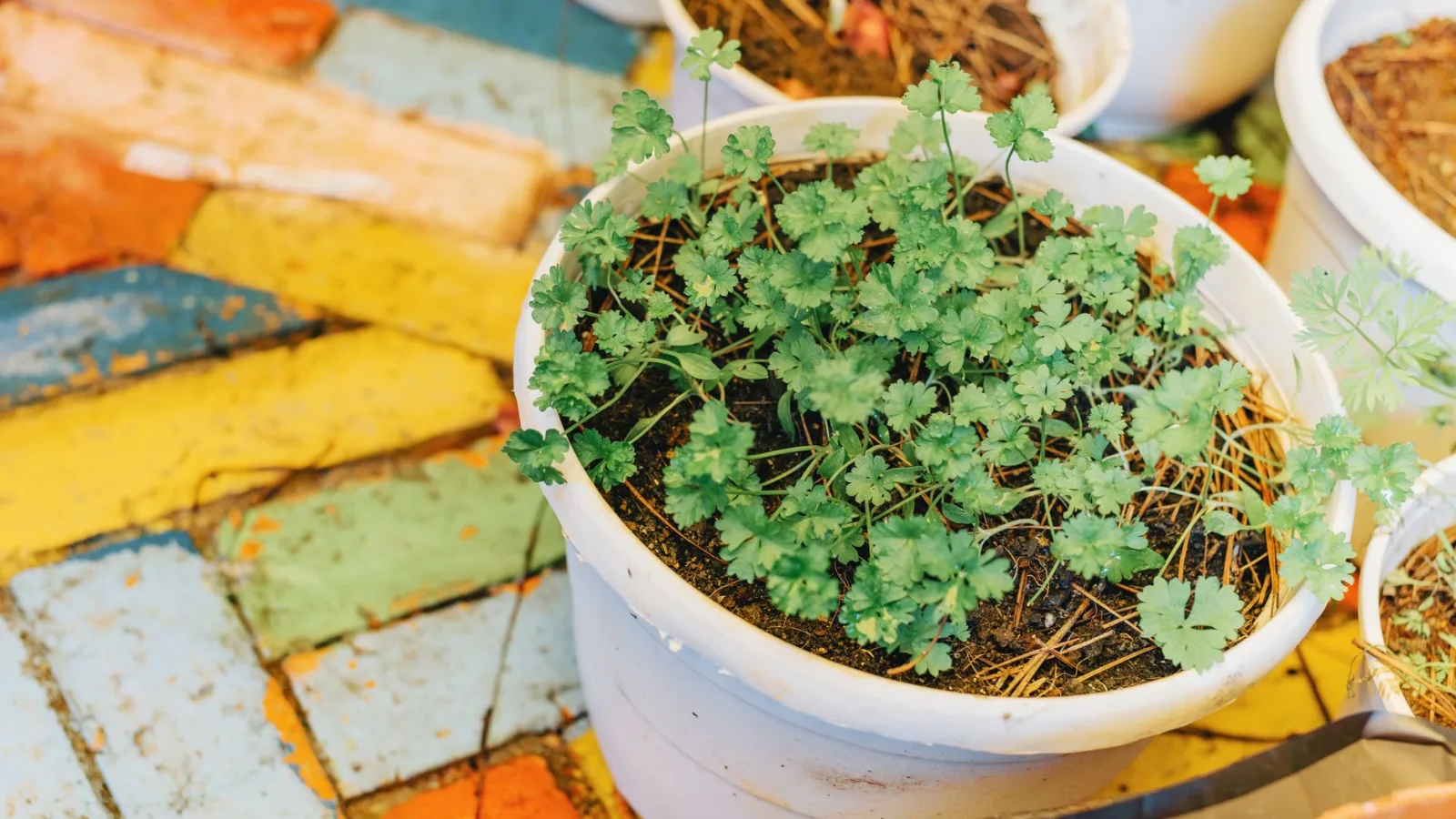
You can't make honey from the cilantro in your garden, but you can offer the bees flowers to work. Cilantro is a cool-season crop that germinates best between 15 and 20°C (59 to 68°F). Once temperatures top 25°C (77°F) and the days lengthen, it stops putting out new leaves and sends up a flower stalk, which gardeners call bolting. If leaves are your goal, sow in spring and again in fall, in succession every two to three weeks, and keep picking the young foliage. But leave two or three plants unpulled and let their stalks rise. The flowers last two to three weeks, and bees and hoverflies will come and go the whole time.
When sowing, press each seed gently under your palm so it splits into its two halves, and the seedlings will come up more evenly. Bury them 1 cm deep and space plants 15 cm apart. After the flowers fade and the round fruits dry to brown, cut the stalks whole, hang them upside down in a paper bag to finish drying, then shake the seeds loose. These are coriander seeds, the spice, and they're also next year's planting stock. No one can count how many cilantro blossoms go into a single jar of honey, but a row of them in your garden adds to the tally.
Reference: Pharmaceuticals, 2026. A study reporting that coriander honey accelerates differentiation and matrix mineralization in human osteoblasts through intracellular calcium signaling.