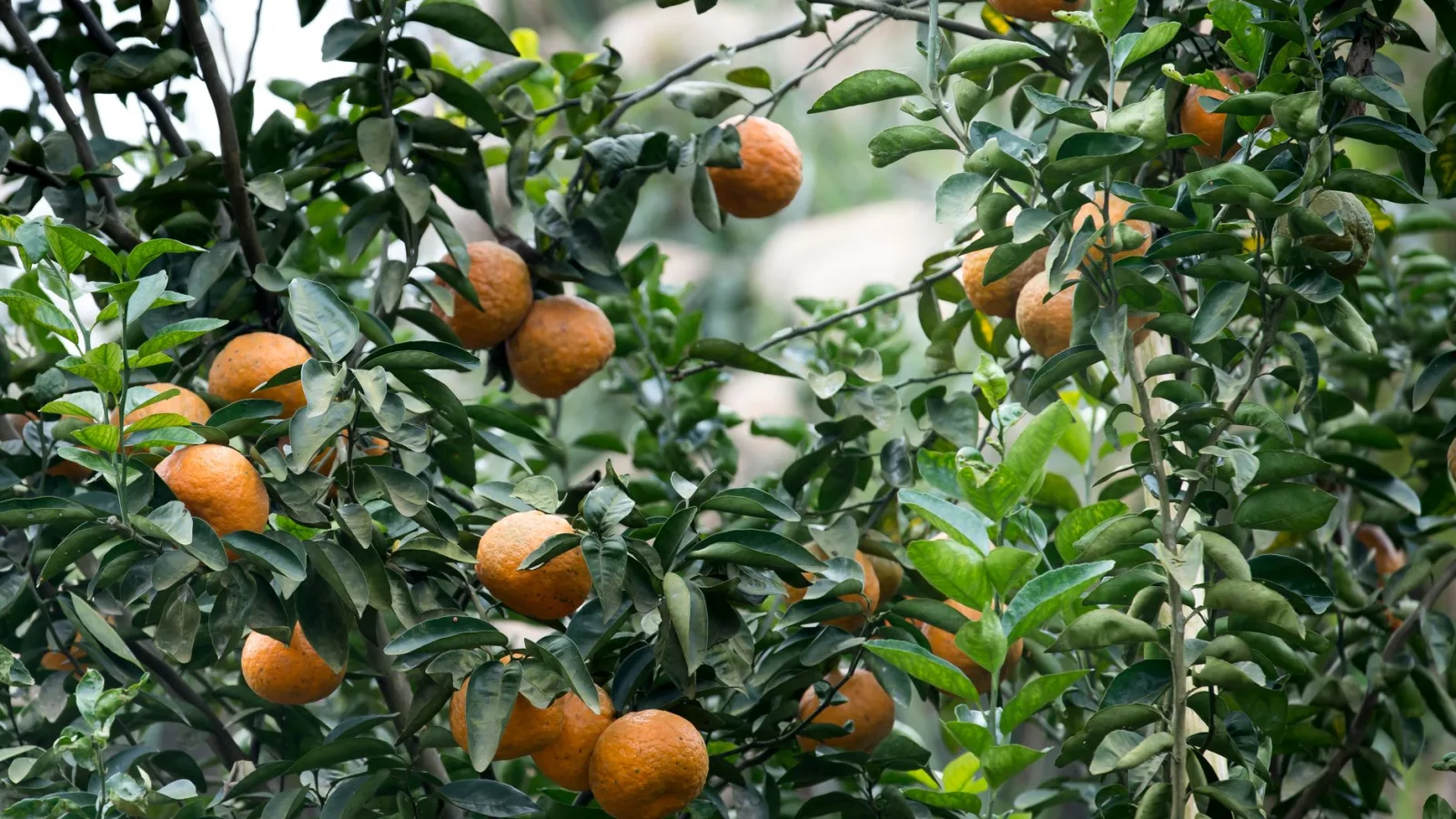
In September (in the Northern Hemisphere), yellow fruits about the size of ping-pong balls start showing between the branches of hedges. Reach in to pick one, and the long, stout thorns catch your sleeve first. The fruit in your hand has a strong citrus scent, and one taste brings sourness and bitterness together. You get to know the trifoliate orange in that order: first with your hands, then your nose, then your tongue.
A Hedge Tree Covered in Thorns
The trifoliate orange is a deciduous tree in the citrus family (Rutaceae). Its thorns grow so thickly that it has long been planted as a living hedge around homes and fields. On Korea's Ganghwa Island, you can still see where it was planted around old fortress walls, and the oldest trees there are protected as Natural Monuments. The point was to keep both people and animals from getting through easily.
It is unusually cold-hardy for a citrus. It drops its leaves in winter and can survive temperatures down to around -20°C. Because of this, growers around the world use it as a rootstock for citrus trees that only do well in warm climates. (A rootstock is the lower plant that supplies the roots when two plants are grafted together.) It grows best at 18–28°C and will grow anywhere from 5 to 32°C. It is native to China and also widely grown in Korea and Japan.
If you want to plant one, set out a young sapling in March or April (Northern Hemisphere). It isn't fussy about soil, but its roots will rot where water collects, so pick a spot that doesn't hold puddles the day after rain. Put on a pair of heavy gloves before you handle the branches.
What Makes It Bitter and Fragrant
The fruit is very sour, quite bitter, and full of seeds, so people rarely eat it raw. The bitterness comes from flavonoids in the fruit. Researchers who analyzed trifoliate oranges found bitter glycosides such as poncirin and naringin. The fragrance of the peel comes from its volatile essential oil.
The sourness comes from organic acids, including citric acid, and the fruit also contains dietary fiber such as pectin. Measurements show that the makeup of these compounds changes as the fruit ripens. Keep in mind, though, that these studies only looked at what the fruit contains. They aren't evidence that it has any particular effect on the body.
Jisil, as Recorded in the Dongui Bogam
The Dongui Bogam (1613), a classic Korean medical text, lists the dried unripe fruit of the trifoliate orange in its section on trees under the name jisil (枳實). It describes jisil as cold in nature, bitter and sour in taste, and non-toxic. It also records other opinions: that it is only slightly cold, or that it tastes bitter and pungent. The book says to pick the fruit in the seventh and eighth lunar months and dry it in the sun, and that older, well-aged fruit is better. It also gives preparation steps: soak the fruit in water, remove the pulp, then dry-roast it with wheat bran before use.
The book also repeats an old saying that a mandarin orange carried across China's Huai River turns into a trifoliate orange. It then notes that both trees grow south of the river but only the trifoliate orange grows to the north, so the two must always have been separate species. In other words, the author tested a traditional saying against what he could observe. Still, descriptions in old medical texts don't match modern medical judgment, so please don't take the passage on jisil as advice to use it as medicine.
Try It as a Syrup or Tea
Bitter and sour as it is, the fruit becomes much easier to enjoy once it's steeped in sugar or dried and simmered into tea. If you picked some ripe yellow fruit this week, try one of these.
- Trifoliate orange syrup (taengja-cheong, a Korean fruit syrup made by preserving fruit in sugar): Wash the fruit and let it dry completely. Slice it thinly, pick out the seeds, and pack the slices in an equal weight of sugar. The thinner you slice the peel, the less bitter the syrup will be. Keep it in a cool place for about ten days, then move it to the fridge.
- Dried trifoliate orange tea: Dry thin slices completely in the sun and store them. To make tea, put a few pieces in a pot of water and set it on the stove. Long boiling makes the tea more bitter, so turn the heat to low as soon as it boils and let it simmer. Stir in honey after you pour it into your cup.
- Tea with ginger and jujubes: Add a few slices of ginger and some sliced jujubes (Korean red dates) at the start and simmer everything over low heat. They soften the fruit's bitterness and sourness. Many people drink this tea often in winter.
Today, put on your gloves and pick three or four ripe yellow fruits. Smell the peel of one, and slice the rest thinly to steep in sugar. For the ginger and jujubes to simmer with them, see the growing guides in our plant encyclopedia.
Sources: Dongui Bogam, Trees section (木部), Jisil (枳實) · Korea National Arboretum, Korea Biodiversity Information System