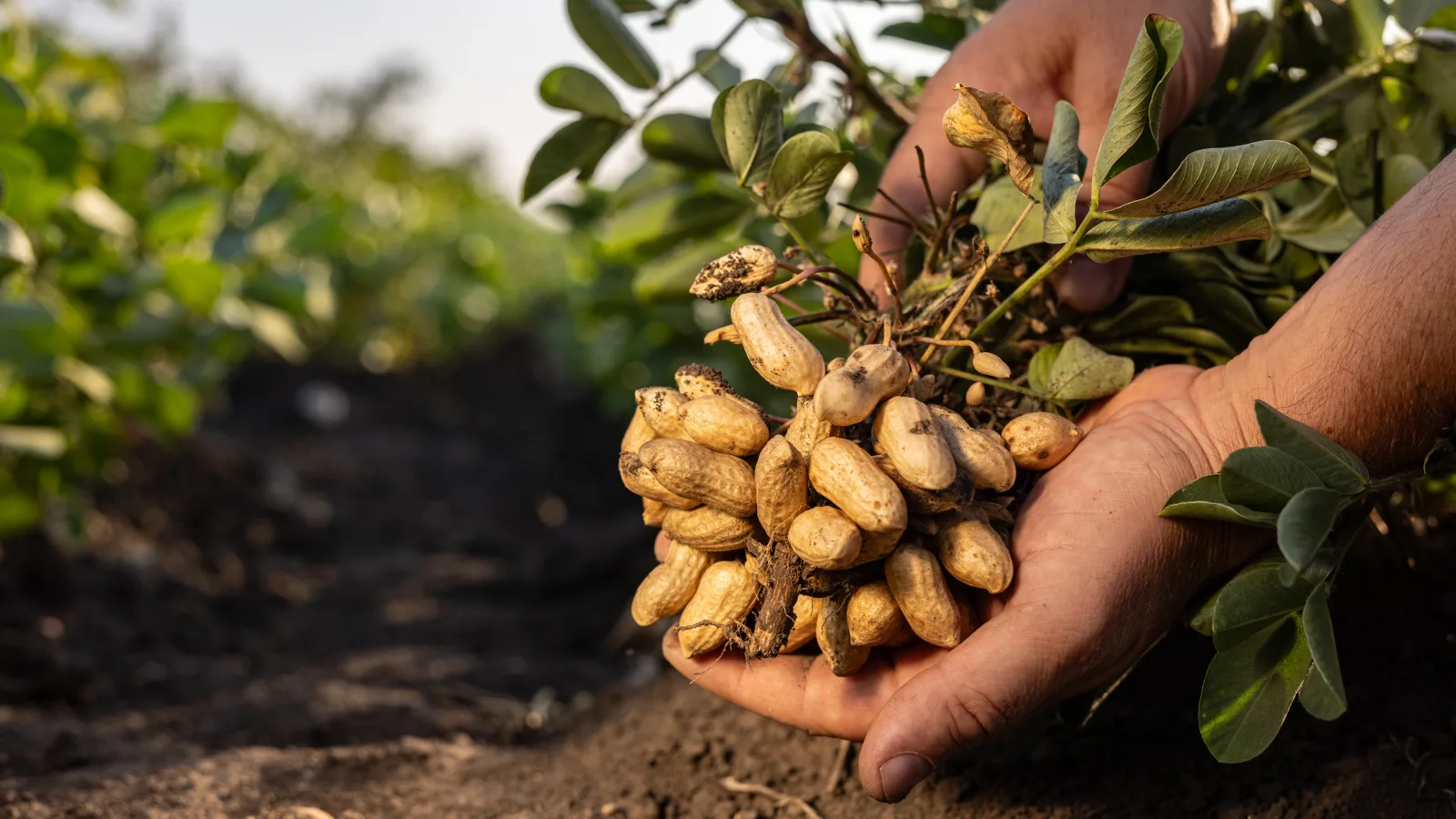
If you set out peanut seedlings in your June garden, small yellow flowers should be opening about now. After each bloom fades, its stalk bends down into the soil to form the pod. Pull the whole plant up in fall and the pods come with it, still clinging to the roots. Peanuts are a major food crop worldwide, and an international research team recently announced that they have decoded the plant's entire genome for the first time.
A Complex Code Built From Two Wild Ancestors
Long ago, two wild peanut species crossed naturally to give rise to the cultivated peanut we grow today. Because it carries the full gene sets of both ancestors combined, its genome is structurally complicated and unusually large. Until now, parts of it had been read, but no one had captured the whole thing without gaps. In this study, the international team applied the latest sequencing technology to fill in every region—including the stretches inherited from each ancestral species and the repetitive sections that had long been the hardest to resolve. This is the first time the peanut genome has been fully revealed. The information will help not only with variety research but also with understanding how the peanut evolved into the plant we know today.
Knowing the Whole Genome Changes How Varieties Are Improved
Scientists can now pinpoint, far more precisely, exactly where in the genome the genes for drought tolerance or resistance to certain fungal diseases are located. In the past, obtaining a desired trait meant repeating countless crossbreeding experiments. Now breeders can identify in advance which genes to bring into a cross and plan accordingly, which should shorten the time it takes to develop a new variety. The same information could support work on varieties that trigger fewer allergies. Because peanuts are an important food for smallholder farmers across Africa and Asia, varieties with better yields and greater safety would make a real difference for a great many growers.
A Crop Rich in Both Protein and Healthy Fats
Every 100 grams of peanut seeds contains roughly 26 grams of protein and 49 grams of fat. Most of that fat is monounsaturated and polyunsaturated, which is considered easier on cardiovascular health than the saturated fat found in animal-based oils. Peanuts also supply vitamin E and niacin (vitamin B3). Pressing the seeds yields peanut oil, which has a high smoke point and works well for stir-frying. Ground into peanut butter, they become an easy way to add protein to a meal. Here in Korea, we've long enjoyed them boiled, or roasted and tossed with jocheong (grain syrup) at the table.
Try Growing Your Own
Peanuts like warm weather and well-draining, sandy soil. Pick a spot that gets plenty of sun. Sow the seeds in late May, once temperatures have settled above 20°C (68°F). Drop one or two seeds per hole, spacing the plants about 30 centimeters apart.
- Late May: Plant the seeds 2–3 centimeters deep.
- After flowering: When the flower stalks bend down into the soil, mound a little earth up around them.
- Late September to early October: Once the leaves yellow, pull up the whole plant to harvest.
- After harvest: Dry the pods in the shade for one to two weeks.
As a legume, the peanut hosts nitrogen-fixing bacteria on its roots. If you follow it with leafy greens or root vegetables in the same spot after harvest, they'll grow in soil that's been replenished with nitrogen.
Set your first peanuts of the fall out to dry in the shade. As the genome work continues, we can expect even more resilient varieties to follow.
Reference: International Peanut Genome Initiative